
YFI Price Prediction and Market Insights for Investors
🔍 Explore YFI price trends, technology, and market factors affecting Yearn Finance token's future. A clear guide for investors in Pakistan and beyond.
Edited By
Charlotte Reed
Bitcoin's price swings have always grabbed headlines, but for traders and investors in Pakistan, staying on top of these changes is a bit like chasing a wildfire. The market moves fast, and knowing what's driving those fluctuations can make the difference between a smart move and a costly mistake.
This article zeroes in on today's Bitcoin price prediction, unpacking the key elements that shape its market behavior. We’ll break down technical analysis techniques used in forecasting Bitcoin’s next moves, and spotlight how sentiment in local and global markets influences buying and selling patterns.
By focusing on insights relevant to Pakistan’s unique crypto environment—where regulations, remittances, and economic factors intersect—we aim to arm readers with practical knowledge. Whether you're a seasoned financial analyst or a cautious first-time trader, understanding these layers scoops you out of speculation and into reasoned decision-making.
In a market buzzing with noise and rapid shifts, grasping today's Bitcoin price trends isn't just useful—it's essential for anyone serious about cryptocurrency in Pakistan.
Throughout the article, watch for real-world examples and straightforward breakdowns that demystify the jargon. The goal here is simple: help you see the bigger picture clearly and tailor your trading strategy accordingly.
Understanding the current state of the Bitcoin market sets the stage for making informed trading decisions. This overview covers the recent price trends, overall market size, and trading volumes which are key indicators observable by traders and investors alike. Keeping an eye on these factors helps paint a clear picture of where Bitcoin stands today and how it might behave in the near future.
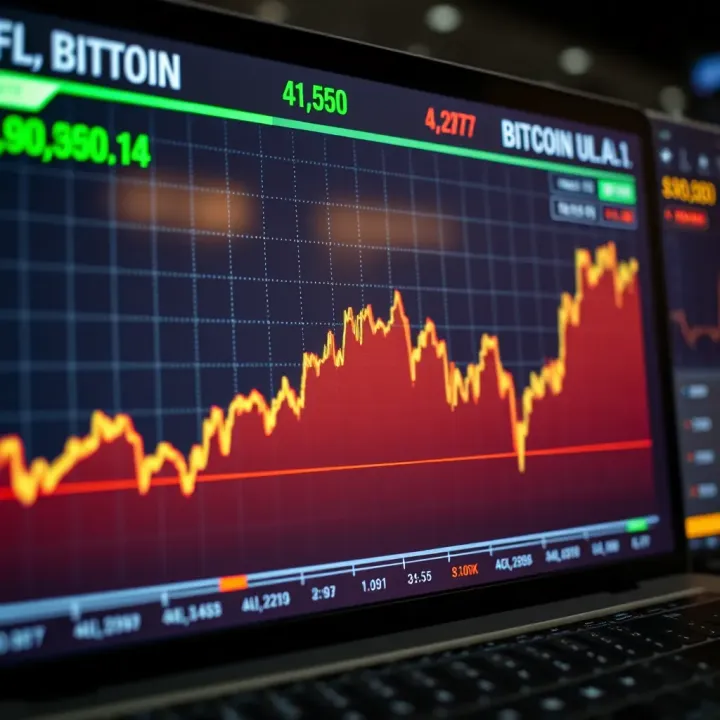
Recent price trends provide a snapshot of Bitcoin’s short-term market behavior. For instance, over the past month, Bitcoin experienced a rollercoaster ride, jumping from around $27,000 to briefly dip under $25,500 before regaining some ground near $26,700. These fluctuations often respond to broader economic signals like inflation data or sudden regulatory announcements in big markets such as the US or Europe.
Traders in Pakistan, who might be keeping close tabs on platforms like Binance and Coinbase, can leverage this information to time their entries and exits. A notable pattern was the bounce off a strong support level near $25,000, highlighting buyer interest at that range. By identifying such trends, investors can avoid jumping in at peaks or panicking at minor dips.
Market capitalization—the total value of all bitcoins in circulation—alongside trading volume, serve as crucial indicators to evaluate Bitcoin’s market strength. At present, Bitcoin’s market cap hovers around $520 billion, reflecting not just its price but the circulating supply. High market cap normally indicates a mature, less volatile asset compared to smaller coins.
Trading volume, on the other hand, reveals market activity and liquidity. Recent daily trading volumes have ranged between $30 billion to $45 billion globally, suggesting active exchange participation. For Pakistani traders, volume spikes can signal heightened volatility, offering both risk and opportunity. For example, a surge in volumes before a significant price change often means big players are getting involved, potentially foreshadowing a trend reversal or breakout.
Keeping track of these metrics isn’t just for the big leagues; understanding market capitalization and volume helps anyone from a casual investor to a professional broker read the market’s pulse effectively.
Together, these elements enable market participants to better gauge Bitcoin’s current position and make educated predictions about its short-term and long-term trajectory.
Bitcoin's price doesn't move on a whim; it's affected by a blend of factors that traders and investors need to keep an eye on. Understanding these drivers is like having a map when venturing into the unpredictable crypto wilderness. Whether you're a broker managing client portfolios or an analyst spotting market trends, knowing what sways Bitcoin's value can make a big difference.
Let's break down the main elements that are tipping scales today—economic backdrop, regulatory moves, and tech improvements. Each carries its own weight, and together, they paint a clearer picture of where Bitcoin could be headed.
Bitcoin often acts like the barometer for the wider economy, responding to shifts in traditional markets and global events. Inflation rates, interest policies by major central banks like the US Federal Reserve, and currency fluctuations all trickle down to the crypto sphere.
For example, when inflation spikes and fiat currencies lose buying power, investors may turn to Bitcoin as a store of value. Conversely, if central banks hike interest rates, making traditional investments more attractive, Bitcoin might see selling pressure. A recent case was when news about rising crude oil prices nudged inflation fears higher, causing temporary Bitcoin price swings.
Tracking economic reports such as the Consumer Price Index (CPI) or unemployment numbers can give early hints about market sentiment, helping traders anticipate Bitcoin's next moves.
Bitcoin's decentralized charm is often challenged by government policies worldwide. Announcements from regulators can send ripples—or waves—through the market. In Pakistan's context, where crypto regulation remains unsettled, any official statements from the State Bank or Securities and Exchange Commission get amplified attention.
Not long ago, when the Reserve Bank of India hinted at stricter crypto rules, Bitcoin prices in South Asia shivered briefly. Similarly, the US Securities and Exchange Commission’s stance on Bitcoin ETFs influences global investor confidence.
Staying updated on policy changes helps investors avoid surprises and craft strategies that fit the regulatory landscape.
Behind the price charts, Bitcoin’s underlying technology evolves steadily. Network upgrades or forks can impact transaction speed, fees, and security, indirectly shaping the currency's appeal.
Consider the Taproot upgrade implemented in November 2021—it enhanced privacy and smart contract flexibility, yet its impact on price was subtle but positive long-term. Developers also work on Lightning Network improvements, aiming to make everyday Bitcoin payments faster and cheaper.
Technological progress reassures investors about Bitcoin's scalability and future usability, factors that often support price growth over time.
Understanding these factors is essential, not just for predicting Bitcoin’s price today but also for positioning investments smartly in Pakistan’s emerging crypto market. Keeping an eye on economic shifts, decoding regulatory signals, and following tech upgrades can give traders and analysts a leg up in this fast-changing environment.

Technical analysis is a cornerstone for traders and investors when forecasting Bitcoin prices. This method hinges on studying past market data such as price and volume patterns to glean insights into potential future moves. Rather than relying on fundamental factors like currency supply or political events alone, technical analysis offers a hands-on glimpse of market psychology reflected through price charts and indicators.
By breaking down price movements into identifiable trends and levels, analysts can make educated guesses about entry and exit points. For instance, spotting a pattern where Bitcoin has consistently bounced off a specific price can signal a support level. Conversely, a price ceiling that Bitcoin struggles to surpass typically marks resistance. These cues are critical in fast-moving markets, allowing traders to respond quickly instead of chasing after news or hype.
Another benefit involves layering technical indicators such as moving averages and Relative Strength Index (RSI) to confirm signals and minimize risk. For example, a trader might notice Bitcoin nearing a strong support level but also check if momentum indicators denote oversold conditions – strengthening the case for buying. This multifaceted approach minimizes guesswork, which is especially important in Pakistan's developing crypto market where volatility and news flow can be unpredictable.
Support and resistance are fundamental to understanding Bitcoin’s price behavior. Think of support as the floor under the price; when Bitcoin dips to this level, buying interest often kicks in, preventing further decline. Resistance acts as the ceiling, where selling pressure typically hinders upward price movement.
Accurately spotting these zones requires examining historical data to see where prices have repeatedly reversed. For example, if Bitcoin has bounced off around $28,200 several times over the past weeks, that’s a clear support level traders watch closely. Breaking below support can signal a downtrend, while breaking through resistance suggests bullish momentum.
For Pakistani traders, recognizing these levels can offer practical guidance. If Bitcoin approaches a strong resistance near $30,000 but shows no sign of breaking it, cautious traders might decide to take profits or tighten stop-loss orders to protect gains.
Moving averages smooth out price fluctuations to reveal the overall trend direction, revealing whether Bitcoin is in a bullish or bearish phase. Commonly used are the 50-day and 200-day moving averages. When the short-term average crosses above the long-term average, known as a "golden cross," it often signals upward momentum. The opposite setup, called a "death cross," suggests potential decline.
For instance, if the 50-day moving average recently crossed above the 200-day on Bitcoin’s hourly chart, it can signal an entry point for traders anticipating gains. Using moving averages also helps filter out the noisy bitcoin swings that could mislead newer traders.
In Pakistan, where the crypto markets can be affected by local and global news, moving averages provide a reliable snapshot of ongoing trends amidst the chaos.
The Relative Strength Index (RSI) measures how strong Bitcoin’s price movements are by comparing recent gains to losses. RSI values range from 0 to 100, with readings above 70 typically hinting at overbought conditions (potentially due for a pullback) and readings below 30 signaling oversold conditions (which may precede a rebound).
For example, if Bitcoin’s RSI jumps above 75 on a short time frame but price hasn’t risen much, it could warn traders that the asset is stretched and a correction may be near. Momentum indicators like RSI are useful for confirming support and resistance signals, helping traders avoid false breakouts or breakdowns.
Besides RSI, tools like MACD (Moving Average Convergence Divergence) and Stochastic Oscillator also provide valuable momentum insights. Combining these indicators paints a clearer picture of Bitcoin's present strength and potential direction, guiding smarter trades.
Using technical analysis techniques such as support/resistance levels, moving averages, and momentum indicators equips traders with concrete tools. These help to decode Bitcoin's market moves systematically rather than relying on guesswork or hype.
In summary, technical analysis provides actionable insights, sharpening today's Bitcoin price predictions. When used skillfully, it empowers market participants in Pakistan to navigate volatility, make informed decisions, and protect their investments amid a dynamic crypto environment.
Market sentiment and news play a huge role in shaping Bitcoin’s price every day. Unlike traditional assets, Bitcoin's value can swing wildly based on how people feel about it or what latest headlines say. For traders and investors in Pakistan, where the crypto scene is still maturing, understanding this impact is vital. It’s not just about numbers on charts — sometimes a simple tweet or a regulatory comment can send prices soaring or crashing.
Social media platforms like Twitter, Reddit, and Telegram are often where Bitcoin’s mood swings start. When influential figures like Elon Musk make remarks about Bitcoin or Dogecoin, the ripple effect on prices can be immediate. Public opinion on platforms like these can trigger herd behavior — if a popular crypto influencer praises Bitcoin’s potential, many followers might rush to buy, pushing prices up temporarily.
In Pakistan, where official crypto information channels might be limited, online communities act as primary sources for news and sentiment. For example, Pakistani crypto forums often buzz with speculation following global market shifts or news from Binance or Coinbase. This chatter can influence local traders’ decisions, making social sentiment a key player in daily price fluctuations.
Practical tip: Keep an eye on trending hashtags and follow reputable crypto analysts on social media to gauge market mood before making trades.
News events, both global and local, can drastically affect Bitcoin prices. Internationally, announcements from the U.S. Federal Reserve about interest rate changes or crackdowns by Chinese regulators have historically caused Bitcoin to dip or jump. Lately, news about the Bitcoin Lightning Network upgrades or major companies like Tesla accepting Bitcoin payments have also swayed market confidence.
On the local front in Pakistan, regulatory clarity or ambiguity impacts investor confidence heavily. For instance, the State Bank of Pakistan’s cautious stance on cryptocurrencies has caused hesitation among traders. Conversely, reports of growing adoption or positive remarks from prominent financial figures can pump optimism.
Consider this: when El Salvador adopted Bitcoin as legal tender in 2021, markets worldwide reacted with a mix of excitement and skepticism — a prime example of how a single news event can shift sentiment.
Staying updated on relevant news helps traders avoid surprises and make informed decisions amidst Bitcoin's notorious volatility.
In summary, market sentiment driven by social media buzz and news events can’t be overlooked. For anyone involved in Bitcoin trading or investment in Pakistan, watching these factors closely is as important as technical analysis or economic indicators. Combining these insights offers a fuller picture and helps in managing risks effectively.
Understanding how Bitcoin stacks up against other cryptocurrencies gives traders and investors a clearer picture of market dynamics. Since Bitcoin was the first cryptocurrency, it often sets the tone for the rest of the market, but altcoins like Ethereum, Binance Coin, and Cardano each bring their own features and risks. Comparing these helps one spot potential opportunities or threats that might not be evident when looking solely at Bitcoin.
This comparison is particularly useful in Pakistan's crypto space, where new investors might be tempted to jump on trending altcoins without grasping how Bitcoin itself is moving. It also aids in diversification choices, allowing a more balanced portfolio rather than putting all eggs in one basket. Recognizing the varied performance, utility, and adoption of each cryptocurrency can sharpen predictions on Bitcoin’s trajectory and give context to sudden price swings or overall market sentiment.
Bitcoin often leads market movements, but altcoins can sometimes outpace it during bull runs. For example, during the 2021 crypto surge, Ethereum’s price increased wildly due to its smart contract ecosystem, something Bitcoin lacks. Meanwhile, Binance Coin benefited from Binance's massive user base and utility within its ecosystem. However, altcoins are usually more volatile and can drop faster during market corrections.
In the current market, Bitcoin's relatively steady recovery contrasts with some altcoins still struggling to regain pre-2022 highs. This divergence helps investors weigh risk versus reward—Bitcoin's dominant position and stronger liquidity offer a safer haven, whereas altcoins might promise bigger gains but come with higher risk. Knowing these differences helps traders decide when to switch between Bitcoin and altcoins depending on market conditions.
Bitcoin remains the most traded cryptocurrency across Pakistan’s growing crypto scene. Despite emerging altcoins gaining traction, Bitcoin's widespread recognition and acceptance make it the primary gateway for many Pakistani investors and traders. Local platforms like Rain and Binance Pakistan primarily list Bitcoin, reflecting its dominance.
Furthermore, Bitcoin is often viewed as a digital store of value in Pakistan, especially amid currency volatility and inflation concerns. It’s not uncommon for people to consider Bitcoin a way to protect wealth, even if they occasionally dabble in altcoins like Dogecoin or Solana following social media buzz.
In Pakistan's context, Bitcoin's significance goes beyond price prediction—it represents a connection to global markets and acts as a hedge against local economic uncertainty.
Understanding Bitcoin's unique place here helps investors tailor their strategies, balancing between global trends and local realities. It also means keeping an eye on remittance flows and regulatory news specific to Pakistan, as these factors heavily affect Bitcoin demand and price.
When diving into Bitcoin trading, understanding risk management isn't just a good idea—it's a lifeline. The cryptocurrency market's notorious volatility can whip prices up and down faster than you can refresh your screen, making it essential to have solid strategies in place. Risk management helps traders protect their capital, avoid emotional decision-making, and stay in the game longer.
Setting clear boundaries on losses and gains can drastically reduce stress and prevent wiping out your portfolio. Think of it like driving on a busy highway: no matter how skilled you are, you still want seatbelts and airbags to protect you. In Bitcoin trading, tools like stop-loss and take-profit orders act as your safety nets, locking in gains and restricting losses before they get out of hand.
Setting stop-loss and take-profit points is a straightforward yet powerful risk control method. A stop-loss automatically sells your Bitcoin once the price dips to a certain level, limiting the damage if the market takes a tumble. Conversely, a take-profit order secures your gains by selling once the price hits a desired target.
For example, suppose you bought Bitcoin at 30,000 USD. You might set a stop-loss at 28,000 USD to prevent deeper losses, while placing a take-profit order at 35,000 USD to lock in profits when the price climbs. This setup protects your downside but leaves room to benefit from upward swings.
One tip: avoid setting stop-losses too tight; the market can experience normal short-term dips that might unnecessarily trigger your stop-loss. Similarly, being realistic with take-profit points helps to avoid missing out on larger gains.
If putting all your eggs in one basket sounds risky, that's because it is—especially in crypto. Diversification means spreading your investments across different assets to reduce exposure to any one’s ups and downs.
In the context of Bitcoin, traders might allocate a portion of their portfolio to altcoins like Ethereum or Binance Coin, or even consider some traditional assets if their platform allows. This approach softens the blow when Bitcoin faces a slump and balances your risk-reward profile.
Beyond asset choice, good portfolio management includes reviewing your holdings regularly, rebalancing to maintain your desired risk level, and adjusting strategies based on market trends and your own financial goals. For instance, if Bitcoin suddenly becomes too volatile, trimming your position or shifting into a stablecoin like Tether can be a prudent move.
Remember, no risk management tool guarantees profits, but combining stop-losses, take-profits, and diversification gives you a fighting chance in unpredictable markets.
By integrating these approaches, Bitcoin traders in Pakistan can better navigate the swings typical to crypto markets and protect their investments from sudden downturns or unexpected shifts. Risk management isn't about eliminating risk—it’s about smartly handling it so your trading journey stays on track.
Staying on top of Bitcoin price movements is a must for anyone serious about trading or investing, especially in a fast-moving market like Pakistan's. Prices can swing wildly within minutes, so having the right sources of information and tools at your fingertips can mean the difference between profit and loss. This section helps you cut through the noise and shows how to track Bitcoin prices efficiently and accurately.
Getting Bitcoin prices from reliable sources ensures you base your decisions on accurate information. In Pakistan, some trusted platforms include CoinMarketCap and CoinGecko, which provide live price updates, trading volumes, and market caps for Bitcoin and other cryptocurrencies. Local exchanges such as Binance and OLX also offer real-time market data tailored to regional trading trends.
Beyond websites, financial news outlets like Bloomberg and Reuters are great for understanding the broader context affecting prices. For example, if new government regulations come into play or global economic shifts hit the market, these sources often report quickly with analysis.
Always cross-verify prices on multiple platforms before making a trade, since some exchanges might show slightly different rates due to liquidity and other factors.
For traders who can't keep glued to their screens all day, using the right tools and mobile apps is vital. Apps like Blockfolio and Delta let you track your Bitcoin portfolio’s value in real-time, set price alerts, and even follow relevant news updates all in one place.
If you enjoy a more hands-on tech approach, trading platforms like Binance or Kraken offer desktop and mobile apps equipped with charting tools, live order books, and customizable indicators to help analyze trends on the fly.
Some apps also support notifications for specific price points or percentage drops, so you can act quickly if the market makes a sudden move. Pakistani traders often find these alerts handy, especially when navigating volatile periods.
In short, combining reliable data sources with smart monitoring tools helps investors and traders stay proactive and ready. Being informed isn’t just about knowing the price at the moment but reading the signs that could signal bigger moves ahead.
🔍 Explore YFI price trends, technology, and market factors affecting Yearn Finance token's future. A clear guide for investors in Pakistan and beyond.

🔍 Discover Aave's price forecast with expert insights, latest DeFi trends, and market analysis. Stay ahead with risks & long-term outlook for smart investing.
📈 Get insights on Bitcoin Cash (BCH) price trends, expert opinions, and market risks. Discover what the future holds for BCH in crypto trading! 💰
📈 Explore TRB price trends, expert insights, and market factors shaping Tellor’s future. Stay informed to make smart investments in Pakistan & beyond!
Based on 7 reviews