
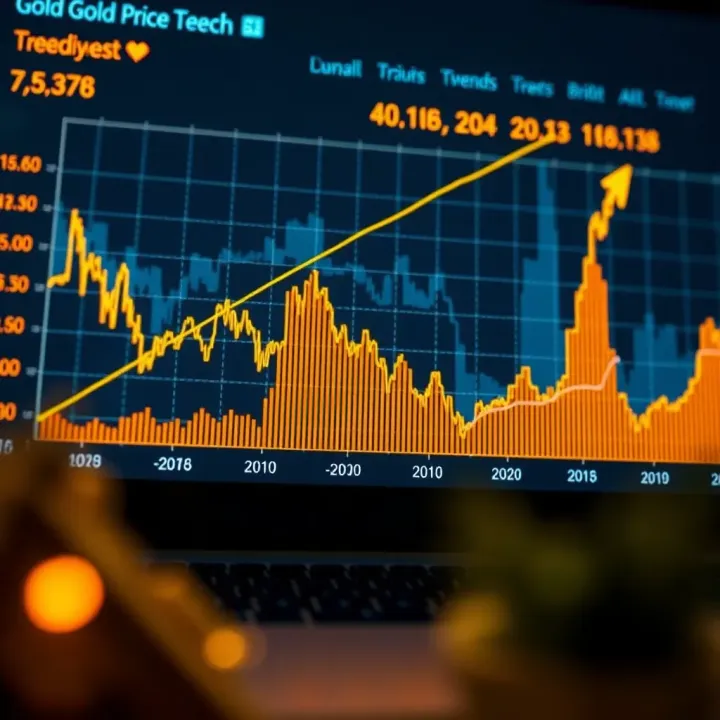
Will Gold Prices Rise Soon? Trends in Pakistan
Wondering if gold prices will rise soon? 📈 This article breaks down local & global factors affecting Pakistan's gold rates for smart investing decisions.
Edited By
Isabella Reed
Understanding the expected price of the US dollar (USD) in Pakistan is vital for traders, investors, and financial analysts alike. The dollar-to-rupee exchange rate affects everything from import costs and inflation to foreign investments and daily consumer prices.
Since Pakistan relies heavily on dollar-denominated imports such as oil and machinery, fluctuations in the dollar's price have a direct impact on the cost of goods and services. For instance, a rise in the USD can push up prices on essential items, affecting household budgets across the country.
Several factors shape the dollar’s expected price in Pakistan:
State Bank of Pakistan (SBP) interventions: The SBP often uses monetary policy tools and forex reserves to stabilise the rupee-dollar rate.
Foreign exchange reserves: Pakistan's reserves play a key role in meeting external debt obligations and supporting currency stability.
Economic indicators: Inflation rates, balance of payments, remittances, and trade deficits influence demand for dollars.
Global market trends: Events like US interest rate changes, geopolitical tensions, and commodity price shifts affect the dollar's strength worldwide.
The combination of domestic economic conditions and international pressures means the dollar rate is always moving, requiring close monitoring by market participants.
For traders and brokers, understanding these dynamics helps anticipate currency movements, optimise trading strategies, and manage risk. Financial analysts rely on timely data on government policy and external factors to project exchange rate trends accurately.
In the sections that follow, we will examine recent trends in Pakistan’s dollar price, detail the economic drivers behind its movement, and explore how government policies and global markets influence its future outlook. This analysis aims to equip professionals in finance with actionable insights into one of Pakistan’s most crucial economic indicators.
Understanding recent trends in the US dollar price is essential for traders, investors, and financial analysts to make informed decisions. The dollar’s movement reflects broader economic conditions, including inflation, trade balances, and policy changes. For example, sharp rises or falls in the dollar rate directly affect import costs and foreign investment flows, impacting businesses and consumers alike.
In the last year, the US dollar against the Pakistani rupee has shown considerable volatility. Starting from around Rs 200 in early 2023, it has crossed Rs 300 at certain points due to mounting current account deficits and declining foreign exchange reserves. This steep increase made imported goods expensive, pushing inflation higher and burdening everyday consumers.
This recent spike is not just a short-term anomaly; it signals deeper structural issues like trade imbalances and fiscal deficits. Traders have closely watched these movements to anticipate further depreciation and hedge their holdings accordingly.
Comparing this cycle with past ones, notably during 2018-19, reveals some patterns. In both periods, sharp currency drops coincided with political instability and rising international commodity prices, particularly oil. However, the 2023 cycle differs in that global economic shifts—such as US Federal Reserve interest rate hikes—have played a bigger role, tightening liquidity and affecting emerging markets like Pakistan.
Also, Pakistan’s forex reserves hit new lows faster this time, which limited the State Bank of Pakistan’s ability to stabilise the rupee. This comparison helps investors and analysts understand the limitations of policy tools during such cycles.
Dollar price fluctuations occur daily in Pakistan’s interbank and open markets. Small changes often result from auction outcomes, remittance inflows, or speculative moves. For instance, during festivals like Eid, increased remittances temporarily support the rupee, causing minor appreciation.
Currency traders and brokers watch these trends closely to adjust pricing in import contracts and foreign exchange deliveries. These short-term moves may appear minor but can compound over weeks to influence business decisions.
Several factors have recently fuelled volatility. First, political uncertainty causes hesitation among investors, spooking capital flows. Second, rising global oil prices have strained Pakistan’s import bill, increasing dollar demand.
Additionally, tightening monetary policy in major economies limits foreign investments, indirectly pressuring the rupee. Speculative trading also adds weight to these swings, especially in thinly settled markets. Understanding these drivers helps professionals anticipate potential dollar movements and manage risk effectively.
Keeping track of both historic and immediate dollar trends is vital for anyone dealing with Pakistan’s financial markets. It provides a clear picture of currency health and signals for timely strategy adjustments.
Key points:
Past year saw sharp rise in dollar rate due to deficits and low reserves
Current cycle differs from previous ones due to global economic shifts
Daily market trends influenced by remittances, auctions, and speculation
Political and commodity factors play big role in recent volatility
This insight into recent trends thus arms market participants with practical knowledge for better forecasting and decision-making.
Understanding the key economic factors that influence the US dollar rate in Pakistan offers valuable insight for investors, traders, and financial analysts. These factors help explain currency movements beyond quick market reactions, guiding better decision-making amid Pakistan’s complex economic environment.

Inflation's influence on currency value: Inflation directly affects the purchasing power of the Pakistani rupee against the US dollar. When inflation rises quickly, Pakistan effectively spends more rupees to buy the same amount of goods, including imported items priced in dollars. This usually weakens the rupee against the dollar as demand for foreign currency grows to pay for costlier imports. For instance, during periods when inflation approached double digits in Pakistan, the dollar rate surged past Rs 280 due to increased import bills and reduced domestic currency confidence.
Persistent inflation pressures undermine the rupee, increasing demand for foreign currency and pushing the dollar rate higher.
Role of the State Bank of Pakistan’s policy rate: The State Bank of Pakistan (SBP) sets the policy interest rate, aiming to control inflation and stabilise the currency. Raising the SBP's policy rate typically attracts foreign investment by offering higher returns on Pakistani assets, which supports the rupee’s value. Conversely, lowering rates might ease borrowing costs but can reduce foreign capital inflows, putting pressure on the currency. Recently, SBP’s gradual hikes to curb inflation helped prevent a sharper devaluation of the rupee, although global factors limited their effectiveness.
Import-export dynamics: Pakistan’s trade balance significantly impacts the dollar’s value. When imports consistently exceed exports, the country faces a gap that requires paying foreign suppliers in dollars, increasing demand for the currency. For example, Pakistan’s import bill, including oil and machinery, often crosses $40 billion annually, while exports hover around $30 billion. This trade deficit means continuous dollar demand, pushing the exchange rate upward unless offset by other inflows.
Status of Pakistan’s forex reserves: Foreign exchange reserves act as a buffer to stabilise the dollar rate by providing the SBP with resources to intervene in the currency market. Adequate reserves enable the SBP to sell dollars during sharp rupee fluctuations. However, Pakistan’s reserves have fluctuated between $8 billion and $12 billion recently, which some analysts consider low given import payments and external debt obligations. Limited reserves increase volatility and riskier conditions for businesses and consumers.
Healthy forex reserves support market confidence by ensuring the SBP can back the rupee during turbulent times.
Together, inflation control, interest rate adjustments, and managing trade deficits with adequate forex reserves provide the State Bank and policymakers tools to influence Pakistan’s dollar rate amid internal and external pressures.
Government and regulatory policies are major factors shaping the value of the US dollar against the Pakistani rupee. These policies determine how the State Bank of Pakistan (SBP) intervenes in the forex market, sets monetary guidelines, and implements taxation and import rules that directly affect dollar demand. For traders and investors, understanding these elements helps anticipate currency movements and manage risks better.
The SBP actively intervenes in the foreign exchange market to stabilise the rupee and avoid excessive volatility. This can involve buying or selling US dollars from its reserves to smooth sharp fluctuations in supply and demand. For example, when the rupee weakens sharply due to external shocks, SBP may sell dollars to support the local currency temporarily. Conversely, if the rupee appreciates too fast, it might purchase dollars to keep exports competitive. Such market operations provide a buffer, though they depend on the central bank’s forex reserves condition.
The SBP’s monetary policies, including adjustments to the policy rate, influence inflation and capital flows, which in turn affect the dollar price. For instance, raising the policy rate often attracts foreign investment seeking higher returns, bolstering the rupee’s value against the dollar. On the other hand, a lower interest rate may trigger capital outflows and weaken the rupee. The SBP’s communication on future monetary stance also guides market expectations, making these policies a key tool for managing currency stability.
Higher customs duties on imports can reduce demand for foreign currency by discouraging the purchase of imported goods. Pakistan often adjusts these duties to manage the trade balance and conserve forex reserves. For example, increasing duties on non-essential luxury items limits dollar outflows, which can support the rupee’s value. However, overly steep duties risk increasing prices for local consumers and may cause inflationary pressures.
The government frequently updates import and export policies to respond to economic conditions. Recent measures include tightening restrictions on non-essential imports and promoting exports through incentives. These steps help improve the trade deficit and ease pressure on the dollar. Traders and businesses should monitor notifications from the Ministry of Commerce and the Federal Board of Revenue (FBR) to stay updated, as such changes affect dollar availability and demand significantly.
Understanding government policies and SBP’s role is essential for navigating Pakistan’s forex market, as these factors directly affect dollar supply, demand, and market confidence.
External factors hold significant sway over Pakistan’s dollar rate, directly and indirectly shaping currency movements. Traders, analysts, and investors closely monitor global developments as they often trigger ripple effects within Pakistan’s economy. Understanding such influences helps stakeholders anticipate shifts and make informed decisions.
Pakistan relies heavily on imported oil to meet domestic energy demands, making global petrol prices a major determinant of its import bill. When international oil prices climb, Pakistan’s import costs rise, putting pressure on foreign currency reserves and triggering demand for dollars. For example, a surge in crude oil prices in 2022 led to an increase of several billion dollars in Pakistan’s import expenditure, exacerbating pressure on the rupee.
This impact is felt beyond the balance of payments. Higher petrol costs increase production and transportation expenses across industries, ultimately pushing consumer prices up. As fuel-dependent sectors face costlier inputs, inflation rises, which has a feedback effect on the dollar rate.
The rupee-dollar exchange rate often moves in response to global commodity price trends. A rise in oil prices tends to weaken the rupee as Pakistan’s dollar demand surges to cover imports. Conversely, when oil prices ease, some pressure on the rupee is relieved. This relationship also extends to other commodities critical to Pakistan, such as wheat and sugar, whose prices on the global market influence foreign exchange flows.
This steady correlation means that currency market participants keep a close eye on commodity futures as an indicator of potential rupee volatility. For example, during periods of falling oil prices, the rupee sometimes regains some strength, providing temporary respite to importers and stabilising inflationary pressures.
Geopolitical tensions in South Asia and surrounding regions strongly influence Pakistan’s dollar rate, affecting investor confidence and currency stability. Events such as border conflicts or diplomatic disputes can cause uncertainty, prompting capital flight or hesitancy among foreign investors.
For instance, heightened tensions along the Line of Control or instability in neighbouring Afghanistan often trigger short-term fluctuations in the rupee as markets react to perceived risks. These moments see increased demand for dollars as a safe haven, usually weakening the rupee.
Foreign direct investment (FDI) and remittances play a stabilising role for Pakistan's foreign exchange reserves and dollar demand. FDI inflows bring in fresh currency, supporting the rupee and enhancing economic activity. However, any sudden drop or slowdown in these inflows can strain reserves and weaken the currency.
Remittances from Pakistanis working abroad, particularly from the Gulf region, remain a steady source of dollars. They provide critical support to the forex reserves and help balance trade deficits. Fluctuations in remittance flows, triggered by global economic conditions or labour market changes overseas, also directly impact the dollar supply and hence the exchange rate.
Keeping abreast of these global factors is essential for anyone dealing with Pakistan’s forex market. They offer practical insights into the underlying pressures and opportunities affecting the rupee-dollar dynamics, enabling better forecasting and risk management.
Fluctuations in the US dollar price directly influence Pakistan’s economy and the everyday lives of consumers. When the dollar strengthens, it raises import costs, pushes inflation higher, and affects businesses that rely on imported raw materials. For consumers, this often means paying more for everyday goods, while companies face rising operational costs. Understanding these implications helps traders and investors anticipate market shifts and make informed decisions.
Import-dependent sectors in Pakistan, such as electronics, machinery, and certain food items, feel the impact of a stronger dollar most. As the dollar rises against the rupee, importers have to pay more in PKR for the same quantity of goods. This increased cost typically passes down to consumers through higher retail prices. For example, the price of smartphones or imported food items can jump noticeably during periods of dollar appreciation, squeezing household budgets, especially among middle and lower-income groups.
Higher import bills also feed into inflation figures, which influence the State Bank of Pakistan’s monetary policy actions. When inflation spikes due to import costs, the SBP may raise interest rates to stabilise the rupee, affecting the broader economy.
Pakistan’s widespread loadshedding issues have created demand for imported generators, UPS systems, and solar panels. These products rely heavily on dollar payments and thus become more expensive when the dollar rate climbs. For instance, small business owners in Karachi or Lahore increasingly struggle as generator prices rise, forcing some to reduce operating hours or invest less in power backup solutions.
Beyond business users, households also feel the pinch. Families who purchase solar batteries or inverters often find that dollar fluctuations significantly affect affordability. This dynamic not only influences consumer behaviour but also the growth prospects of local industries manufacturing backup power solutions, who compete with imports.
Many Pakistani industries depend on imported raw materials like chemicals, textiles, and plastic resin. A rising dollar rate increases the cost of these inputs, squeezing profit margins for manufacturers and exporters alike. For example, textile mills needing synthetic fibres or chemical dyes face higher production costs that either force price hikes or erode competitiveness abroad.
Business owners must then either absorb the increased input costs or pass them to buyers, both of which have drawbacks. Absorption hurts profitability, while higher prices can reduce demand, especially in export markets sensitive to pricing.
While exporters theoretically benefit from a weaker rupee—since their earnings in dollars convert to more rupees—an unstable or sharply rising dollar can make planning difficult. Sudden currency shifts disrupt contract pricing, increase hedging costs, and create cash flow uncertainties.
Entrepreneurs also face challenges when sourcing capital or imports priced in dollars. Fluctuating exchange rates raise the risk premium for financing and complicate budgeting. For instance, a manufacturer importing machinery from China on credit might see repayment costs escalate unexpectedly, affecting long-term viability.
The dollar’s value acts like a pulse, reflecting and shaping pressures across Pakistan’s economy. Traders, investors, and business leaders keep a close eye on these movements to navigate risks and spot opportunities.
Understanding how dollar fluctuations ripple through inflation, consumer prices, and business costs equips stakeholders to better manage financial strategies amid Pakistan’s evolving economic landscape.
Wondering if gold prices will rise soon? 📈 This article breaks down local & global factors affecting Pakistan's gold rates for smart investing decisions.
Explore Cardano's ADA price trends 📈 with insights on network updates, market sentiment, and crypto shifts. Stay informed about ADA's potential in Pakistan 🇵🇰.
📉 Explore BGB price trends, key factors affecting its value, and market insights tailored for Pakistan's investors and traders. Stay informed with expert tips!

📉 Get detailed insights on XAU/USD movements affecting Pakistan's traders. Explore market trends, economic impacts, and smart trading strategies. 💰
Based on 15 reviews