
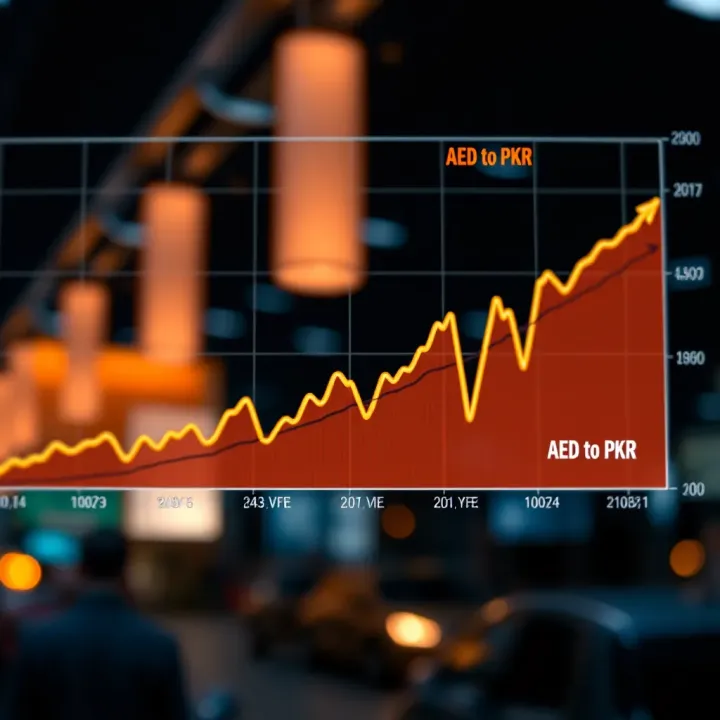
AED to PKR Exchange Rate: Trends and Forecasts
📊 Explore AED to PKR exchange trends, key economic and geopolitical factors shaping currency shifts, and expert forecasts for informed financial decisions. 💹
Edited By
Daniel Hughes
The USD to PKR exchange rate plays a significant role in Pakistan’s economic landscape. Traders, investors, and financial analysts closely watch this pair due to its impact on imports, exports, inflation, and overall market sentiment. Understanding the drivers behind dollar to rupee movements helps stakeholders make informed decisions.
Recent trends show considerable volatility driven by fluctuating international markets and internal challenges such as fiscal deficits and political shifts. For example, in FY 2023-24, the PKR saw marked depreciation against the dollar amid rising external debt servicing costs and low foreign exchange reserves.
Economic fundamentals shape the exchange rate direction. Key factors include:
Trade balance: Pakistan's import bill often exceeds exports, creating pressure on the rupee.
Foreign direct investment (FDI) and remittances: These inflows bolster PKR stability.
Monetary policy: Decisions by the State Bank of Pakistan (SBP) on interest rates influence currency demand.
Inflation rates: Higher inflation can weaken the rupee's buying power.
Political developments also carry weight in exchange rate shifts. Uncertainty during election periods or policy changes often trigger speculative moves and exchange rate fluctuations.
Exchange rate trends reflect a tug of war between external pressures and domestic economic policies.
To forecast the USD to PKR rate realistically, one must consider global dollar strength, Pakistan’s economic performance, and geopolitical events. For instance, US Federal Reserve monetary policy affects the dollar's global value, indirectly impacting PKR.
In practical terms, businesses importing raw materials or services from abroad must anticipate currency risks to manage costs effectively. Similarly, investors dealing in equities or foreign exchange require constant monitoring to adjust their portfolios.
This article will dissect these trends and influences to provide Pakistani market participants with a clear overview of what to expect from the USD/PKR exchange rate.
Keeping an eye on the current status of the dollar to Pakistani rupee (PKR) exchange rate helps traders, investors, and businesses make informed decisions. Since the exchange rate affects import costs, export competitiveness, and inflation, knowing where the market stands right now is valuable. For example, when the dollar strengthens against the rupee, importers face higher costs, pushing prices up for consumers.
The dollar to PKR rate has seen fluctuations recently owing to both internal and external triggers. In early 2024, the rate hovered around Rs 280, showing some volatility due to political developments and monetary policy changes. Throughout February and March, market activity reflected typical end-of-fiscal-year adjustments, with some speculative trading influencing short-term shifts. Traders also noted increased demand for the dollar from the import sector, especially for machinery and fuel.
Market behaviour lately suggests cautious optimism among investors. The rupee's slight recovery against the dollar was supported by remittances flowing in at a steady pace. However, concerns over Pakistan’s widening trade deficit continue to pressure the currency. Local brokers reported that currency swaps and forward contracts have grown in popularity for hedging exchange rate risks.
The exchange rate doesn't move in isolation; it responds to economic ups and downs both here and abroad. Globally, the US Federal Reserve’s interest rate decisions and American economic data directly impact the dollar’s strength. When the US hikes rates, the dollar tends to appreciate, making PKR depreciate if Pakistan's economic indicators lag behind.
Locally, Pakistan’s current account deficit and foreign exchange reserves play a key role. For instance, a drop in State Bank of Pakistan’s foreign reserves limits the country's ability to defend the rupee during market turbulence. Additionally, domestic inflation, fuelled by rising petroleum prices and loadshedding costs, weakens economic stability and indirectly affects the currency.
Understanding these economic factors helps stakeholders anticipate exchange rate movements and plan accordingly, whether for import contracts, investment timing, or budgeting.
By keeping tabs on recent market trends and economic conditions, traders and analysts can navigate the unpredictable dynamics of the dollar to PKR exchange rate with greater confidence.
Understanding the key elements affecting the dollar to Pakistani rupee (PKR) exchange rate is vital for traders, investors, and financial analysts. These factors not only shape short-term fluctuations but also determine long-term trends that influence Pakistan’s economy. Among the major influences are the monetary policy pursued by the State Bank of Pakistan (SBP), political stability within the country, and the trade balance alongside foreign exchange reserves.
The SBP's monetary policy plays a direct role in setting the exchange rate environment. By adjusting the policy rate, the SBP influences interest rates across the economy, which affects capital flows and demand for the PKR. For example, if SBP raises interest rates to contain inflation, it can attract foreign investment, thereby strengthening the rupee. Conversely, cutting rates might ease borrowing costs but can put pressure on PKR due to outflows seeking higher returns elsewhere.
SBP also intervenes in the forex market to stabilise the currency when volatility spikes. In 2023, occasional intervention helped curb rapid depreciation by offering foreign currency from reserves. These measures signal the central bank's commitment to keeping the exchange rate within manageable limits, which matters for confidence among exporters and importers.
Political conditions weigh heavily on investor sentiment and currency value. Periods of political uncertainty or tension in Pakistan tend to weaken the PKR as doubts rise over policy continuity and economic reforms. For instance, frequent changes in government or delays in budget announcements can trigger foreign investors to hold back, leading to reduced demand for PKR.
On the other hand, stable governance and clear economic policies boost confidence and economic activity, providing steady demand for the rupee. Political stability reduces exchange rate risk, encouraging foreign direct investment (FDI), which bolsters foreign currency reserves and supports the PKR.
The trade balance—the difference between exports and imports—directly impacts PKR’s strength. Pakistan’s persistent trade deficit means more dollars flow out to pay for imports than come in from exports, putting downward pressure on the rupee. A widening deficit often coincides with currency depreciation.
Foreign exchange reserves act as a buffer to support PKR against external shocks. Sufficient reserves allow SBP to intervene effectively in forex markets or repay external debt without destabilising the currency. For example, reserve levels close to or above $15 billion often reassure markets. However, if reserves fall below critical thresholds, concerns over the country's ability to meet obligations mount, triggering sharp PKR drops.
Keeping tabs on the SBP's policy stance, Pakistan’s political climate, and external account health offers a clearer picture of the PKR’s possible direction, helping market participants make informed decisions.
External events play a significant role in shaping the dollar to PKR exchange rate. These events, often out of direct control of local policymakers, can cause sudden shifts in currency value. Pakistan’s economy is quite sensitive to global trends and developments, so understanding these external factors helps traders and investors anticipate market movements better.
Global economic trends, particularly the strength of the US dollar, have a direct impact on the PKR exchange rate. When the US economy performs well—supported by factors like rising interest rates set by the Federal Reserve, strong GDP growth, or low unemployment—the dollar often strengthens against other currencies, including the PKR. For instance, during periods when the Federal Reserve hikes interest rates aggressively, investors prefer holding dollars for better returns, pushing the PKR down.
Conversely, if the US faces economic challenges such as inflation spikes or geopolitical risks, the dollar might weaken, giving some relief to the PKR. The dollar’s status as a global reserve currency means its fluctuations influence Pakistan’s imports, foreign debt repayments, and overall trade balance.
Foreign direct investment (FDI) and remittances from overseas Pakistanis are vital external sources of dollars that affect the PKR exchange rate. Higher FDI inflows indicate foreign investor confidence and increase foreign currency availability, helping stabilise or strengthen the rupee. For example, during periods when China-Pakistan Economic Corridor (CPEC) projects advance, enhanced FDI flows have supported the PKR.
Remittances also provide a steady inflow of foreign currency every month, cushioning any sudden demand for dollars. Countries like Saudi Arabia, UAE, and the UK host large Pakistani expatriate communities who send billions of dollars back home. A drop in remittances, due to economic slowdowns abroad or travel restrictions, can tighten dollar supply in Pakistan’s market, causing the rupee to weaken. On the other hand, an increase in remittances boosts reserves and supports currency stability.
External economic factors like US dollar trends and foreign inflows may not be directly manageable but understanding their impact equips market participants with an edge when navigating the unpredictable foreign exchange environment.
In short, keeping an eye on such external developments—US economic policies, global market sentiment, investment flows, and remittance patterns—gives Pakistani investors and traders critical insight into likely currency behaviour. This knowledge supports better decision-making in forex trading, hedging, and business planning related to import-export activities.
Forecasting the dollar to PKR exchange rate plays a critical role for traders, investors, and businesses in Pakistan. Knowing where the exchange rate might move helps companies plan import costs, exporters set competitive prices, and financial institutions manage risks. For instance, a textile exporter in Faisalabad will gain by predicting a weakening rupee, allowing them to price goods accordingly and maximise foreign earnings.
Precise forecasting also assists investors in deciding when to enter or exit currency markets or hedge their portfolios against currency depreciation. Similarly, policy-makers rely on these forecasts to gauge economic stability and adjust monetary policy if needed.
Currency analysts use a mix of quantitative models and qualitative insights to forecast the dollar to PKR rate. They consider indicators like interest rate differentials set by the State Bank of Pakistan (SBP), foreign exchange reserves, and current account deficits. For example, during periods of rising international commodity prices, analysts might expect a depreciation in PKR due to increased import bills.
Market expectations are often shaped by announcements from central banks or political developments. When the SBP raises the policy rate, it usually signals support for the rupee, encouraging positive market sentiment. Analysts also monitor global events, such as shifts in US Federal Reserve policy, as they impact the dollar's global strength and thus its performance against PKR.
However, forecasts may differ widely, reflecting uncertainties in Pakistan’s economic and political landscape. In 2023, some analysts projected the dollar would reach Rs 320, while others anticipated it staying closer to Rs 295, depending on assumptions about IMF programmes and trade balances.
Speculation heavily influences the exchange rate beyond fundamental economic factors. When traders anticipate a currency’s movement, their buying or selling activity itself can shift the rate. If rumours spread about potential delays in foreign aid or political instability, the result could be a sudden spike in demand for dollars, pushing the PKR lower.
Market sentiment often reacts sharply to unexpected news. For example, after a surprise announcement of interest rate changes or geopolitical tensions, speculative trades may induce short-term volatility. This behaviour can cause the exchange rate to deviate temporarily from levels justified purely by economic data.
Currency markets in Pakistan are particularly sensitive to speculation due to relatively thin liquidity compared to major currencies. Traders should watch sentiment indicators and trading volumes alongside fundamental analysis to better time their decisions.
In summary, forecasting the dollar to PKR exchange rate requires a balanced view combining analyst predictions, underlying fundamentals, and the unpredictable influence of market sentiment. This blend helps market participants navigate risks and opportunities in the forex market with greater confidence.
Understanding the practical implications of fluctuations in the dollar to PKR exchange rate is essential for anyone dealing with Pakistan’s economy. The rupee’s value affects a wide range of sectors—from trade to everyday expenses—making it necessary for importers, exporters, consumers, and policymakers to keep a close eye on exchange rate trends. Small shifts in the dollar rate can ripple through businesses and households alike, altering costs, profit margins, and purchasing power.
Currency depreciation increases the cost of imported goods since businesses need more rupees to buy the same quantity of dollars. For example, if the dollar climbs from Rs 280 to Rs 300, an importer paying $10,000 for machinery faces an extra Rs 200,000 expense. This often forces importers to raise prices to protect margins, directly impacting consumers who rely on imported products like electronics, pharmaceuticals, and machinery parts.
On the flip side, exporters benefit from a weaker PKR, as they receive more rupees per dollar earned. Textile manufacturers, a major export player in Pakistan, typically see improved competitiveness abroad when the rupee weakens. However, this advantage can be offset if they depend heavily on imported raw materials priced in dollars, causing input costs to rise.
Consumers face the brunt of exchange rate volatility in more subtle ways too. Increased import prices feed into everyday goods and services, while transport and fuel costs rise due to higher foreign currency payments for oil. Inflationary pressures often build up, eroding buying power.
The dollar to PKR rate plays a significant role in shaping Pakistan’s inflation. As imports become costlier with a depreciated rupee, essential items like petroleum, electrical parts, and consumer goods see price hikes. For instance, a surge in dollar value against the rupee tends to increase petrol prices immediately, translating into higher transport costs and eventually affecting groceries and other necessities.
Food inflation is particularly sensitive to exchange rates because Pakistan imports significant quantities of edible oils, wheat, and fertilisers. A weaker rupee means these imports cost more, prompting farmers and suppliers to raise prices across the board.
Persistent depreciation can trigger a wage-price spiral, where rising living costs pressure employers to increase salaries, which in turn push prices higher, fuelling inflation further.
This cycle affects the average Pakistani household’s budget, reducing disposable income and slowing economic growth. Policymakers must thus balance exchange rate management to prevent runaway inflation without choking exports or foreign investment.
In summary, exchange rate movements touch daily lives and major industries alike. Traders and investors should consider these practical effects when analysing currency trends, while businesses and consumers need to anticipate cost shifts to plan accordingly.
📊 Explore AED to PKR exchange trends, key economic and geopolitical factors shaping currency shifts, and expert forecasts for informed financial decisions. 💹
Explore detailed insights on AUD to PKR rates 💱, including economic indicators, geopolitical impacts, and market trends to aid your currency exchange decisions.

📊 Explore key factors shaping USD to PKR rates: history, economics, policies & global trends. Insights for investors, businesses & consumers in Pakistan.
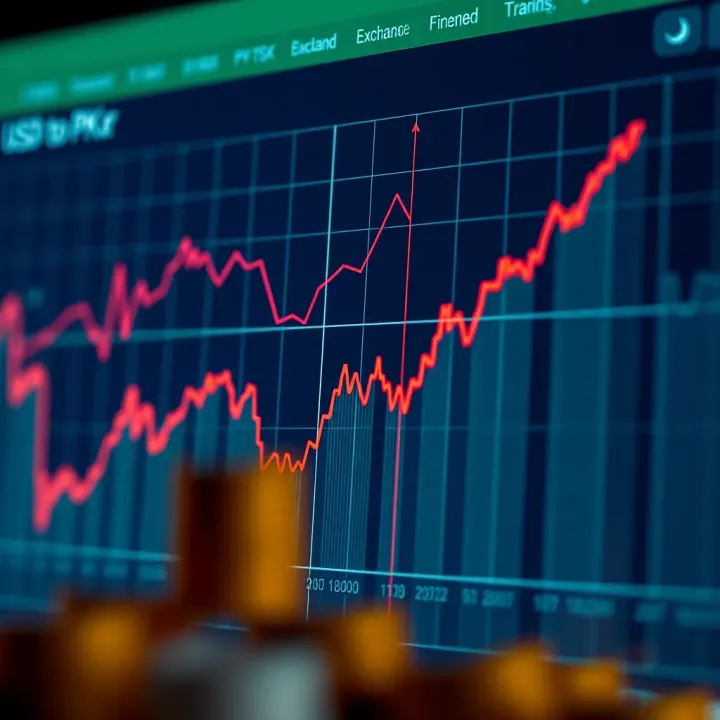
📉 Get detailed insights into USD to PKR trends, key economic and political factors, and practical tips to understand and adapt to exchange rate movements.
Based on 12 reviews