
WLD Price Prediction: Trends and Future Outlook
📈 Explore WLD price predictions with insights on market trends, key drivers, expert forecasts, and what lies ahead in the crypto world 🌐
Edited By
Emily Fletcher
Ethereum remains one of the most influential digital assets, widely traded and analysed worldwide, including in Pakistan. Its price is driven by several factors that investors and traders closely monitor to make informed decisions.
A key influence is Ethereum’s continuous technological upgrades. The transition to Ethereum 2.0, focusing on proof-of-stake consensus, promises lower energy consumption and improved transaction speeds. For example, the recent update significantly reduced gas fees, attracting more users and boosting demand.
Market sentiment also plays a big role. Positive news, such as partnerships with major corporations or enhancements in decentralised finance (DeFi) platforms running on Ethereum, tends to push prices up. On the other hand, bearish trends in global markets or regulatory crackdowns can trigger sell-offs.
Regulatory uncertainties affect Ethereum’s outlook in Pakistan and the global market. The State Bank of Pakistan (SBP) has not yet formalised clear guidelines on cryptocurrency usage, which adds to investor caution. Yet, growing awareness and discussions around regulations indicate potential for more defined rules, which could influence price stability positively.
Expert opinions vary but often highlight Ethereum’s versatility beyond just being a cryptocurrency. Its role in supporting smart contracts and numerous applications makes its price trajectory closely linked to broader blockchain adoption trends.
As Ethereum evolves technologically and faces changing market and regulatory conditions, understanding its price trends requires a holistic view of these interacting factors.
To sum up, predicting Ethereum’s price requires attention to:
Technological advancements and network upgrades
Global and local market sentiment
Regulatory environment in Pakistan and abroad
Adoption rate of Ethereum-based applications
This article aims to unpack these aspects, providing practical insights to help you navigate Ethereum’s complex price movements effectively.
Ethereum stands as a major player in the cryptocurrency world, offering more than just a digital currency. Understanding its fundamentals and market role is essential for anyone aiming to predict its price trends or considering investment. Clarifying how Ethereum operates helps investors grasp what drives its value and how it differs from other cryptocurrencies.
Ethereum is built on blockchain technology, a distributed ledger that records transactions across numerous computers. This setup makes Ethereum resilient to tampering or downtime, as no single point of failure exists. For traders and analysts, this provides confidence in transaction security and transparency, which directly influences market trust and liquidity.
Beyond being a digital currency, Ethereum supports smart contracts—self-executing agreements coded directly into the blockchain. These contracts automate processes, reducing the need for middlemen in transactions. For example, a real estate deal could automatically transfer ownership once payment clears. Such capabilities attract developers and businesses, boosting Ethereum’s demand and impacting its price.
Ether, or ETH, is Ethereum’s native coin, used both as a currency and to pay for executing smart contracts. It powers activities within the network, so demand for ETH grows with increased usage of Ethereum-based applications. This dual role makes ETH’s price sensitive to both general market sentiment and technological adoption, influencing investment decisions.
Ethereum consistently ranks second by market capitalisation, after Bitcoin, boasting high liquidity on various exchanges. This volume allows investors to buy or sell large amounts without drastically affecting the price. Liquidity also reduces the risk of price manipulation, which is a significant factor for institutional investors considering entry.
While Bitcoin serves primarily as "digital gold," Ethereum offers broader functionality through smart contracts and decentralised apps (DApps). This utility has cultivated an active developer community, distinguishing Ethereum from many altcoins focused solely on payments. For investors weighing options, Ethereum’s versatility presents different growth drivers than Bitcoin’s store-of-value narrative.
Ethereum’s unique combination of blockchain security, smart contract capabilities, and market presence anchors its price dynamics, making it crucial to understand these elements before making investment decisions.
Understanding the key factors that influence Ethereum’s price helps investors make informed decisions. Ethereum’s value reacts strongly to technological progress, market demand, and shifting regulatory landscapes. Each of these elements affects not only price but also future adoption and investor confidence.

The Ethereum 2.0 upgrade is a major technological evolution designed to improve network performance. This upgrade aims to increase transaction speed, reduce fees, and enhance energy efficiency. For investors, Ethereum 2.0 signals a move toward a more scalable and sustainable platform, which could boost demand and, in turn, price.
Ethereum’s transition to proof-of-stake (PoS) replaces the traditional proof-of-work (PoW) consensus mechanism. PoS demands far less energy and allows holders to earn rewards by staking their tokens. This shift lowers environmental concerns and appeal among eco-conscious investors, while also narrowing the supply growth rate, potentially increasing ETH’s scarcity.
Scalability improvements and layer-2 solutions tackle Ethereum’s congestion and high gas fees, two barriers that have restricted broader use. Layer-2 methods like rollups increase transaction throughput by processing off-chain operations while still anchoring security on the mainnet. These advancements make Ethereum more practical for everyday applications and financial products, encouraging more users and developers to commit, which helps sustain value.
Ethereum’s price responds closely to demand and supply aspects. Limited token supply combined with growing use cases can drive prices upward. Conversely, if many holders decide to sell simultaneously, prices may dip. Keeping track of token staking behaviour and liquidity on exchanges reveals these trends in real time.
The role of institutional and retail investors significantly shapes the market. Institutional players like funds and corporations generally bring stability and large capital inflows, often pushing prices higher. Retail investors, on the other hand, can cause sharper fluctuations, driven by news or market sentiment. In Pakistan, rising retail interest in digital assets has increased Ethereum’s trading volumes on platforms like Binance and local exchanges.
Global economic conditions also impact Ethereum. During times of inflation or currency devaluation, cryptocurrencies sometimes attract investors seeking to protect wealth. However, macroeconomic uncertainties or tightening monetary policies can reduce appetite for risky assets, including ETH. Thus, Ethereum’s price movement often mirrors international financial trends.
In Pakistan, the regulatory stance remains cautious but evolving. Current policies affecting cryptocurrency in Pakistan discourage formal transactions but do not outlaw holding or trading on crypto exchanges outright. This ambiguity can limit institutional participation but encourages retail investors to seek legal clarity before committing large funds.
International regulatory trends influence Ethereum’s global outlook. Countries increasingly introduce frameworks to oversee crypto activities, which can either bolster confidence or restrict usage. For example, EU regulations on digital assets or US SEC rulings impact investor sentiment worldwide. Staying updated with such developments helps investors anticipate regulatory risks or opportunities affecting Ethereum's price.
Ethereum’s price hinges on a mix of innovation, market forces, and regulatory attitudes. Observing these factors can guide both seasoned traders and newcomers in managing their investments thoughtfully.
Understanding recent trends and detailed analysis of Ethereum’s price movement helps investors and traders make better decisions. This section focuses on real market data and behaviour, which complements theoretical knowledge with practical insights. Keeping track of recent price actions reveals how Ethereum responds to different catalysts, making it easier to anticipate future movements.
Ethereum’s price has experienced significant ups and downs since its launch. For example, after crossing Rs 2 lakh in May 2021, it saw sharp corrections, falling to nearly half by July. Such volatility indicates Ethereum's price sensitivity to market sentiments and external factors. For traders, recognising this can help in timing entry and exit points more wisely.
Volatility also reflects Ethereum's risk profile. Higher price swings mean greater short-term risk but potentially larger rewards. Investors should be prepared for sudden price changes, which often follow influential events or announcements.
Political decisions, technological upgrades, and even global economic situations impact Ethereum’s price. For instance, the delayed rollout of Ethereum 2.0 led to price adjustments as traders reconsidered the network’s performance prospects. Similarly, announcements related to stricter crypto regulations in major markets have led to price dips.
Moreover, global inflation trends or changes in interest rates can shift investor interest between cryptocurrencies and traditional assets. During times of uncertainty, Ethereum’s price can mirror overall market risk appetite.
Identifying trend patterns such as uptrends or downtrends helps predict where Ethereum’s price might head next. Support levels mark price points where buying interest tends to appear, preventing further decline, while resistance levels indicate where selling pressure may cap upward moves.
For example, if Ethereum repeatedly bounces off Rs 140,000 as support, many traders view it as a strong buying zone. Breaking these levels decisively often triggers significant price moves, providing clues for entry or exit.
Traders rely on tools like Moving Averages (MA), Relative Strength Index (RSI), and Fibonacci retracement to analyse Ethereum’s price. The 50-day and 200-day MAs, for instance, show longer-term trends and possible reversal points. An RSI reading above 70 may indicate overbought conditions, signalling a potential pullback.
Fibonacci retracements help spot likely support and resistance zones based on prior price swings. Using these tools collectively offers a more reliable picture rather than depending on one indicator alone.
Keeping an eye on current trends and technical indicators allows investors to stay ahead of market shifts and manage their Ethereum investments with informed strategies.
The combination of historical price context and technical analysis guides practical decision-making in today’s rapidly changing crypto environment, especially for investors in Pakistan where volatility can impact trading opportunities and risk management alike.
Forecasting the future price of Ethereum is essential for investors and traders aiming to make informed decisions amid a volatile market. By anticipating potential price movements, you can manage risks better and spot opportunities earlier. For instance, understanding market sentiment or regulatory changes helps avoid unexpected losses or capitalise on growth phases. Hence, price forecasting is not just guesswork but a practical tool grounded in analysis and trends.
Financial experts and cryptocurrency analysts study blockchain developments, market trends, and global factors to predict Ethereum’s price. These predictions often consider data like network upgrades, trading volumes, and macroeconomic indicators. For example, many analysts anticipated price surges following the Ethereum 2.0 upgrade announcement due to its promise of improved scalability and energy efficiency. Investors in Pakistan, who often keep a close eye on global expert opinions, can gauge market sentiment and adjust their portfolios accordingly.
Market rumours and news reports have a strong influence on Ethereum’s short-term price fluctuations. News about regulatory crackdowns, technological glitches, or partnerships can trigger sudden price spikes or dips. For example, speculation around legal actions by regulators or delays in network upgrades has caused noticeable price swings in recent years. Hence, staying updated with reliable news sources is crucial, especially for Pakistani investors who face changing regulations locally and globally.
Regulations are one of the biggest risks impacting Ethereum’s future price. Changes in Pakistan's cryptocurrency policies or international laws can affect trading volumes and investor confidence. For instance, a strict crackdown or excessive taxation could discourage investment, reducing demand and pressuring prices downward. Conversely, clear and supportive regulations could encourage wider adoption and institutional participation, driving the price up.
Ethereum’s roadmap includes technical upgrades aimed to enhance speed and lower transaction costs. However, delays or failures in implementing these upgrades can put downward pressure on the price. For example, issues during the transition to Proof of Stake (PoS) could shake investor trust temporarily. On the flip side, successful upgrades boost network efficiency and attract more users, offering strong upside potential.
Adoption levels directly impact Ethereum’s demand. In Pakistan, rising interest among developers and businesses using Ethereum-based decentralized applications (dApps) could expand the user base and support the price. Globally, greater use of Ethereum in finance, gaming, and NFTs also signals healthy demand. Higher adoption typically reduces price volatility while providing a foundation for steady growth.
Analysts suggest monitoring both local and global regulatory signals closely while staying updated on Ethereum’s technical progress. This balanced approach helps investors prepare for potential risks while identifying worthwhile opportunities in the market.
For Pakistani investors, understanding the practicalities of buying and holding Ethereum is essential given the growing interest and increasing market participation. Ethereum, as a prominent cryptocurrency, presents opportunities but also demands awareness of local infrastructure, regulations, and security practices specific to Pakistan's financial environment.
Reliable platforms are foundational for safe Ethereum investment. Pakistani investors typically turn to local cryptocurrency exchanges like Binance (which operates in Pakistan), or Paxful and LocalBitcoins, which facilitate peer-to-peer trading with regional payment options like JazzCash and Easypaisa. These platforms usually support PKR deposits, making it straightforward to invest without currency conversion hassles. However, before selecting a platform, it’s crucial to verify its reputation, customer support, and compliance with local regulations to avoid scams and operational risks.
Security comes next in line for holding Ethereum. Many investors opt for hardware wallets such as Ledger Nano S or Trezor, which provide offline storage to protect private keys against online threats. For those who prefer mobile or desktop options, software wallets like Trust Wallet or MetaMask offer user-friendly interfaces but require cautious handling, including strong passwords and enabling two-factor authentication (2FA). Remember, keeping backup seed phrases safely offline is key, as losing them means losing access to Ethereum holdings permanently.
The Federal Board of Revenue (FBR) has begun recognising cryptocurrencies as taxable assets, which places new obligations on Ethereum investors in Pakistan. While detailed guidelines are still evolving, the FBR considers gains from cryptocurrency trading as taxable income, subject to capital gains tax or income tax depending on the investor’s profile. Practically, this means Pakistani investors must track purchase prices, sale proceeds, and holding periods accurately to compute taxes correctly for filing.
Reporting requirements are another critical aspect. Investors should declare cryptocurrency holdings and earnings when submitting annual tax returns, especially if they cross the exemption limits. Non-compliance can invite penalties or legal scrutiny. Besides tax liabilities, investors should stay alert to any updates from FBR or SECP on further compliance, as Pakistan’s regulatory framework for crypto is still maturing. Staying informed ensures you avoid unintended breaches and maintain a clean financial record.
Being proactive with secure transactions and tax compliance not only protects your investment but also positions you well as the cryptocurrency market in Pakistan grows more regulated and mainstream.
📈 Explore WLD price predictions with insights on market trends, key drivers, expert forecasts, and what lies ahead in the crypto world 🌐
📈 Explore AXS price trends, key factors shaping Axie Infinity's future, and expert insights to guide your crypto investment and trading choices wisely.
🌐 Dive into Arbitrum price trends, risks, and adoption insights. Get expert views and compare with peers to understand its future potential! 📈
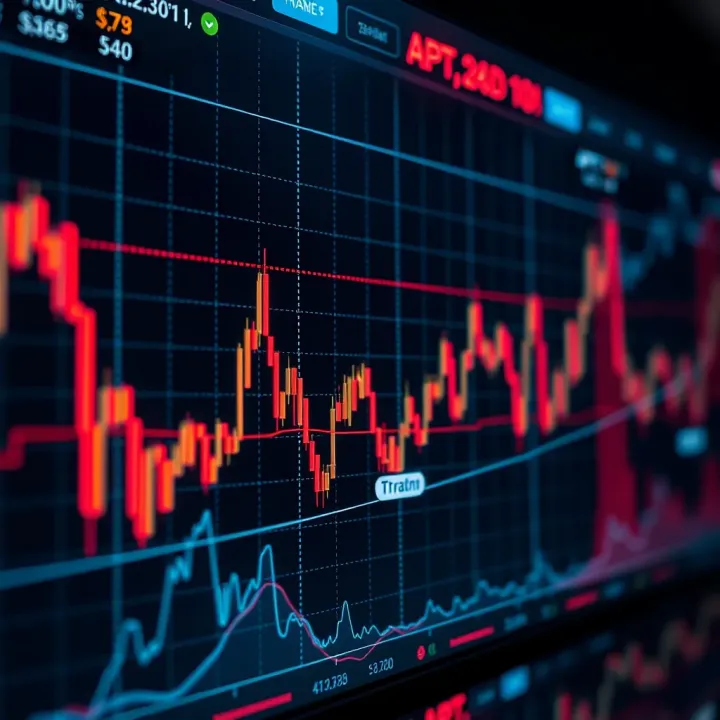
📈 Explore APT price trends with expert insights, market data, and technical analysis. Learn how to predict APT prices wisely and understand the risks involved.
Based on 10 reviews