
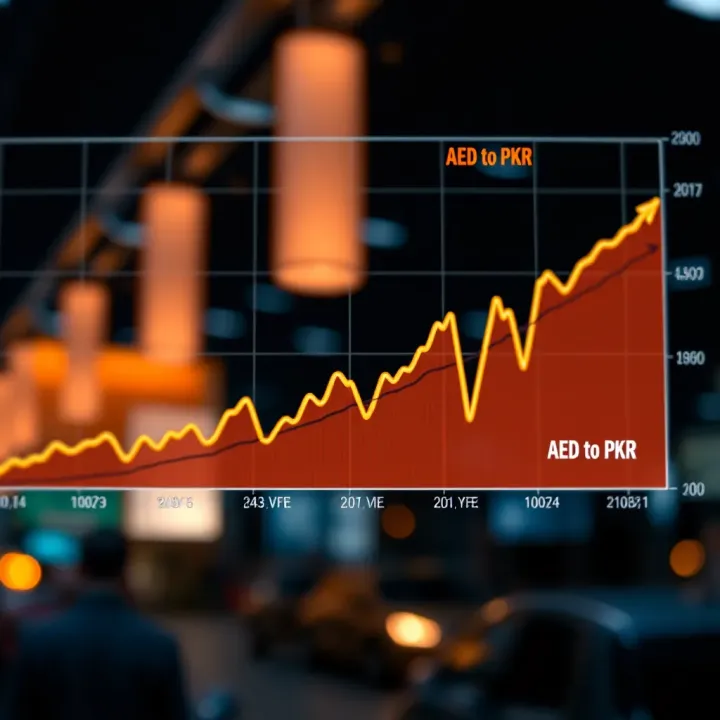
AED to PKR Exchange Rate: Trends and Forecasts
📊 Explore AED to PKR exchange trends, key economic and geopolitical factors shaping currency shifts, and expert forecasts for informed financial decisions. 💹
Edited By
Charlotte Evans
The euro to Pakistani rupee (PKR) exchange rate is closely watched by traders, investors, and businesses involved in international trade or remittances. This exchange rate reflects how much PKR one euro can buy and fluctuates based on various economic, political, and market factors in both the Eurozone and Pakistan. Understanding these drivers helps forecast future movements and make smarter financial decisions.
At its core, the euro-PKR rate responds to supply and demand shifts in forex markets. For example, if Pakistan imports more from Europe, demand for euros rises, pushing the euro’s value upward against the rupee. On the other hand, if Pakistanis abroad send more remittances in euros, the local PKR may strengthen.

Several economic indicators influence this currency pair:
Interest rates set by the State Bank of Pakistan and the European Central Bank affect investor preferences for holding assets in each currency.
Inflation trends showing the rupee’s purchasing power versus the euro.
Balance of trade data, including export and import volumes.
Foreign investment flows impacting currency demand.
Geopolitical events can sharply move exchange rates as well. Political instability or policy changes within Pakistan or the Eurozone cause market uncertainty, triggering swings in the euro to PKR rate. Recent trade agreements or sanctions have shown how these shifts occur quickly.
Traders should watch scheduled economic announcements and political developments closely since these often precede volatile forex fluctuations.
Analysing historical data alongside current trends offers insight into where the euro-PKR rate might head. For instance, the rupee’s gradual depreciation in recent years has reflected rising trade deficits and inflationary pressures in Pakistan, while eurozone economic recovery supports a stronger euro.
By tracking these tangible indicators, investors and businesses can better plan currency exchanges, hedge risks, and capitalise on favourable rates.
In the next sections, we will explore in detail the key factors shaping this exchange rate and examine expert forecasts to guide practical forex decisions.
Understanding the euro to Pakistani rupee (PKR) exchange rate is essential for anyone involved in trade, investment, or currency trading between Europe and Pakistan. This rate not only reflects the value of the euro against the PKR but also signals broader economic conditions and market confidence in both regions. For investors and traders, staying updated with this exchange rate helps in making informed decisions on forex markets and risk management.
Recent fluctuations in the euro to PKR rate have been quite noticeable in response to various global and domestic events. For example, in the first half of 2024, political developments in Europe and volatile market conditions due to inflation concerns led to the euro experiencing both upward and downward swings against the PKR. These fluctuations affect the cost of imports and exports, foreign remittances, and investment flows, making it crucial for businesses and financial analysts to monitor.
Looking back at the key historical movements and milestones, the euro to PKR exchange rate has seen significant shifts during global crises and economic reforms. In 2020, the onset of the COVID-19 pandemic caused the euro to weaken against the PKR temporarily, as Pakistan's currency held relatively steady due to aid inflows and central bank interventions. Another milestone occurred in 2022, when inflationary pressures and political uncertainty in Pakistan led to a sharp depreciation of the PKR, pushing the euro rate higher. Tracking such historical contexts helps predict possible future trends.
The exchange rate plays a direct role in trade and import-export impact for Pakistan. European countries remain key markets for Pakistani goods such as textiles, leather products, and surgical instruments. When the euro strengthens against the PKR, Pakistani exporters earn more in rupee terms, which can boost profits. Conversely, a weaker euro makes European imports more expensive, increasing costs for businesses relying on machinery or raw materials from Europe.
On the other hand, remittances and foreign investment are heavily influenced by this rate. Many Pakistanis working in European countries send remittances back home. A favourable euro to PKR rate means higher rupee value for these remittances, supporting household incomes and domestic consumption. Similarly, foreign investors from Europe consider currency trends when assessing investment risks and returns. Stable or appreciating PKR against the euro can encourage more direct investment into Pakistan's markets and industries.
Monitoring the euro to PKR exchange rate offers practical benefits beyond currency conversion; it highlights economic health and guides critical financial decisions for traders, businesses, and policymakers alike.
Traders can time conversions to gain better margins.
Importers and exporters can plan procurement or sales strategically.
Investors gauge entry and exit points for euro-denominated assets.
This overview sets the stage for deeper analysis of economic, geopolitical, and market factors shaping the EUR/PKR trends ahead.
Economic factors play a significant role in determining the euro to PKR exchange rate. Understanding these elements is essential for traders, investors, and businesses involved in forex transactions between Europe and Pakistan. Economic indicators reflect the strength of each economy, shaping currency demand and supply.
The European Central Bank (ECB) and the State Bank of Pakistan (SBP) manage monetary policies that directly influence their currencies' value. For example, the ECB controls the eurozone’s interest rates and money supply to maintain inflation targets and economic stability. Similarly, the SBP sets Pakistan’s benchmark interest rates and regulates money flow in the economy.
When the ECB raises interest rates, the euro tends to strengthen because higher returns attract foreign capital. Conversely, if the SBP increases rates, the PKR might gain value as investors seek better yields locally. These central banks’ decisions reflect economic conditions and expectations, impacting traders’ confidence and exchange rate movements.
Interest rate differences between the eurozone and Pakistan often drive short-term currency fluctuations. If the ECB offers a higher interest rate compared to the SBP, investors might prefer euro-denominated assets, increasing demand for the euro and pushing the EUR/PKR rate higher. On the other hand, if Pakistan’s rates rise sharply—like during inflation spikes or economic stress—the attractive yields might support the PKR despite other concerns.
Inflation rates significantly affect exchange rates. When a country experiences high inflation, its currency usually loses value because purchasing power declines. For instance, if Pakistan's inflation outpaces the eurozone’s, the PKR weakens against the euro as imported goods become costlier, boosting demand for foreign currency.
Traders observe inflation trends carefully since central banks respond by adjusting policies that affect currency strength. A stable, moderate inflation rate in the eurozone tends to support the euro, while volatile inflation in Pakistan often leads to PKR depreciation.
Economic growth indicators such as GDP, industrial output, and employment rates also influence demand for currencies. Strong growth in the eurozone boosts euro demand through increased trade and investment activity. Meanwhile, Pakistan’s economic performance shapes PKR demand; for example, robust exports can strengthen the PKR, while slowed growth might undermine it.
Keeping track of these economic factors helps in making informed decisions around the EUR/PKR exchange rate, especially for businesses managing imports, exporters receiving payments, or investors in forex markets.
In brief, monetary policies, interest rates, inflation, and growth patterns in both economies interplay to shape the euro to PKR exchange rate movements. Understanding these fundamentals allows stakeholders to anticipate market shifts with better clarity and manage currency exposure wisely.
Geopolitical events and global market dynamics significantly affect the exchange rate between the euro and Pakistani rupee (PKR). Traders and investors keenly watch these factors because shifts here can trigger rapid currency movements. For Pakistan, a country that imports heavily and relies on foreign investment, understanding these influences helps manage risks and make informed decisions.
Trust in a country's political stability often reflects directly on its currency strength. Positive diplomatic ties between Pakistan and the European Union, for instance, build confidence among investors and traders, encouraging foreign investment and stabilising the PKR against the euro. Conversely, tensions or diplomatic standoffs can reduce market confidence, making the PKR more volatile. For example, disruptions in EU-Pakistan relations could slow remittances or trade, affecting demand for both currencies.
Trade deals shape currency flows by influencing imports, exports, and investment volumes. Recent trade negotiations between Pakistan and EU member states affect the euro to PKR exchange rate by altering the volume and value of cross-border transactions. Sanctions imposed on countries or sectors can also disrupt regular trade patterns, causing sudden demand shifts in forex markets. For example, if Pakistan faces restrictions in exporting textiles to Europe, fewer euros might flow into Pakistan's forex reserves, weakening the PKR.
Since Pakistan depends heavily on imported oil, fluctuations in global oil prices strongly influence the PKR. When oil prices rise, Pakistan's import bill grows, increasing demand for foreign currency, including euros used for European trade settlements. This pressure often weakens the PKR. For instance, a spike in Brent crude from $70 to $90 per barrel could push the PKR lower against the euro due to higher import costs and trade deficits.
Financial markets worldwide react quickly to global events like geopolitical crises, monetary policy changes, or economic data releases. This volatility often spills over into currency markets. For the euro to PKR rate, sudden swings in European stock markets or emerging market sentiments can create sharp fluctuations. During such times, investors may rush to safe-haven currencies like the US dollar, leaving emerging currencies like the PKR vulnerable. Monitoring these global trends is crucial for traders to anticipate and respond effectively to short-term exchange rate variations.
Being aware of geopolitical updates and global market movements is essential to grasp the drivers behind the euro to PKR exchange rate. It equips businesses and investors in Pakistan to better prepare for currency risks and opportunities arising from international developments.
Predictive analysis and expert forecasts play a key role in helping traders, investors, and businesses plan their currency exchange strategies. Understanding where the euro to PKR rate might head can influence decisions on import costs, foreign investment, and risk management. Expert insights combine economic indicators, geopolitical developments, and market sentiment to offer informed outlooks rather than mere guesses.
Short-term predictions based on current data focus largely on immediate economic events and market reactions. For example, fluctuations in SBP’s interest rates or fresh statements from the European Central Bank (ECB) can rapidly change the euro to PKR rate within days or weeks. Traders monitor these signals to time their entries or exits, hoping to capitalise on quick movements. For instance, if inflation data from Pakistan comes in higher than expected, it may signal PKR depreciation against the euro in the near term.
Medium and long-term outlooks often reflect broader economic trends and structural factors. Analysts consider Pakistan’s balance of payments, foreign reserves level, and Eurozone growth forecasts. Such predictions span months to years and help exporters and importers budget their foreign exchange needs better. For example, if forecasts point to persistent trade deficits or political instability in Pakistan, the PKR might weaken over the medium term, affecting hedging strategies for corporate clients.
Unexpected events and market shocks can quickly derail even the best forecasts. Sudden geopolitical tensions in Europe or a global oil price surge may disrupt forex markets overnight. Such black swan events are hard to predict but have immediate impact on the euro to PKR rate. Traders should always keep a cushion for volatility and use stop-loss orders to protect against unpredictable swings.
Challenges specific to Pakistan’s economic environment add more uncertainty to forecasting. Factors like erratic policy decisions, loadshedding, and inconsistent foreign investment flows complicate accurate predictions. The rupee often reacts sharply to sudden news about IMF negotiations or FBR tax collection targets, which analysts find difficult to model precisely. This inherent unpredictability means that forex strategies in Pakistan should remain flexible and regularly reviewed.
Precise predictions for euro to PKR rates are useful but nowhere near foolproof. Combining expert forecasts with careful risk management offers the best approach for stakeholders exposed to this currency pair.
This balanced view helps traders and businesses navigate the complex, often volatile interplay of local and international forces influencing the euro to PKR exchange rate.
Understanding practical strategies can make a real difference for anyone involved with the euro to PKR exchange. Whether you run a business relying on imports or are an investor dealing with cross-border transactions, managing currency risk and choosing the right forex service are vital steps.
Hedging options and forward contracts offer a reliable way to shield against unpredictable currency swings. Many importers in Pakistan, for instance, use forward contracts to lock in a rate today for payments due in the future. This approach protects businesses from sudden euro appreciation which otherwise could hike costs unexpectedly. Since the PKR can be volatile, forward contracts help with financial planning by fixing costs upfront.
Besides, hedging via currency options or swaps also provides flexibility, though these might be more relevant to larger enterprises or financial institutions. The main benefit is reducing uncertainty, which is crucial when margins might be thin and currency volatility high.
Timing transactions for better rates can also save money but demands attention to market trends. Some exporters waiting for favourable movements in the euro to PKR rate may delay transactions slightly, especially when macroeconomic forecasts predict PKR strengthening. That said, timing the market perfectly is tricky. Businesses often rely on trend analysis and expert advice to decide when to exchange currency.
For instance, during political tensions in Europe or Pakistan’s fiscal announcements, the exchange rate may fluctuate sharply. Smart traders watch these developments closely and act quickly to get better rates, rather than waiting in uncertainty.
Comparing rates from banks and exchange houses is essential since even a small difference in rates can impact large transactions significantly. Major banks like HBL, UBL, and MCB generally offer safe and regulated services, but exchange houses might sometimes provide slightly better rates or faster service, especially for cash transactions. It’s wise to monitor rates regularly rather than relying on one source alone.
Additionally, checking for hidden fees or commissions is important. Some exchange houses might show attractive rates but add fees later, so transparency matters.
Using digital payment platforms like JazzCash or Easypaisa brings convenience and speed to forex dealings. They are ideal for smaller businesses and individuals sending or receiving cross-border remittances in euros or PKR. Plus, these platforms offer competitive rates and are easily accessible via mobile phones, integrating well with Pakistan’s growing digital economy.
In short, managing currency exposure effectively and selecting trustworthy forex services can save both money and stress. Being proactive with strategies like hedging or timing payments, together with using reliable platforms, equips businesses and individuals to handle euro to PKR exchange smoothly.
📊 Explore AED to PKR exchange trends, key economic and geopolitical factors shaping currency shifts, and expert forecasts for informed financial decisions. 💹
Explore detailed insights on AUD to PKR rates 💱, including economic indicators, geopolitical impacts, and market trends to aid your currency exchange decisions.
📊 Explore key factors shaping USD to PKR rates: history, economics, policies & global trends. Insights for investors, businesses & consumers in Pakistan.
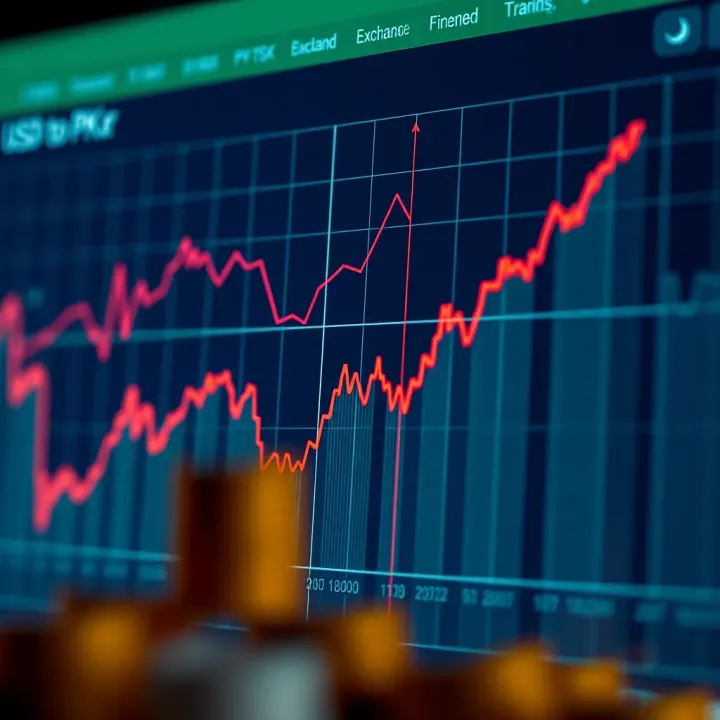
📉 Get detailed insights into USD to PKR trends, key economic and political factors, and practical tips to understand and adapt to exchange rate movements.
Based on 8 reviews