

Amazon Share Price Insights and Trends
📈 Explore Amazon's share price trends, key influences, and investment tips for Pakistani investors. Understand risks, market moves, and future outlooks.
Edited By
Liam Gallagher
Microsoft’s share price is a key indicator of the company’s market performance and investor confidence. As one of the largest tech giants listed on the NASDAQ, its stock reflects not only internal business results but also broader global economic trends. In Pakistan, where many investors follow international markets closely for portfolio diversification, understanding the behaviour of Microsoft shares offers practical insight.
Tracking Microsoft’s share price involves looking at recent trends, such as gains following new product launches or declines triggered by global economic shifts. For example, when Microsoft announced significant growth in its cloud computing services, its share price saw a notable uptick. Conversely, international events like the US Federal Reserve increasing interest rates can negatively impact stock valuations, including Microsoft’s.

Beyond market events, company-specific factors—such as quarterly earnings reports, leadership decisions, and innovation pipelines—play significant roles. Pakistani investors should also compare Microsoft’s valuation metrics, like price-to-earnings (P/E) ratio and dividend yield, with those of its peers in the technology sector, such as Apple and Google, to gauge relative investment value.
Understanding these influences helps investors make informed choices rather than reacting to market noise.
Practical investment considerations for Pakistani market participants include currency exchange implications, given the rupee’s volatility against the US dollar, which affects returns when converting gains back into PKR. Furthermore, working knowledge of international trading hours and accessible platforms, such as Karachi Stock Exchange-linked brokerage firms that provide access to global markets, is crucial.
In short, Microsoft’s share price is shaped by a complex mix of internal performance and external economic factors. For traders, investors, and analysts in Pakistan, grasping these dynamics provides a clearer picture of opportunities and risks involved in holding or buying Microsoft shares.
Tracking the current trends in Microsoft’s share price offers valuable insight for traders, investors, and analysts aiming to make informed decisions. These trends reflect how the stock responds to market forces, company events, and broader economic shifts. For instance, a steady rise over several months might indicate growing investor confidence, while sudden dips can hint at market uncertainties or sector-specific challenges.
Microsoft’s stock has shown notable fluctuations over the past few months. Starting from around $250 per share early this year, it climbed steadily to surpass $315 by March, reflecting strong quarterly earnings and positive market sentiment around cloud computing services. However, short-term volatility appeared due to global macroeconomic concerns, such as rising interest rates and ongoing geopolitical tensions impacting investor appetite.
These price swings illustrate how external factors beyond company fundamentals can affect stock valuation. Pakistani investors watching these movements should consider timing and market conditions, particularly given foreign exchange and tax considerations involved in purchasing international shares.
Microsoft’s share price often reacts sharply to company-specific news, making it crucial to follow official announcements. The recent unveiling of Windows 12 development and Xbox’s new game subscription model attracted positive attention, sending shares up by 3-4% within days of release. Conversely, talks about potential regulatory scrutiny in Europe caused brief price dips.
Corporate actions like acquisitions also influence investor perception. The purchase of cybersecurity firm Mandiant in early 2024 was viewed favourably, strengthening Microsoft’s position in a high-growth sector. Such developments highlight why keeping track of these announcements is essential for market participants.
Understanding how recent events steer Microsoft’s share price helps investors gauge risk and seize opportunities. Staying informed aids in recognising when price shifts are reactionary or signal deeper business trends.
In summary, current trends and company disclosures are fundamental for assessing Microsoft’s stock dynamics. Investors should combine these insights with broader economic data before making decisions.
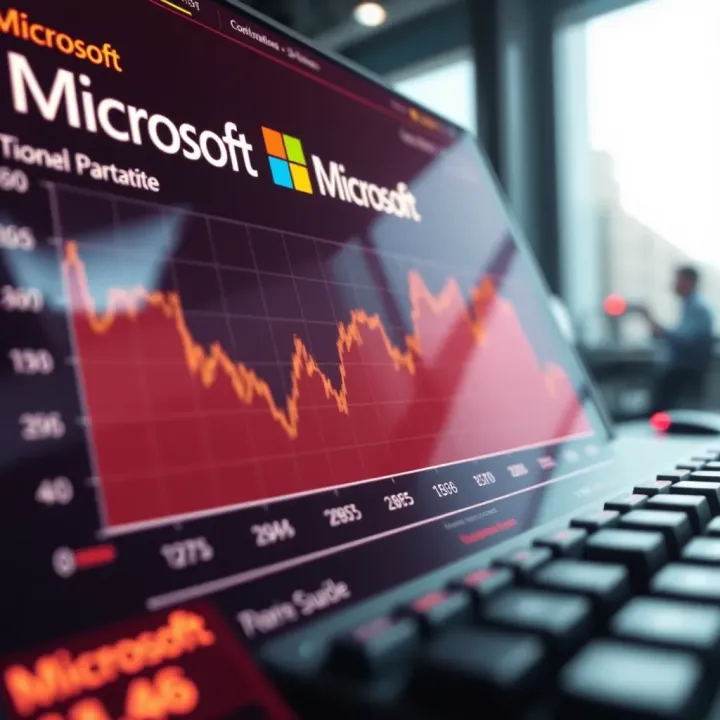
Understanding what drives Microsoft’s stock performance helps investors and traders make informed decisions. The company’s share price reflects not only its own financial health but also external factors like global economies and political climates. For Pakistani investors, grasping these influences is crucial since international developments often impact markets here too.
Microsoft’s stock closely follows broader market trends shaped by global economic health. When economies slow down or face inflation pressures, investors often shift away from tech stocks, affecting share prices. For instance, the recent hike in US Federal Reserve interest rates triggered selling pressure on tech stocks including Microsoft. Market sentiment also swings with geopolitical tensions, oil price shocks, and currency fluctuations. Pakistani investors should watch US-China trade relations and currency movements carefully because these directly affect Microsoft’s overseas revenue and profit margins.
Quarterly earnings reports provide a clear window into Microsoft’s business performance. Steady growth in cloud services like Azure has buoyed share prices despite challenges elsewhere. For example, the company’s strong financial results in FY23, driven by cloud and Office 365 subscriptions, lifted investor confidence substantially. New product launches and innovations likewise influence sentiment. The launch of Windows 11 and the expansion of AI-integrated tools has kept Microsoft competitive. PSX investors watching Microsoft shares should track these updates closely since good news here tends to boost prices.
Regulation affects how Microsoft operates globally, which in turn impacts stock prices. Recent antitrust investigations in the US and Europe created uncertainty around the company’s growth prospects. Moreover, geopolitical events like sanctions on Russia and trade restrictions involving China present operational challenges. Pakistani investors trading Microsoft shares from abroad must be mindful of these issues since regulatory hurdles can cause sudden stock price drops. Besides, policies on data protection and cybersecurity in various countries may add costs, affecting long-term profitability.
Keeping an eye on these factors—economic trends, company results, and regulatory shocks—provides a well-rounded view of Microsoft’s stock potential and risks. This approach helps you time decisions and manage exposure effectively.
Global economic health influences investor appetite for Microsoft shares.
Financial results and innovations like cloud computing directly affect stock momentum.
Regulatory probes and geopolitical tensions add layers of risk and volatility.
Fully understanding these elements will give you a better handle on Microsoft’s share price dynamics, making your investment or trading strategies more resilient and informed.
Valuation metrics provide a snapshot of a company's financial health and market expectations, critical for anyone looking to invest in Microsoft shares. Comparing these metrics with industry peers helps Pakistani investors and analysts gauge whether Microsoft’s stock is fairly priced or overvalued compared to rivals. This insight is essential to make informed decisions amid fluctuating global tech market conditions.
The Price-to-Earnings (P/E) ratio remains one of the most commonly used valuation tools for Microsoft. It measures the current share price relative to its earnings per share, offering a quick assessment of how much investors are willing to pay for a rupee of Microsoft’s profits. For example, a P/E ratio of 30 means investors expect strong growth and are ready to pay 30 times the earnings today. Compared to the tech industry average, Microsoft typically commands a higher P/E due to its consistent profits and innovative product lineup.
Besides P/E, growth indicators such as Earnings Per Share (EPS) growth and revenue growth track how Microsoft expands over time. Steady EPS increments suggest strong operational performance, which tends to attract investors looking for reliable returns. In 2023, Microsoft reported an EPS growth of around 11%, signalling healthy expansion despite global economic challenges.
Understanding these metrics helps investors spot whether Microsoft shares are priced according to actual growth potential, avoiding overpriced or undervalued pitfalls.
When looking at Microsoft’s valuation, comparing it with other major technology companies like Apple, Google (Alphabet), and Amazon provides valuable context. For instance, while Microsoft’s P/E ratio might hover around 30, Apple’s might be closer to 25, and Amazon’s often higher due to its aggressive reinvestment in expansion.
This comparison highlights Microsoft's balanced position: not as high-risk as some fast-growing startups, but not too conservative either. It reflects Microsoft’s diversified revenue streams from cloud services, software licences, and hardware, making it less vulnerable to market swings than firms reliant solely on consumer electronics.
For Pakistani investors, such comparisons inform choices about portfolio diversification and risk appetite. If one is cautious about volatility, Microsoft offers a middle ground compared to the often more volatile tech newcomers listed on NASDAQ.
In summary, valuing Microsoft shares through P/E ratio, growth figures, and peer comparison equips Pakistani traders and investors with concrete data. This aids in assessing whether Microsoft fits their investment goals and current market outlook.
Investing in Microsoft shares requires clear understanding of both the risks and opportunities specifically relevant to Pakistani investors. This section breaks down how to approach Microsoft stock from Pakistan, touching upon market access, dividend expectations, and the overall risk landscape. Clear insight here helps traders, investors, and financial analysts make sound decisions.
For Pakistani investors, currency fluctuation stands out as a key risk. The US dollar's strength against the Pakistani Rupee can impact returns when converting gains back to PKR. For example, a 5% devaluation of the rupee means a corresponding reduction in local currency gains, even if the stock performs well in dollar terms. Political instability or changes in tax laws in Pakistan can also affect investment flows and repatriation of dividends.
On the opportunity side, Microsoft’s consistent growth in cloud computing, artificial intelligence, and hybrid work solutions can translate into steady long-term capital appreciation. Pakistani investors who can afford a longer investment horizon may benefit from these trends. Moreover, diversification outside the local market can provide a cushion against Pakistan-specific economic challenges, making Microsoft shares an attractive option in a portfolio.
Buying Microsoft shares involves using international brokerage platforms that give access to the NASDAQ or New York Stock Exchange (NYSE). Investors in Pakistan often use brokers like Interactive Brokers, TD Ameritrade, or local firms partnered with international services. Opening an account requires submitting identification like CNIC and completing a Know Your Customer (KYC) check.
Transactions are conducted in US dollars, so investors need to convert PKR through legal channels like banks or licensed exchange houses. Pakistani investors should also be mindful of Stamp Duty, Capital Gains Tax, and any applicable withholding tax on international investments, as governed by the Federal Board of Revenue (FBR).
Microsoft maintains a steady dividend policy, paying quarterly dividends progressively increasing over the years. This reflects the company’s strong free cash flow and commitment to returning value to shareholders. Historically, Microsoft has delivered compounded annual returns well above many industry peers, combining dividend payouts with share price appreciation.
For instance, over the last decade, Microsoft’s total shareholder return has exceeded 20% annually on average, outpacing the broader technology sector. This makes it attractive not only for capital gains but also for regular income, a key factor for Pakistani investors seeking both growth and cash flow. However, dividends paid are in USD, so investors should consider currency risk when estimating local returns.
Microsoft shares offer a balance of steady dividends and growth potential, but Pakistani investors must carefully evaluate currency fluctuations and tax implications before investing.
Understanding these investment considerations will help Pakistani investors approach Microsoft stock with realistic expectations and effective strategies suited to their financial goals and local constraints.
📈 Explore Amazon's share price trends, key influences, and investment tips for Pakistani investors. Understand risks, market moves, and future outlooks.

Explore Apple's share price trends 📈, factors influencing it, and investment tips tailored for Pakistan investors 🇵🇰 seeking smart tech stock insights.

Wondering if gold prices will rise soon? 📈 This article breaks down local & global factors affecting Pakistan's gold rates for smart investing decisions.

🌐 Dive into Arbitrum price trends, risks, and adoption insights. Get expert views and compare with peers to understand its future potential! 📈
Based on 7 reviews