
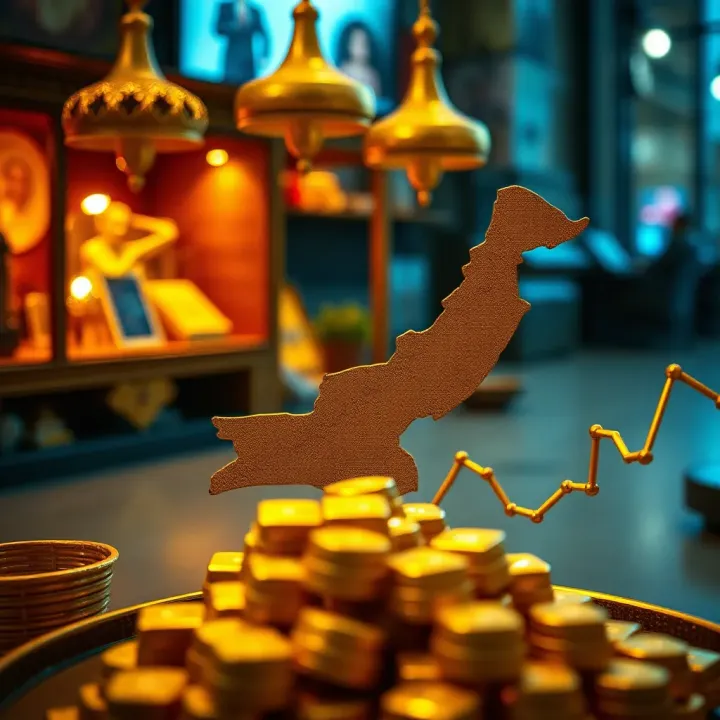
Will Gold Prices Drop Soon in Pakistan?
📈 Curious if gold prices will drop soon in Pakistan? Explore key economic signals, currency moves, and market trends to decide your next gold buy wisely. 💰
Edited By
Isabella Wright
Understanding gold rates in Pakistan can be tricky, especially when you consider the variety of prices quoted daily. Investors, traders, and brokers all keep a close eye on gold prices, not just because gold is a popular investment, but also due to its cultural and economic significance in the region.
This article breaks down 30 different gold prices you’ll come across and explains why they vary. You'll get a clear picture of how these prices are set and what influences their daily swings. From karat variations to local demand, international trade, and currency exchange rates, we’ll cover the spectrum.

By the end, you'll understand why knowing multiple gold rates is important—not just the headline price but the specifics that impact actual buying and selling decisions. Whether you’re a seasoned trader or someone dipping a toe into gold investment, this guide will help make sense of the numbers and provide insights tailored for the Pakistan market.
"Gold isn’t just a metal; it’s a dynamic asset whose value shifts with a mix of global trends and local factors. Knowing the detail behind these shifts can save you money and guide smarter investments."
Let's get started by laying out the key points we'll dive into next:
How gold prices are determined and where you find different rates
Why 24K, 22K, 21K, and other karats affect pricing
The role of currency exchange fluctuations and import duties
How international gold markets influence local price tags
Practical advice for traders and consumers buying or selling gold in Pakistan
This article aims to give you a practical, clear understanding that'll prove useful whether you’re tracking market trends or making a purchase.
Understanding the basics of gold pricing is like knowing the roots of a tree before appreciating its blossoms. For traders, investors, financial analysts, educators, and brokers in Pakistan, grasping these fundamentals can mean the difference between profitable decisions and costly mistakes. Gold prices don’t float randomly—they reflect a mix of global demand and supply, local economic factors, purity, and even market sentiment.
For instance, consider a local jeweler in Karachi who uses the daily gold rate to set prices for 22K gold rings. If they don’t understand how these rates are quoted or why they change, they might end up pricing too high or low, affecting sales and profits. Hence, the basics of gold pricing lay down the groundwork for comprehending more complex topics like price fluctuations or comparing 30 different gold prices effectively.
Gold rates are essentially the prices at which gold is bought and sold in the market at any given time. These rates vary depending on factors like purity, weight, and the form in which gold is traded—be it bars, coins, or jewelry. For example, if the spot gold price is reported as 100,000 Pakistani rupees per tola, that's the starting point for many transactions in the country.
Understanding these rates helps both investors and everyday buyers gauge the value of their gold holdings or purchases accurately. It’s not just a figure but an indicator shaped by intricate market dynamics.
Gold prices are commonly quoted per unit of weight—usually per tola (which equals 11.66 grams) in Pakistan, or per gram in many international contexts. Quotation involves stating a price for a specific purity level, typically 24K, which is considered pure gold. For example, a gold rate might be quoted as PKR 105,000 per tola for 24K gold.
Prices are updated every trading day and can even change several times during hours of active market trading. Quotes are sourced from international gold exchanges like the London Bullion Market Association (LBMA) and adjusted according to the local currency’s strength and any import duties or taxes.
The spot price represents the current market price for pure gold, traded hands instantly without delay. Think of it as the wholesale rate that fluctuates in real time on global exchanges. In contrast, the retail price is what buyers pay locally when purchasing jewelry or coins—it includes making charges, taxes, and dealer margins.
For example, if the spot price is PKR 100,000 per tola, the retail price of a 22K gold necklace might be significantly higher due to craftsmanship costs and GST. Knowing this difference saves buyers from being surprised at the store checkout.
The karat number indicates the purity of gold, with 24K representing almost pure gold (99.9%), 22K about 91.6% gold, and 18K around 75%. Prices adjust accordingly because less pure gold contains more alloy metals, lowering its intrinsic value.
For instance, if the 24K gold rate is PKR 105,000 per tola, the 22K rate might be roughly 95,700 PKR per tola (91.6% of 24K), while 18K gold would be around 78,750 PKR per tola. This proportionate pricing helps buyers and investors understand what they’re actually paying for in terms of gold content.
When shopping or investing in gold, always ask for purity confirmation—never assume all gold items carry the same value due to their karat differences.
By mastering these basics, you set a firm foundation to interpret a wide range of gold prices, especially when dealing with multiple rates as found in Pakistan’s dynamic gold market. From there, it becomes easier to track trends, compare offers, and make smarter financial choices.
Understanding how gold prices are determined is key when dealing with gold, especially in a market as dynamic as Pakistan's. Several factors come into play, from international exchanges to local economic conditions. Knowing this helps traders, investors, and even everyday buyers make smarter decisions and avoid surprises.
International gold exchanges, such as the London Bullion Market Association (LBMA) and COMEX in New York, set the benchmark prices for gold worldwide. These markets operate based on real-time supply and demand, trades executed in massive volumes, and global economic news. For example, when investors worldwide panic or grow cautious, these exchanges see higher buying activity, pushing prices up.
For Pakistani traders and investors, these international prices often form the base rate. When the LBMA gold price rises, local gold prices generally follow, adjusted for local factors. This means staying attentive to global news and exchange rates can give you a heads-up on price movement even before it affects local markets.
Gold is priced internationally in US dollars, so the value of local currencies against the USD directly influences gold rates within any country. If the Pakistani rupee weakens against the dollar, gold in Pakistan usually becomes more expensive, even if the dollar price stays steady.
Consider this: the dollar price for one ounce of gold stays at $1,900, but the rupee drops from 280 to 290 per dollar. Suddenly, gold becomes pricier by about 3.5% for buyers using Pakistani rupees. This ripple effect shows why currency watch is vital, especially for investors planning to enter or exit the market.
Because Pakistan imports almost all of its gold, the rupee's strength or weakness plays a huge role. A depreciating rupee means higher import costs, which jewelers and traders pass on to consumers. For instance, during times when the rupee tumbles, gold prices can soar by hundreds of rupees per gram even without any change in global gold prices.
This factor is especially important for short-term buyers and sellers since currency rates can fluctuate daily. Monitoring the rupee-dollar exchange thus helps predict possible shifts in local gold prices before they actually happen.
Policies like sales tax, customs duties, and regulations on gold imports also heavily influence price. Take the example of a sudden increase in import duty on gold: importers face higher costs and often respond by hiking retail prices. Pakistan has seen such adjustments over the years, and these are usually reflected in the local gold rate immediately.
Additionally, periodic changes in tax policies (like GST variations) may cause small but significant ripples in the price, impacting profitability for traders and affordability for buyers.
Besides government levies, the overall demand in Pakistan affects pricing. In festive seasons like Eid or weddings, demand for gold rises sharply, pushing up local prices regardless of global trends. Meanwhile, high import duties tend to keep gold prices inflated since traders need to cover these costs.
Local jewelers sometimes adjust prices based on supply conditions and demand spikes, impacting the 30 different gold rates you often see in daily listings. For example, Karachi might show slightly different rates than Lahore or Islamabad due to these local variances.
Stay aware of these local aspects alongside global trends to navigate the gold market effectively. Knowing the why behind price moves can prevent impulsive decisions and help find the best time to buy or sell.
By understanding both global influences like international exchanges and currency shifts, along with local factors such as government policies and market demand, stakeholders in Pakistan can better anticipate and respond to changes in the gold market. This dual view is essential for accurate pricing knowledge and smart investment or trading decisions.
When you look at gold prices in Pakistan, it’s easy to get overwhelmed by the sheer number of rates quoted daily. But understanding why there are 30 different gold prices listed is key for anyone involved in trading or investing. This variety reflects various factors like karat purity, form, and local market conditions, all of which influence the rate you get.
Grasping the full range helps investors and buyers make informed decisions instead of settling for just one quoted price. For example, 22K gold might have a different rate than 24K, and jewelry pieces have added making charges affecting their rates. Without recognizing this range, you might miss better deals or misunderstand market trends.
Gold isn’t one-size-fits-all—its purity varies, mainly seen in carat weights like 24K, 22K, and 18K. Naturally, 24K gold is the purest and commands the highest price. For instance, in Karachi today, 24K might be priced at PKR 150,000 per tola, while 22K could be around PKR 138,000. That difference is important for buyers and investors deciding what purity suits their budget and needs.
Understanding these distinctions lets you weigh value against purity. If you're buying jewelry meant for daily wear, 22K might offer a sweet spot between durability and price. Traders tracking the 30 prices can spot which karat weight is trending and adjust their strategies accordingly.
The form of gold drastically influences its rate. Bullion bars and coins generally come closer to the spot price with minimal overhead, making them attractive for pure investment. On the other hand, jewelry prices include making charges, design fees, and retailer margins, pushing rates higher.
For example, a 1-tola gold bar in Lahore might match the daily spot price of PKR 150,000, while a 1-tola necklace could cost an additional 10-15% more because of craftsmanship. Buyers need to factor this in to avoid confusion when comparing rates from different sellers.
Gold rates are not uniform across Pakistan. Cities like Karachi, Lahore, and Islamabad might quote slightly different prices due to varying local demand, supply constraints, and currency exchange influences.
For instance, the gold price in Karachi might be a few hundred rupees higher than in Quetta on the same day, influenced by different import paths and local market sentiment. Investors should monitor these regional differences closely, especially if they trade gold physically or work across multiple cities.
Local jewelers and goldsmiths play a subtle but strong role in setting gold prices on a day-to-day basis. They add making charges depending on design complexity, quality of workmanship, and their target customers. This can create noticeable price variation even within the same city.
For instance, a goldsmith in Lahore’s Anarkali market may charge 8% making fees, while another in a less busy locality charges 5%. Knowing these differences helps buyers negotiate better or shop around for the best value. For investors, it’s a reminder that quoted prices aren’t always the final amount if buying physical jewelry.
Keeping track of the 30 different gold prices, including their regional and form-based nuances, equips you with practical insight. It avoids surprises and helps you make better financial decisions whether you’re investing or buying personal gold.
By understanding these price layers, traders, investors, and consumers in Pakistan can navigate gold purchases with confidence and clarity rather than confusion.
Knowing how gold weight and measurement work is essential when dealing with gold prices. In Pakistan, where gold trading is common, understanding these elements helps you avoid confusion and ensures transparency. It matters not just for everyday buyers but also for investors and traders who need to make informed decisions about pricing and purity.
Gold’s value isn’t just about its current market rate—it’s heavily tied to how much gold you have and how pure it is. Different units are used to weigh gold, and each affects price calculations differently. Without clear knowledge of these units and their conversions, even someone experienced might find themselves biting off more than they can chew.
In Pakistan, gold weight is most commonly measured in tolas, grams, and sometimes ounces. The tola has a long-standing tradition in South Asia and equals about 11.6638 grams. Grams are increasingly popular due to international standards and ease of conversion.
Tola: Traditional measure, still widely used in local markets and by jewelers.
Grams: Used globally and favoured in scientific and international trading contexts.
Ounces: Less common locally but prevalent in global trade; 1 ounce equals about 31.1035 grams.
Knowing these units allows traders and buyers to compare prices properly, whether you’re getting a price quoted in tolas or grams. For instance, if you hear a gold price quoted at PKR 120,000 per tola, that's roughly PKR 10,286 per gram. This quick mental math can be handy when switching between markets or price listings.
Understanding these weight units isn't just about number crunching; it prevents misunderstandings during transactions. For example, you might think you’re paying a fair price per gram, but if the seller quotes in tolas without explaining, you might end up paying more than expected.
Also, some sellers might quote price by weight without indicating if that’s pure gold or alloy-weight, complicating things further. Clear knowledge of weight units means you can:
Verify that prices match the stated gold content.
Avoid unfair pricing due to unit misinterpretation.
Calculate the value of gold in different forms, whether coins, bars, or jewelry.
A simple yet overlooked practice is to always ask what unit the price is quoted in and convert it yourself if need be.
Gold isn’t always pure. Its purity is measured in karats (K), with 24K being pure gold, and lower karats indicating mixtures with other metals. This affects price because buyers pay mostly for the pure gold content, not the alloy.
For example:
24K gold: 99.9% pure, highest price.
22K gold: About 91.6% pure, lower price.
18K gold: About 75% pure, even lower price.
The purer the gold, the higher its intrinsic value. Hence, two 10-gram pieces of gold, one 24K and the other 18K, will have different market prices despite weighing the same.
Let's say the current price of 24K gold is PKR 120,000 per tola. To calculate the price of 22K gold per tola:
Determine purity ratio: 22K is 91.6% pure or 0.916.
Multiply price of pure gold by purity: PKR 120,000 × 0.916 = PKR 109,920 per tola.
So, 1 tola of 22K gold costs about PKR 109,920.
Suppose a buyer wants to purchase 5 grams of 18K gold:
Convert 5 grams to tolas: 5 grams ÷ 11.6638 ≈ 0.429 tola.
Calculate 18K purity: 18/24 = 0.75.
Price per tola 18K gold: PKR 120,000 × 0.75 = PKR 90,000.
Total price: 0.429 × 90,000 ≈ PKR 38,610.
This calculation method helps anyone figure out fair pricing based on weight and purity, eliminating guesswork during trading or buying.
Always double-check the weight units and purity before sealing any deal. It’s the best way to ensure you get your money’s worth.
Understanding gold weight and measurement ties directly into comprehending the 30 different gold prices you might encounter in Pakistan. Without this foundation, comparing those prices is like trying to catch smoke with bare hands—frustrating and mostly ineffective.
Keeping an eye on several gold rates is not just a matter of curiosity—it’s a smart move that can make a real difference, especially in a dynamic market like Pakistan’s. Gold prices vary depending on several factors such as purity, weight, location, and the type of gold product. By tracking multiple rates, investors and buyers can better understand the market’s rhythm and avoid costly mistakes.
Gold markets don’t move in a straight line; they ripple and jiggle with news, currency changes, and demand shifts. Watching different rates helps spot these waves early rather than chasing them when the tide’s out. This is particularly helpful when you’re juggling various gold forms—coins, bars, or jewelry—each priced differently. Monitoring multiple rates equips you with a broader picture, allowing informed decisions whether it's buying, selling, or holding.
Investors who keep tabs on multiple gold prices are in a better position to read the market’s subtle signs. For example, a steady rise in the 24K gold coin rate coupled with a drop in 22K gold jewelry prices might signal changing demand patterns or shifts in local fabrication costs. By observing these trends across various prices, investors can identify potential entry or exit points with more confidence.
This practice is especially beneficial in Pakistan where local factors—like currency swings or tariffs—cause discrepancies in gold pricing. Regularly comparing rates across different cities or dealers can reveal trends that broader global indexes might miss.
Timing can make or break an investment. If you only watch a single gold rate, you risk jumping in at the peak or exiting too soon. By tracking multiple rates, including spot prices and retail prices for different karats, you can spot when prices dip below your target or surge beyond profitable levels.
For instance, if the 22K gold prices dip unusually low due to local market conditions while the international spot price remains stable, it could be a great buying opportunity. Conversely, if all tracked prices surge, it might be wise to sell or hold off buying.
For everyday buyers, especially those buying gold jewelry, watching multiple rates helps avoid paying more than necessary. Since gold jewelry’s price depends on purity, craftsmanship, and market competition, knowing the variance in multiple rates ensures the price quoted is fair. It’s no secret some jewelers include hefty premiums, so having a clear idea of gold’s base price across different karats and forms helps negotiate better deals.
Imagine a buyer looking to buy a 22K gold necklace who checks spot prices, retail prices in their city, and jewelers' rates online. They can confidently ask questions and push back if the price quoted seems off the mark.
Not all gold sellers play ball the same way. Differences arise due to overhead costs, brand reputation, and the quality of craftsmanship. Monitoring multiple gold rates across sources allows buyers or sellers to spot prices that are too high or unusually low.
For example, a seller might quote rates based on tola measurements that differ slightly from grams, causing confusion or overpayments. Buyers aware of those variations are less likely to fall into traps. Similarly, sellers tracking multiple gold rates can price competitively without sacrificing profit, understanding where margins typically stand in their market.
Keeping an eye on multiple gold rates is like having several windows into the market world—it just makes navigating the ups and downs safer and smarter.
Keeping an eye on gold price movements is essential for anyone dealing with gold, especially in a dynamic market like Pakistan’s. Prices can change rapidly due to global cues or local shifts, so staying informed helps in making smarter buying, selling, or investing decisions. This section explores practical ways to get timely and accurate updates on gold rates that reflect real market conditions.
Pakistan offers several reliable online platforms where you can check updated gold prices easily. Websites like Pakistan Jewellers Association, Multi Commodity Exchange (MCX) Pakistan, and economic news portals provide daily gold rate listings for different carats and weights. These sites usually update their data multiple times a day reflecting spot prices, retail rates, and regional differences.
Beyond just numbers, these websites often feature charts, historical prices, and sometimes expert commentary. This helps users not only see the current price but also understand trends. For example, the MCX site offers live updates during trading hours, aiding traders and analysts alike.
When interpreting these daily updates, it’s important to note the timing and source of the data. Prices on some sites reflect wholesale market rates, while others indicate retail or jeweler prices, which include additional costs. Understanding the difference can prevent surprises at the point of purchase or sale. Also, keep in mind currency fluctuations, as they directly impact gold prices in Pakistani rupees.
Nothing beats firsthand information from local traders and jewelers. Visiting markets in Karachi, Lahore, or Islamabad and speaking to trusted vendors can give insight into real-time price changes and local demand variations. Such visits reveal price nuances that online data may not capture fully—like premiums on certain gold forms (coins vs. jewelry) or special discounts.
Besides personal visits, regularly following local financial news outlets like the Business Recorder or Dawn Business sections can keep you informed about broader economic factors influencing gold prices. These sources discuss government policies, import duties, and shifts in the Pakistani rupee's strength—factors that play a significant role in determining gold rates.
Staying updated through both digital and local channels ensures a comprehensive view of the gold market, enabling better timing and decision-making for your transactions.
Using a combination of online resources and local intel forms a solid approach to tracking gold prices, especially in a market as volatile as Pakistan’s. This dual strategy helps avoid reliance on a single source and guards against misinformation or outdated figures.
Understanding the common pitfalls in handling gold prices is crucial for anyone involved in trading, investing, or buying gold jewelry. Many people overlook small but significant details that can lead to financial losses or poor investment decisions. Highlighting these mistakes helps in developing a sharper eye for evaluating gold rates and making wiser choices in Pakistan’s dynamic market.
One of the frequent errors buyers make is overlooking the purity and proper weight of gold. Gold purity is measured in karats, with 24K being pure gold, but many pieces sold as traditional jewelry might range from 18K to 22K. Buying gold without verifying the exact karat can result in paying more for less valuable metal.
For example, purchasing a necklace labeled "gold" that turns out to be 18K instead of 22K means you’re getting roughly 82% pure gold rather than 92%. This difference affects the resale value directly. If you don’t check purity, you might overpay or be shortchanged unknowingly.
Certification and testing become your best allies here. Trusted jewelers should provide certification verifying weight and karat, often backed by reputed agencies in Pakistan like the Pakistan Standards and Quality Control Authority (PSQCA). Testing methods like acid tests or electronic gold testers can assess purity on the spot. Always insist on seeing these certifications or proof of testing before any major purchase. This safeguards you from counterfeit or substandard gold, adding confidence and fairness to transactions.
Remember, a well-tested piece of gold carries a higher resale value and fewer disputes later on.
Another mistake that traders and buyers frequently make is sticking to one source for gold prices. Rates can vary widely across dealers, cities, and even online platforms due to local demand, overhead costs, or simple timing differences.
To illustrate, imagine you check the daily gold price from a single website or a specific jeweler in Karachi. The price there might differ from a dealer in Lahore or another online aggregator. Without comparing, you might miss a chance to buy at a better rate or sell at a higher price.
Therefore, it’s vital to cross-check several sources before making decisions. Compare spot prices, check rates on popular financial sites like GoldPrice.org or local resources such as the Pakistan Bullion Market Association listings. Visiting multiple jewelers can also give a realistic picture of market variability.
Verifying rates before transacting helps you avoid overpaying or accepting unfair offers. Keep in mind that gold prices shift frequently throughout the trading day. Asking for the latest quote and clarifying any additional charges, such as making fees or taxes, ensures the deal is transparent and fair.
Checking multiple sources isn’t just cautious; it’s essential in a fluctuating market like gold where every rupee counts.
In summary, avoiding these common mistakes—neglecting purity tests and weight standards, and depending on a single gold rate source—empowers investors and buyers to navigate the Pakistani gold market with greater assurance and improved financial outcomes.
📈 Curious if gold prices will drop soon in Pakistan? Explore key economic signals, currency moves, and market trends to decide your next gold buy wisely. 💰
Explore how XAUUSD live prices impact Pakistan's market 🇵🇰 Learn to access real-time gold data, analyze trends, and make smarter investment choices in gold trading.

📉 Analyzing economic signals, geopolitical events, and market trends to forecast potential drops in gold prices for investors and buyers in Pakistan.

📊 Explore key concepts of trading books, how they're managed, risk factors, and the impact of Pakistani regulations on financial trading insights.
Based on 8 reviews