

USD to PKR Exchange Rate Forecast: Next 10 Days
📉 Track the USD to PKR exchange rate over the next 10 days with insights on market trends, economic signals, and expert analysis for smarter financial decisions.
Edited By
Isabella Wright
Understanding the USD to PKR exchange rate over the coming month is not just for currency traders—investors, financial analysts, and even educators can find valuable insights here. The shift of even a few paisas can ripple through import costs, inflation, foreign investment decisions, and the overall economic mood.
In the next 30 days, several moving parts will influence this currency pair. From Pakistan’s domestic policies to international economic cues and market sentiment, their combined effect will shape the direction of the rupee against the dollar.
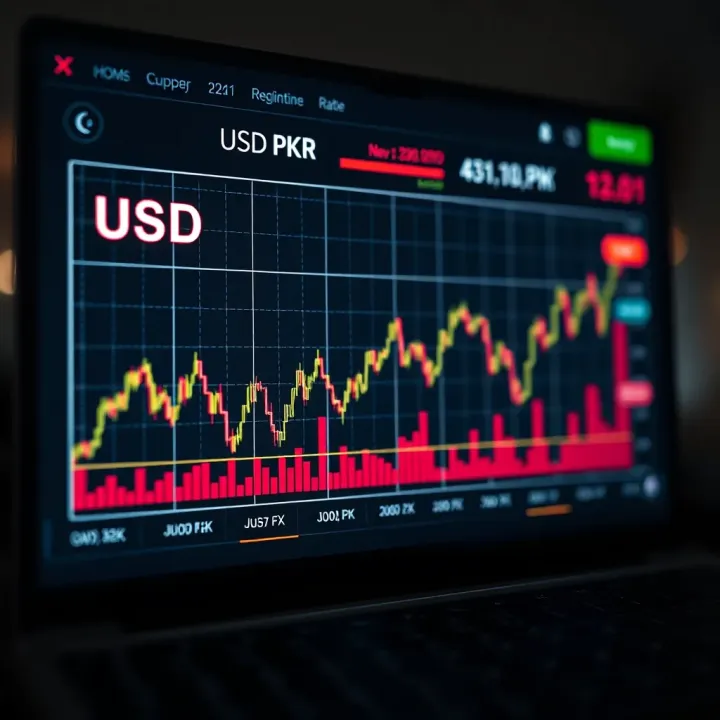
This article will unpack the key factors driving the exchange rate, such as recent economic indicators like inflation rates and trade deficits, government interventions including monetary policy and currency controls, and how global events might tip the balance.
Keeping an eye on these details can help traders and investors make smarter calls, while analysts can refine their forecasts with clearer context.
Below, you will find an outline that highlights what to expect, what to watch closely, and how these shifts might influence decisions in the short term.
Grasping where the USD to PKR exchange rate currently stands is more than just knowing the numbers—it’s about understanding the wider picture. Traders, investors, and policymakers keep a close eye on this rate because it directly impacts decisions like import pricing, investment flows, and even remittance values for families in Pakistan. For example, a sudden dip in the rupee can squeeze the profit margins of companies importing raw materials, while overseas Pakistanis sending money home might notice the difference in how much support their families actually get.
Understanding the current exchange rate helps in making informed predictions about where things might head in the near future. It sets a baseline, enabling us to compare recent movements and identify patterns or anomalies that call for attention. Without this context, any outlook on the next 30 days would feel like shooting in the dark.
Looking at how the USD to PKR rate moved over the past three months reveals a lot about immediate market pressures. For instance, around February and March, the rupee saw a steady slide against the dollar, influenced by rising inflation in Pakistan and uncertainty in global markets. On the flip side, periods where remittances surged or the State Bank of Pakistan intervened to stabilize the market saw the rupee gaining some ground.
This quarter’s performance shows us the tug-of-war between domestic economic factors and global influences. Knowing these swings helps businesses decide when to lock in rates or hold off. Say an exporter notices the rupee weakening steadily—they might want to hasten invoicing to benefit from a higher dollar rate.
Major ups and downs in the exchange rate aren’t random—they usually tie back to specific events. For example, a shocking political announcement or an adjustment in the US Federal Reserve’s interest rates can send ripples through this pair. Recently, a surprise hike in US interest rates made the dollar more attractive globally, causing the rupee to fall sharply.
Local factors matter, too. Pakistan’s trade deficit news or sudden regulatory changes by the State Bank often trigger market moves. Understanding these causes means traders aren't just reacting to charts but have a grasp of the underlying stories. That’s essential for anyone trying to predict or protect against volatile swings.
Stepping back and looking at yearly averages gives perspective. Over the last five years, the USD to PKR rate has generally trended upward, reflecting Pakistan’s economic challenges like rising debt and inflation. For instance, rates that hovered around 105 rupees per dollar in 2018 have climbed closer to 280 in early 2024.
This steady climb isn’t just numbers—it reflects big-picture shifts like currency devaluation efforts and changes in foreign investment. When comparing with these averages, current rates might seem high or low, but this context helps evaluate whether the market is overshooting or simply adjusting along a long-term path.
The rupee’s journey against the dollar isn’t just about a slow crawl—it’s marked by periods of sharp ups and downs. Volatility spikes often come during political upheaval or financial crises. Take mid-2022, for example, when political instability and funding issues triggered wild swings.
Knowing these volatility patterns helps traders manage risk better. If you know the rupee typically gets jumpy after certain fiscal announcements or geopolitical news, you can plan trades or hedges accordingly. It’s about spotting when to be cautious or when there might be an opportunity to profit.
In short, understanding the current state of the USD to PKR exchange rate along with recent trends and past patterns equips everyone from traders to policymakers with a toolbox for smarter decisions over the next month.
Understanding what drives the USD to PKR exchange rate is essential, especially for traders, investors, and businesses operating between the US and Pakistan. The next 30 days bring a mix of economic data releases, political happenings, and shifts in market sentiment that can all sway this currency pair. These key factors act like the weather forecast for currency traders—a heads-up about what kind of winds might blow the exchange rate up or down.
Inflation figures are like a thermostat for currency value. If Pakistan reports high inflation while the US maintains stable prices, the Pakistani rupee might weaken against the dollar. That’s because higher inflation in Pakistan erodes purchasing power and may force the State Bank of Pakistan to adjust policies or lose investor confidence. Conversely, if the US sees a spike in inflation, you might observe pressure on the dollar, which could narrow the USD/PKR gap. Keeping an eye on Pakistan’s Consumer Price Index (CPI) readings alongside the US Consumer Price Index is practical—it provides clues on upcoming interest rate moves and investor appetite.
Central banks react to inflation and economic performance by tinkering with interest rates. If the Federal Reserve raises rates, USD generally gains strength since higher yields attract foreign capital. Meanwhile, if Pakistan’s State Bank raises its policy rate to combat inflation, it might temporarily support the rupee by offering better returns on PKR assets. However, if rate hikes are too aggressive or come alongside political unease, the effect might be muted. For traders and analysts, watching announcements from both the US Federal Reserve and the State Bank of Pakistan is crucial in assessing where the exchange rate may head.
Pakistan’s trade deficit or surplus heavily influences PKR's strength against USD. A widening trade deficit means Pakistan imports much more than it exports, increasing demand for foreign currency and putting downward pressure on PKR. For example, a surge in crude imports or machinery purchases from the US can dent the rupee. On the other hand, if exports pick up or remittance inflows rise, these help shore up PKR. The current account reflects this balance in goods, services, and income, so any improvement there can be a positive sign for the rupee in the coming weeks.
The State Bank's monetary policies, including liquidity management and forex reserves interventions, have an immediate effect on the USD to PKR rate. If the SBP steps in to defend the rupee by selling US dollars or tightening money supply, this can slow down depreciation temporarily. Conversely, signs that the central bank might ease controls or hesitate to act could lead to quick declines in PKR. Traders should keep a close watch on SBP press releases and policy statements, as these hint at the bank’s currency management strategies.

Pakistan’s budget and fiscal policies—like tax changes, spending plans, or borrowing—impact market confidence. A budget aimed at reducing deficits with clear revenue targets can boost investor trust and stabilize PKR. But if the budget signals higher borrowing or uncontrolled spending, it may trigger concerns about inflation and currency weakness. For example, a recent budget that increased subsidies would likely pressure the rupee, discouraging capital inflows. Assessing the government’s fiscal discipline over the next 30 days will provide insights into currency movements.
Geopolitical tensions tend to stir the market, often unsettling currencies of emerging markets like Pakistan. Conflicts, diplomatic strains, or regional instability can cause investors to move toward "safe havens" like the US dollar. For instance, any heightened friction between Pakistan and neighboring countries or erratic signals from global powers can trigger sudden PKR drops. Traders and analysts must factor in current geopolitical news as part of their USD/PKR outlook.
Broader global trends impact the USD to PKR rate indirectly. A slowdown in major economies like China or the Eurozone affects commodity demand and financial flows, hitting Pakistan's export-driven sectors and remittances. Similarly, changes in US economic growth can strengthen or weaken the dollar. During times of global risk aversion, the dollar tends to strengthen, making PKR vulnerable. Monitoring headlines from the IMF, World Bank, or OECD gives a sense of these bigger picture trends.
Sometimes, currency swings are driven less by fundamentals and more by market mood. If investors expect the rupee to weaken next month, speculative selling can accelerate that movement. Similarly, if the outlook is positive due to reforms or foreign aid prospects, confidence can bolster PKR. Keeping tabs on foreign portfolio investment flows, hedging volumes, and speculative positions on futures markets helps gauge this sentiment.
Pakistan is a net importer of commodities like oil, which affects its trade balance and currency. When global oil prices rise, it means more dollars leaving Pakistan, putting pressure on PKR. On the flip side, if prices fall or stabilize, it eases cost pressures. For example, if crude oil drops below $70 per barrel during this period, it could modestly support the rupee. Similarly, prices of other commodities influencing Pakistan’s exports and imports play a role.
Watching these economic indicators, policy moves, and market sentiments together provides a clearer picture of where the USD to PKR exchange rate might head in the next 30 days. Both short-term events and broader trends intertwine, making continuous monitoring key for anyone exposed to this currency pair.
Predicting how the USD to PKR exchange rate might move over the next 30 days is critical for anyone involved in currency trading, import-export business, or simply managing overseas transactions. Knowing likely trends helps in planning financial decisions, managing risks, and avoiding unpleasant surprises due to sudden currency swings. For instance, if a trader anticipates the rupee weakening against the dollar, they might opt to hedge their exposure beforehand to save costs.
Financial analysts rely on various tools—from economic data analysis to market sentiment—to make these forecasts. Understanding their predictions offers a window into possible market directions, assisting businesses and investors in timing transactions more wisely and adjusting their strategies accordingly.
Consensus forecasts refer to the average or common prediction made by a group of financial experts regarding the USD to PKR movement. This shared outlook generally comes from analyzing recent trends, anticipated economic reports, and policy changes. For example, most analysts might agree that due to Pakistan’s rising inflation and persistent current account deficit, the rupee could see a steady depreciation against the dollar in the short term.
Why does this matter? Such consensus helps businesses and investors build a baseline expectation. It’s like getting everyone to glance at the weather forecast before deciding whether to carry an umbrella. If the majority predict weakening PKR, importers might rush to buy dollars early to avoid paying more later.
Not all experts see eye to eye. Divergences in predictions highlight differing views based on factors like geopolitical risks or varied interpretations of data. For example, while some analysts might warn of a sharp slide in PKR due to political instability rumors, others may argue that government interventions and IMF support will stabilize the currency.
Understanding these sharp contrasts is useful because it signals uncertainty in the market. Traders who spot these divergences can choose more cautious strategies or look for opportunities in volatility. This gives a realistic picture that forecasts are not foolproof; instead, they reflect multiple plausible outcomes.
In the best-case scenario, the Pakistani rupee either holds steady or gains value against the USD. This could happen if foreign remittances increase sharply or if the government successfully implements reforms that boost investor confidence. For example, if new trade agreements materialize or inflation shows clear signs of moderation, the PKR might strengthen.
Such an outcome would benefit importers by lowering the cost of foreign goods and ease inflationary pressures inside Pakistan. Investors holding PKR assets could see better returns without worrying about currency losses.
On the flip side, the worst-case scenario involves a significant depreciation of the PKR. This might be triggered by sudden political turmoil, failure to meet IMF program benchmarks, or a global shock that dries up capital inflows. For instance, a spike in US interest rates combined with Pakistan’s weak fiscal position could send the exchange rate soaring, pushing USD to PKR much higher.
In that situation, importers would face heavy costs, inflation could accelerate, and ordinary people might find daily expenses rising sharply. It also complicates debt servicing for businesses and the government if loans are denominated in foreign currencies.
The most likely outcome balances these extremes. Given current economic indicators like steady inflation around 15-18% and cautious optimism around IMF negotiations, the USD to PKR rate is expected to trend mildly upwards, with some volatility.
In practice, this means the rupee may weaken but not drastically—perhaps moving within a range of 285 to 295 PKR per USD over the month. Traders and businesses should prepare for periodic fluctuations but can avoid panic by watching key data releases and policy signals closely.
Staying updated on short-term forecasts and scenarios lets you gauge risks better and decide when to act—whether it’s buying dollars early, locking in exchange rates via contracts, or holding off until the rate becomes more favorable.
To sum up, keeping an eye on what financial analysts predict and understanding the range of potential outcomes puts you ahead of the curve. This knowledge lets you make more informed decisions in the often unpredictable world of currency exchange.
Understanding the consequences of USD to PKR exchange rate shifts is essential for both businesses and individuals in Pakistan. Changes in the exchange rate can directly affect import costs, export competitiveness, and the value of money sent or received from abroad. Given how interwoven the economy is with global markets, even slight fluctuations demand attention.
For importers, a weaker PKR means higher costs for goods priced in USD. This can squeeze profit margins if costs can’t be fully passed on to customers. For example, a textile manufacturer importing synthetic fabrics will find raw material bills unexpectedly bloated during PKR depreciation periods. On the flip side, exporters may benefit since their earnings in USD convert into more Pakistani rupees, potentially boosting revenue. However, volatility complicates budgeting — companies need to forecast and adjust procurement plans carefully.
Importers and exporters should monitor exchange rates continuously and consider locking in prices or using financial instruments to hedge against sudden swings.
Adjusting pricing strategy is critical when exchange rates shift. Importers forced to pay more might try to absorb some costs to stay competitive but usually will increase prices gradually to avoid losing clients. Exporters, meanwhile, often face the opposite challenge; they need to decide whether to lower prices to increase market share or maintain prices to maximize PKR gains. For instance, a Pakistani electronics company might delay updating price lists during short-term USD spikes to avoid alarming customers.
Flexible pricing policies, coupled with clear communication, help maintain customer trust and support smoother operations amid exchange rate pressure.
For families reliant on remittances, exchange rate movements can be a double-edged sword. When the Pakistani rupee weakens, money sent in USD translates to a higher amount in PKR, which can offer temporary relief to household expenses. However, this benefit vanishes if the rate swings unpredictably.
Pakistani workers abroad, especially in Gulf countries or the US, should stay alert to exchange trends. A remittance of $500 might be worth 130,000 PKR one week and significantly less the next if rates move sharply.
Timing is a practical way to mitigate risks for remittances and overseas payments. Ideally, sending or withdrawing funds when the rupee is stronger yields more local currency. Conversely, businesses paying abroad for services or goods should aim to transact when the PKR holds better against the USD.
Keeping an eye on exchange rate forecasts and perhaps consulting financial service providers can save significant sums. Some banks and money transfer services even offer options to set favorable exchange rates for future transactions.
In essence, staying informed and proactive enables individuals and companies alike to manage the ripples caused by exchange rate changes better. Whether dealing with imports, exports, or cross-border money flows, practical strategies and timing decisions make a real difference.
Managing currency risks isn’t just for big businesses or hedge funds—individuals and exporters alike could face significant setbacks if they ignore the volatility typical of the USD to PKR exchange. With this in mind, the coming month could be bumpy given ongoing economic and political shifts, so having a game plan to protect your funds or pricing margins is more important than ever.
Currency risk management involves tools and techniques that help reduce potential losses from unforeseen movements in exchange rates. Whether you’re a trader, a business importing machinery, or someone waiting to send money abroad, these strategies can provide a safety net. Let's take a closer look at some practical options available locally, and simple steps to make the process less daunting.
A forward contract is a straightforward way to lock in the current exchange rate for a currency transaction set to happen in the future. Imagine a Pakistani textile exporter expecting payment in dollars three months down the line. If they’re worried about the rupee weakening, they can enter a forward contract with their bank to fix today’s rate for that future date.
This contracts helps avoid nasty surprises caused by sudden drops or spikes in the exchange rate. Since the terms are agreed upon upfront, businesses can budget and price their products more confidently. Still, it’s important to note that forward contracts aren’t flexible; once set, you have to stick to them even if rates move in your favor.
Unlike forward contracts, currency options offer more flexibility by giving you the right but not the obligation to exchange currency at a pre-agreed rate before the contract expires. Think of it as purchasing insurance without forcing yourself to use it if not needed.
For instance, a Pakistani importer worried about a sudden dollar surge can buy a currency option to protect against rising rates while still benefiting if the dollar's value drops. While options tend to be pricier upfront due to premiums, they serve as a great tool for those seeking downside protection without losing potential upside gains.
Timing is everything when dealing with foreign exchange. Keeping an eye on market trends and political events can help identify windows when the exchange rate is more favorable. For example, many businesses pause significant currency transactions around budget announcements or central bank policy meetings due to anticipated volatility.
Though predicting exact peaks and troughs is near impossible, regular monitoring through platforms like the State Bank of Pakistan or Forex brokers can help make informed decisions. Splitting large transactions into smaller tranches spread over time can also reduce exposure to sudden shocks.
When confusion strikes, professional advice goes a long way. Financial experts, especially those familiar with Pakistan’s forex market, can provide customized strategies based on your unique needs and risk appetite. They can analyze macroeconomic indicators, political developments, and global currency movements that might affect your outlook.
For example, brokers at institutions like Habib Bank or MCB offer consultation services that explain how to use hedging instruments effectively. They’re worth a chat before committing to any contracts or risky moves.
Managing currency risk doesn’t have to be overwhelming. A blend of hedging tools and smart timing, guided by expert insight, can shield your finances from the inevitable ups and downs of the USD to PKR rate.
In short, with the right approach, even the unpredictability of the next 30 days won’t throw your plans off course entirely.
📉 Track the USD to PKR exchange rate over the next 10 days with insights on market trends, economic signals, and expert analysis for smarter financial decisions.
📉 Get detailed insights into USD to PKR trends, key economic and political factors, and practical tips to understand and adapt to exchange rate movements.

📊 Get ready for insights on USD to PKR exchange trends over the next 3 months. Understand economic signals, policy shifts & global market moves shaping Pakistan's currency.
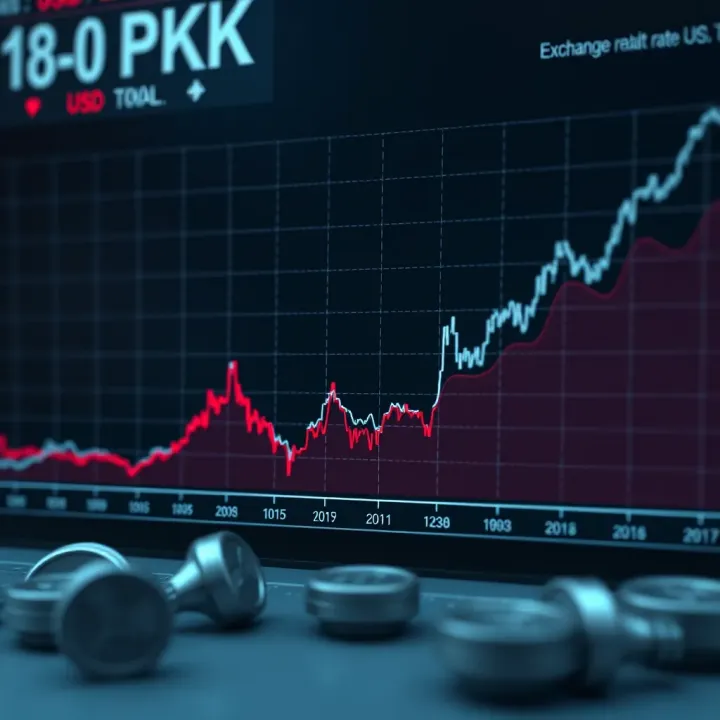
📉 Explore the USD-PKR exchange rate trends, economic impacts, govt policies, and expert views shaping Pakistan’s currency market forecast today.
Based on 8 reviews