
BGB Price Prediction: Key Factors and Future Outlook
Explore BGB price prediction 📈 with in-depth insights on market trends, historical data, and expert views to guide investors in Pakistan's dynamic crypto space 🇵🇰.
Edited By
Matthew Collins
Ethereum (ETH) has become a key player in the cryptocurrency world, especially for investors looking beyond Bitcoin. Its underlying blockchain technology supports not just digital currency but also decentralised applications and smart contracts, making ETH a unique asset. In Pakistan, interest in Ethereum is growing as traders and investors seek fresh avenues amid fluctuating traditional markets.
Understanding Ethereum’s price movement involves analysing elements like network upgrades, regulatory changes, and global economic trends. For instance, Ethereum’s switch from proof-of-work to proof-of-stake through the Merge significantly affected its energy efficiency and supply dynamics, which in turn influences price.
Ethereum’s development roadmap and adoption in sectors like decentralized finance (DeFi) and non-fungible tokens (NFTs) also help shape market sentiment. Increased use of ETH for transaction fees and staking rewards can affect demand and price stability. Observing these technical drivers alongside macro factors such as global inflation or changes in Pakistan’s foreign exchange rates gives a clearer picture of ETH’s potential path.
"Ethereum’s ongoing upgrades and expanding ecosystem present both opportunities and risks for investors, especially in emerging markets like Pakistan where exposure to cryptocurrencies continues to rise."
Key takeaways for Pakistani investors include recognising volatility, regulatory uncertainties, and the impact of international crypto policies on local trading. Familiarity with platforms like Binance, Binance P2P, and local exchanges can help investors navigate liquidity and access. Additionally, staying informed about the State Bank of Pakistan’s stance on digital assets is vital.
This article will explore Ethereum’s recent performance, the main factors influencing its price, expert opinions, and potential risks. The goal is to provide practical insights to help traders, financial analysts, brokers, and educators make informed decisions in Pakistan’s evolving crypto landscape.
Understanding Ethereum and its market position is critical for anyone planning to invest or trade in this cryptocurrency. Ethereum is not just another digital asset; it plays a fundamental role in the blockchain ecosystem, impacting numerous sectors beyond simple currency transactions. A clear grasp of its positioning helps investors anticipate price movements more accurately and make informed decisions.
Ethereum pioneered the concept of programmable blockchain through smart contracts, which are self-executing contracts with terms directly written into code. Unlike Bitcoin, which is primarily a digital currency, Ethereum provides a platform where developers can build decentralised applications (dApps). For example, popular decentralised finance (DeFi) applications and non-fungible tokens (NFTs) largely run on Ethereum’s network. This broad utility supports continuous demand for ETH (Ethereum’s native cryptocurrency), as users require it to pay transaction fees. The network’s role as the backbone of DeFi and NFTs has raised its profile globally, including in Pakistan, where interest in digital assets is steadily increasing.
Compared to other major cryptocurrencies like Bitcoin, Binance Coin, or Cardano, Ethereum stands out due to its multifunctional platform rather than being a store of value or payment method alone. Bitcoin’s primary role as digital gold contrasts with Ethereum’s focus on enabling decentralised innovation. Meanwhile, Binance Coin benefits from being linked to a centralised exchange, while Cardano emphasises academic research and peer-reviewed protocols. Ethereum’s upcoming upgrades, such as Ethereum 2.0, aim to improve scalability and energy efficiency, which could widen the gap with competitors.
Ethereum’s versatile ecosystem and ongoing technological improvements position it uniquely among cryptocurrencies, making it essential to follow its market dynamics closely.
Understanding these aspects helps Pakistani investors assess how Ethereum’s market shifts might unfold relative to other coins, ensuring a better grasp of both risk and opportunity. It also highlights why Ethereum often leads price surges linked to tech upgrades or ecosystem growth, a factor crucial for timing investments effectively.
Tracking recent trends in Ethereum's price movement is crucial to understanding its current standing and projecting future shifts. This section sheds light on how ETH’s value has changed over time, helping investors, traders, and financial experts assess patterns and make informed decisions based on real market behaviour.
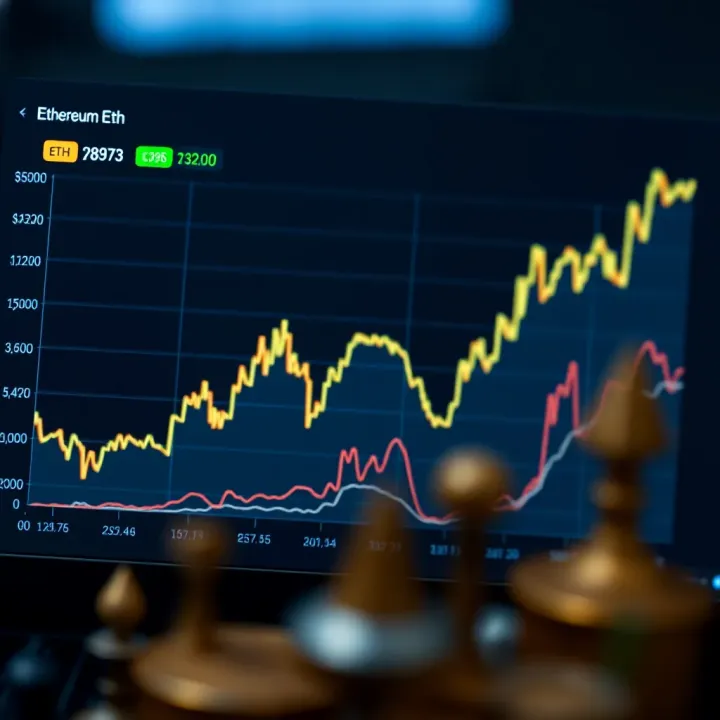
Ethereum’s price has shown considerable ups and downs since its launch. For instance, in early 2021, ETH reached an all-time high of around $4,800 (approximately Rs 840,000), driven largely by booming interest in DeFi (Decentralised Finance) and NFTs (Non-Fungible Tokens). However, this surge was followed by sharp corrections, with prices dipping below $1,700 (around Rs 297,000) later that year. These swings reveal Ethereum's volatility, influenced by market hype, investor sentiment, and technological updates.
Past price movements demonstrate ETH’s strong correlation with Bitcoin, but Ethereum often reacts more intensely to developmental milestones. The launch of Ethereum 2.0 phases, with promises of improved scalability and reduced energy consumption, consistently affected price pumps and dips. Investors must note that short-term price spikes don't always indicate long-term stability; sudden corrections can follow exuberant rallies.
Global happenings significantly shape Ethereum’s price trends. Economic disruptions, such as inflation concerns and central bank interest rate hikes worldwide, often push more investors towards cryptocurrencies as alternative assets. In 2022, for example, rising inflation rates in major economies sparked renewed interest in ETH as a hedge, though this period also saw heightened price swings amid market uncertainty.
Political events and regulatory announcements influence Ethereum’s acceptance and usage. When the Securities and Exchange Commission of Pakistan (SECP) started regulating cryptocurrency exchanges more closely, there was a temporary slowdown in trading volumes locally, affecting demand dynamics. Similarly, international regulatory moves, like tighter controls in the US or EU, tend to ripple through the market, leading to price adjustments.
Environmental debates around Ethereum's energy use, before shifting to proof-of-stake consensus with Ethereum 2.0, also played a role, as institutional investors reconsidered their positions based on sustainability criteria.
Understanding these recent price trends equips investors with context about how external factors and technological progress interplay to influence Ethereum’s market value. For Pakistani investors especially, awareness of global and local events aids in timing entry and exit points more strategically.
Understanding what drives Ethereum's price helps investors make informed decisions. Various elements, from technology upgrades to global financial shifts, interplay to shape ETH's value. This section breaks down the main factors affecting Ethereum's market movement.
Ethereum 2.0 marks a significant upgrade targeting energy efficiency and security. The switch from Proof of Work to Proof of Stake reduces electricity consumption drastically, making Ethereum more sustainable and attractive for long-term investment. For Pakistani investors concerned about environmental impact, this change only adds to Ethereum's appeal amid growing renewable energy discussions.
Scalability Improvements aim to solve Ethereum's congestion issues. With more users and decentralized applications (DApps), transaction speed and gas fees became problematic. Layer 2 solutions, such as Rollups, process many transactions off-chain and submit aggregated data on-chain to keep costs low and speed high. This scalability helps Ethereum maintain its competitive edge, especially against faster blockchains.
Smart Contract Enhancements continue to make Ethereum the go-to platform for decentralized applications. Developers regularly introduce new standards and optimisations that boost contract efficiency and security. These improvements encourage wider adoption of Ethereum in sectors like finance and gaming, which directly influence network demand and, consequently, ETH's price.
The growth of Decentralised Finance (DeFi) has opened vast opportunities on Ethereum. DeFi platforms allow users to lend, borrow, and earn interest without traditional banks. Pakistan's fintech sector, already experimenting with digital payments, watches DeFi with keen interest. As more capital flows into these platforms, ETH demand rises, often causing price upticks.
NFT Market Influence has introduced a new wave of collectors and creators using Ethereum. Non-fungible tokens represent unique digital assets bought and sold mainly via Ethereum smart contracts. Despite occasional volatility, the NFT space keeps drawing user attention and increases transaction volume, which can boost Ethereum’s price.
The Regulatory Environment in Pakistan and Globally is a double-edged sword. In Pakistan, the State Bank has been cautious but open towards blockchain technology, impacting investor confidence. Globally, tighter or clearer regulations in key markets like the US or EU can either encourage wider adoption or create hurdles. Staying updated on these regulations helps investors anticipate market reactions.
Interest Rates and Inflation in the wider economy influence crypto investments like Ethereum. Rising inflation might push investors to seek assets that preserve value, including cryptocurrencies. Conversely, higher interest rates typically encourage investments in safer assets. Pakistan’s current monetary policies and inflation trends thus indirectly affect ETH demand.
Global Economic Stability shapes investor risk appetite worldwide. Economic slowdowns or geopolitical uncertainties can trigger sell-offs in volatile assets, Ethereum included. On the other hand, during stable periods, investment in cryptocurrencies often gains momentum as part of diversified portfolios.
Finally, Cryptocurrency Market Trends set the broader tone for Ethereum’s price. Bull runs in Bitcoin and altcoins usually pull ETH’s price up due to positive sentiment and increased trading volume. Conversely, market-wide downturns or loss of investor trust in crypto projects lead to price drops. Ethereum’s unique role as a DeFi and smart contract leader, however, often cushions it better than other coins.
Keeping an eye on these factors helps traders and investors navigate Ethereum's price fluctuations more wisely and tailor their strategies accordingly.
Expert forecasts offer a practical view of Ethereum’s price trajectory based on current data, market trends, and technological factors. For investors and traders, these predictions provide a useful benchmark to inform buying, holding, or selling decisions. However, relying solely on forecasts without understanding the underlying assumptions can be misleading. A blend of technical analysis, fundamental drivers, and macroeconomic factors shapes these outlooks.
Short-term Ethereum price projections usually span weeks to a few months and depend heavily on immediate market sentiment, news, and trading volumes. For instance, during periods of increased DeFi activity or a successful upgrade rollout, experts often predict sharp upward moves in ETH price. Conversely, announcements of regulatory crackdowns or global economic instability typically signal caution. An example would be predictions around the Merge upgrade in 2022, where analysts expected volatility but overall positive momentum. Traders should watch for such catalysts, as short-term price swings in Ethereum can be quite volatile and sensitive to external developments.
Long-term forecasts look at Ethereum’s value over several years, focusing on factors like network adoption, ongoing upgrades such as Ethereum 2.0, and broader blockchain integration. Many institutions anticipate ETH’s price rising steadily as smart contracts and decentralised applications expand. For example, if Ethereum’s scalability improves and transaction costs decrease, more users and businesses might adopt the platform, driving demand. Still, long-term outlooks often caution about market competition from blockchains like Solana or Cardano, which could influence Ethereum’s dominance. Investors should weigh these fundamental trends alongside economic conditions and evolving regulatory frameworks.
Not all analysts agree on Ethereum’s price direction. Some are bullish, forecasting ETH to reach new highs in the next few years due to increased DeFi use cases and NFT integration. Others remain sceptical, pointing to regulatory hurdles or technical glitches as potential setbacks. For instance, major investment firms like Grayscale and Galaxy Digital offer optimistic ETH price targets, while some hedge funds take a more conservative stance. This diversity reflects the complexity of crypto markets where abrupt changes are common. Pakistani investors should consider multiple viewpoints, balancing optimism with caution to navigate Ethereum’s uncertain future.
Expert analysis is a valuable tool but should be combined with personal research and awareness of market dynamics for better decision-making.
Look out for recent network developments impacting scalability and security.
Monitor regulatory updates both within Pakistan and internationally.
Stay informed on global economic factors influencing cryptocurrency markets.
Understanding these elements alongside expert forecasts equips you with a clearer picture of Ethereum’s price potential in the coming years.
Investing in Ethereum carries various risks that Pakistani investors must understand before committing their capital. These challenges can directly impact returns and require careful consideration alongside potential rewards. Recognising risks like volatility, regulatory changes, and technological competition will help investors make informed decisions and manage their portfolios responsibly.
Ethereum’s price is highly volatile, often swinging by double-digit percentages in a short time. For example, ETH’s price dropped nearly 50% within weeks during global economic uncertainties in 2022. This level of fluctuation can lead to significant gains or losses that require investors to be prepared for sudden market changes. Liquidity in local Pakistani exchanges for Ethereum can sometimes be limited, intensifying volatility. Therefore, investors should exercise caution, use stop-loss orders, and diversify their crypto holdings to manage risk effectively.
Pakistan currently does not have a fully formalised regulatory framework for cryptocurrencies including Ethereum. The State Bank of Pakistan (SBP) has issued warnings against crypto trading, and the Securities and Exchange Commission of Pakistan (SECP) is still reviewing regulatory approaches. However, there is growing interest in balancing innovation with consumer protection. For Pakistani investors, this means cryptocurrency remains outside formal financial protections, making personal due diligence and use of trusted platforms like Binance or Okex essential. Also, tax authorities may treat crypto gains as taxable income, so maintaining accurate records for FBR filings is prudent.
Globally, several major economies are developing clearer regulatory guidelines for Ethereum and other cryptocurrencies. The US Securities and Exchange Commission (SEC) and European regulators are increasingly scrutinising crypto exchanges, focusing on anti-money laundering (AML) and investor safeguards. These international moves impact Ethereum's liquidity and acceptance worldwide, which in turn influence its price volatility and adoption in Pakistan. Pakistani investors should stay informed about such global developments as they can affect market access and possible cross-border transactions.
Ethereum faces technological challenges including network congestion and high transaction fees during peak times. While upgrades like Ethereum 2.0 promise to improve scalability and energy efficiency, delays or technical glitches could undermine investor confidence. In addition, competing blockchains like Solana, Cardano, and Polygon offer faster, cheaper alternatives, which might attract users and developers away from Ethereum. Pakistani investors should watch these trends since shifts in developer activity and user adoption can affect Ethereum's long-term value.
Understanding and preparing for these risks is essential for any investor seeking to hold or trade Ethereum, especially given the evolving crypto landscape in Pakistan and abroad.
By keeping volatility, regulations, and technological competition in mind, you can better navigate Ethereum investments with clearer strategies and measured expectations.
Pakistani investors eyeing Ethereum need a clear strategy to navigate the volatile crypto world effectively. This involves selecting trustworthy platforms, understanding tax duties, and managing risks wisely. With the growing interest in cryptocurrencies across Pakistan, these tips help safeguard your investment and optimise returns.
Selecting the right platform is crucial for a smooth trading experience. Pakistani investors should prefer well-known exchanges like Binance or Coinbase, which provide robust security and clear compliance with international rules. Locally, platforms such as Binance’s P2P or local OTC desks offer convenience but require extra caution to avoid scams.
For storing Ethereum safely, hardware wallets like Ledger Nano S or Trezor are recommended. These wallets keep your private keys offline, reducing risk from hackers. While mobile wallets (e.g., Trust Wallet or MetaMask) are user-friendly for daily use, they depend heavily on phone security. Always enable two-factor authentication and keep backup phrases secure.
The Federal Board of Revenue (FBR) has started more rigorous efforts to track cryptocurrency transactions. Investors must declare profits from trading Ethereum as part of their income tax returns. Failing to report can lead to penalties under Pakistan’s tax law.
Since Pakistani tax laws around crypto are still evolving, it’s wise to consult a tax advisor familiar with digital assets. Keeping clear records of all buys, sells, and transfers will simplify compliance during tax season. Additionally, investors should be aware that converting crypto back to PKR at exchanges triggers taxable events.
Ethereum’s price can swing dramatically within hours. Investors must avoid putting all capital into ETH at once. Instead, consider dollar-cost averaging—buying small amounts regularly to reduce exposure to sudden drops.
Setting stop-loss limits can help protect against steep losses. For example, if ETH price falls 10% below purchase price, an automatic sell can prevent further downside.
Balancing your crypto portfolio with other assets, including traditional investments like stocks or real estate, stabilises overall risk. Plus, always invest only what you can afford to lose without impacting your day-to-day life.
Successful Ethereum investment in Pakistan requires careful platform choice, compliance with FBR rules, and disciplined risk control.
These practical steps empower you to participate confidently in the Ethereum market while minimising common pitfalls faced by new investors in Pakistan.
Explore BGB price prediction 📈 with in-depth insights on market trends, historical data, and expert views to guide investors in Pakistan's dynamic crypto space 🇵🇰.
Explore ADA price trends 📉, Cardano's growth potential 🚀, and expert insights to forecast its future value in Pakistan's crypto market 🔍💰.
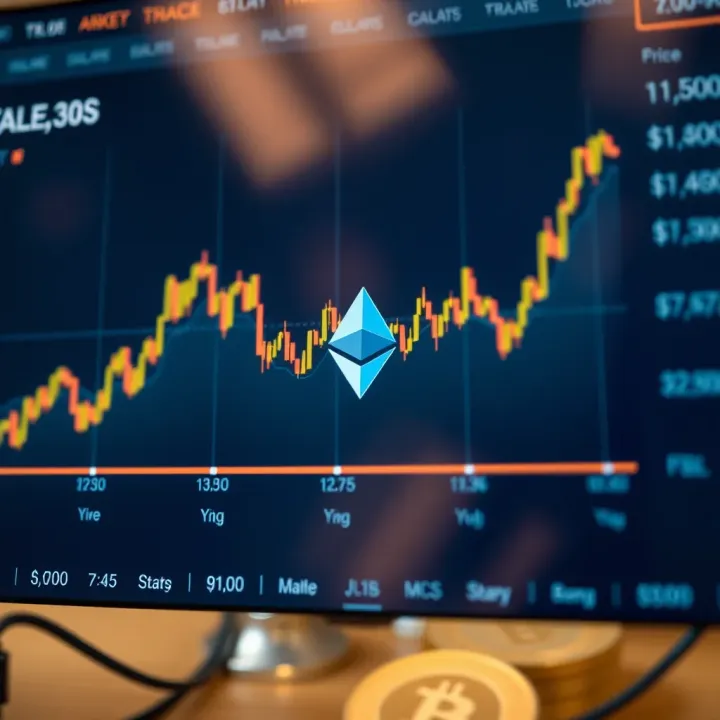
📈 Explore Ethereum price trends, tech updates, and expert insights. Understand market sentiment, regulations, and future outlook for Pakistani investors.
📈 Explore AXS price trends, key factors shaping Axie Infinity's future, and expert insights to guide your crypto investment and trading choices wisely.
Based on 11 reviews