

USD/JPY Outlook: Key Trends and Market Factors
Explore the USD/JPY forecast with fresh insights on economic trends, geopolitical issues, and market sentiment shaping currency moves for Pakistan traders 📊💹.
Edited By
James Carter
Today's EUR/USD outlook is particularly important for traders and investors keeping an eye on the forex market from Pakistan. The euro to US dollar exchange rate is influenced by multiple moving parts, including economic data releases, policy signals from central banks, and shifts in global sentiment. Understanding these factors helps market participants anticipate price behaviour and manage risk better.
Recent indicators from the European Union and the United States set the tone for EUR/USD today. For example, strong US employment numbers or inflation data could push the dollar higher, weighing on the euro. Alternatively, convincing Eurozone GDP growth or hints of monetary easing by the European Central Bank (ECB) might lend strength to the euro.
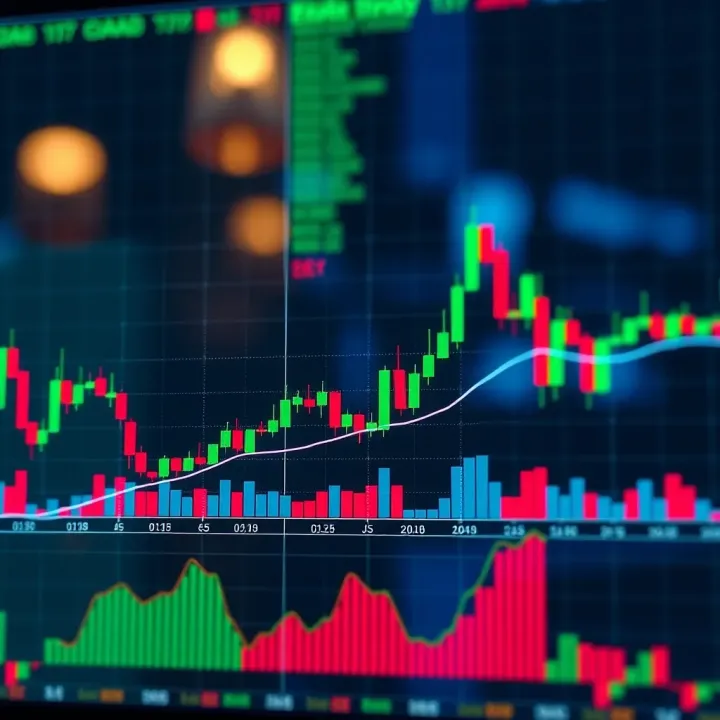
Meanwhile, the US Federal Reserve's announcements and rate decisions remain key drivers. Traders watch Fed communications closely, as signaling a pause or continuation in interest rate hikes influences USD demand. Pakistan-based investors also benefit from tracking these developments since currency fluctuations affect import costs, remittances, and investment returns.
On the technical front, the EUR/USD shows clear patterns that can guide entry and exit points:
Support levels around 1.0800 tend to hold when bearish pressure eases.
Resistance near 1.1000 often caps upside rallies.
Moving averages and Relative Strength Index (RSI) readings provide further clues on momentum shifts.
Traders should combine fundamental updates with technical analysis to form a balanced view, particularly during volatile sessions.
Market sentiment also matters today. Factors like geopolitical tensions, commodity price swings, or shifts in risk appetite influence the pair's behaviour beyond pure economic stats. Pakistan traders ought to stay alert on news flows through their preferred platforms to react quickly.
In essence, the EUR/USD forecast today hinges on a blend of hard data, central bank moves, technical signals, and sentiment cues. Keeping these elements in check offers a solid foundation for making informed trading or investment choices in Pakistani as well as international contexts.
Understanding the current state of the EUR/USD exchange rate is vital for anyone involved in forex trading or investment related to this pair. It offers a snapshot of the currency pair’s position in the market, reflecting recent activity, volatility, and underlying economic forces. For Pakistani traders, this insight helps in aligning trading strategies with real-time market behaviour, especially when navigating unpredictable factors such as geopolitical shifts or central bank moves.
Daily and weekly price fluctuations reveal much about the market’s immediate direction. Tracking these fluctuations helps traders gauge short-term trends and potential volatility. For example, the EUR/USD pair might move within a narrow range during stable economic periods but can swing significantly during economic announcements or unexpected geopolitical developments. Such knowledge can help scalpers and day traders make timely entry and exit decisions.
Impact of major events on recent prices cannot be overlooked. Events like the recent ECB meeting outcomes or US non-farm payroll releases often cause noticeable spikes or drops in the EUR/USD rate. Take the ECB’s hints towards tightening monetary policy; this raised the euro's value against the dollar last week, influencing traders’ risk appetite and portfolio adjustments. Recognising these event-driven movements aids investors and brokers in anticipating shifts, ensuring they’re not caught off guard.
Eurozone inflation and GDP data form the backbone of the euro’s strength. When inflation rates rise above expectations or GDP growth accelerates, the euro tends to gain against the dollar. For instance, the latest Eurozone inflation report showed a slight uptick, which supported the euro’s resilience despite dollar strength. Pakistani investors watching this can better time forex trades or manage currency exposure by understanding such data impacts.
US employment and inflation reports are equally influential for the USD side. Strong employment numbers, such as improved job creation or declining unemployment rates, usually bolster the dollar by signalling economic confidence and potential rate hikes by the Federal Reserve. Conversely, inflation reports that exceed market expectations could lead to hawkish Fed comments, enhancing dollar strength. Keeping an eye on these indicators allows traders to anticipate dollar moves, influencing EUR/USD price action directly.
Monitoring these economic indicators and recent market shifts on the EUR/USD pair equips traders and investors with practical insights to navigate daily forex challenges effectively.
Focus on short-term price moves for tactical trading
Consider economic event calendars for strategy adjustments
Use data points to manage risk in portfolios
In summary, knowing the current exchange rate’s context, its responsiveness to recent events, and how economic indicators shape it forms the cornerstone of today’s EUR/USD forex outlook.
Central bank policies significantly impact the EUR/USD exchange rate. Traders and investors closely monitor decisions and statements from the European Central Bank (ECB) and the Federal Reserve (Fed), as these shape currency strength and market direction. Understanding how rate adjustments and forward guidance affect EUR/USD helps market participants anticipate price movements and manage risks better.
Interest rate decisions are one of the primary tools the ECB uses to influence the euro's value. When the ECB raises interest rates, borrowing costs increase, usually attracting foreign investors seeking higher returns, which boosts demand for the euro. Conversely, rate cuts tend to weaken the euro. For example, during recent inflation hikes in the Eurozone, the ECB’s decision to raise rates helped the euro gain against the dollar temporarily. Traders in Pakistan watching the EUR/USD need to consider ECB interest rate moves carefully as these provide clues about the euro’s medium-term trajectory.

ECB statements and forward guidance provide insight into the central bank's economic outlook and future policy path. The ECB often signals its intentions through carefully worded statements after its monetary policy meetings. If the bank signals a hawkish stance, with hints of further rate hikes, the euro tends to strengthen as traders bet on tightening policy. On the other hand, dovish comments about prolonged accommodative stance can weaken the euro. Reporting on ECB press conferences and minutes can offer actionable info for short-term EUR/USD trades, especially around scheduled announcements.
Fed interest rate adjustments play a crucial role in shaping the US dollar’s value against the euro. The Fed’s rate hikes usually support a stronger dollar because higher interest rates attract capital inflows seeking better yield. For example, the Fed's aggressive rate hikes in 2023 pushed the dollar higher across many pairs, including EUR/USD. Pakistani forex traders should watch upcoming Fed meetings closely; any surprise rate decisions will likely cause sharp EUR/USD moves.
Impact on dollar strength from Fed actions goes beyond rates alone. Fed statements and economic forecasts influence market expectations about future policy. If the Fed signals the economy is weakening or inflation is easing, markets might anticipate slower rate hikes or cuts, which can dampen dollar strength. Conversely, persistent hawkish signals, even without immediate rate changes, tend to boost the dollar. This interplay means traders must look beyond Fed rate numbers and study tone, language, and economic projections to gauge dollar momentum against the euro.
Clear comprehension of ECB and Fed policies offers a practical edge. By analysing rate decisions alongside forward guidance, traders can better predict EUR/USD swings and position their trades accordingly.
Understanding these central bank influences is key for managing risks and taking advantage of opportunities in today’s forex market.
Technical analysis plays a key role in understanding the EUR/USD pair's price movements for today. Traders rely on it to identify patterns, entry and exit points, and overall market momentum without waiting for economic reports. By analysing charts, support and resistance levels, and indicators, one can make more informed trading decisions amid current market volatility.
Recent price highs and lows serve as critical markers on the EUR/USD chart. These levels represent points where the price struggled to move beyond in past sessions, signalling zones of buying or selling pressure. For example, if the pair recently hit 1.1050 as a high but failed to break higher, that level becomes resistance. Conversely, a recent low at 1.0950 becomes support, providing traders with reference points to place stop-loss orders or target profits.
These price extremes are especially useful today since the EUR/USD has shown choppy behaviour around these ranges, suggesting that breaking above resistance or dropping below support could trigger sharp moves. Observing these highs and lows helps in anticipating potential reversals or continuations.
Psychological price points are round numbers—like 1.1000 or 1.1100—that tend to influence trader behaviour. These levels act as informal barriers because many market participants anticipate reactions around such figures, making them self-fulfilling. For instance, a large number of stop orders may cluster just above 1.1000, causing increased volatility if the price nears this point.
In today’s trading, watching how EUR/USD interacts with these psychological levels can help predict short-term swings. When the pair approaches a key psychological point, it often slows down or reverses, unless strong market drivers break through.
Moving averages smooth out price data to highlight trends over time. The 50-day and 200-day moving averages are popular choices for EUR/USD traders. Crossovers—when the short-term average crosses the long-term one—typically indicate momentum shifts. For example, if the 50-day crosses above the 200-day, it suggests bullish momentum, prompting buying interest.
Today, keeping an eye on moving averages can help evaluate whether the EUR/USD is trending upward or downward, assisting traders in riding trends rather than fighting them.
Relative Strength Index (RSI) measures the speed and change of price movements, signalling whether the pair is overbought or oversold. An RSI above 70 often indicates overbought conditions, where a correction might follow, while below 30 points to oversold territory, hinting at a possible rebound.
Checking the RSI today lets traders spot potential reversal points before the price actually turns, helping manage risk effectively.
MACD (Moving Average Convergence Divergence) tracks momentum by comparing two moving averages, generating signals via crossovers and divergences. When the MACD line crosses above the signal line, it signals buying momentum; a cross below suggests selling pressure.
Applying MACD today supports traders in confirming trend changes and timing their trades better, especially during periods of uncertain economic news or geopolitical news that impact EUR/USD swings.
Understanding these technical aspects is crucial for navigating today’s EUR/USD market, offering practical tools that complement fundamental analysis and improve trading outcomes.
Market sentiment and external factors play an active role in shaping the EUR/USD exchange rate beyond just technical charts or economic reports. Traders and investors closely watch these elements to gauge the overall mood in the forex market. Such sentiment often reflects broader economic or political concerns that can influence currency demand and supply unexpectedly. For instance, if global risk appetite shifts suddenly due to geopolitical tensions or major stock market swings, EUR/USD can react sharply.
Political developments in the Eurozone have a tangible impact on the euro’s strength against the US dollar. Uncertainty from elections, parliamentary deadlocks, or policy disagreements among member states can weaken the euro. For example, ongoing debates over fiscal discipline in countries like Italy or Spain tend to make traders wary, prompting a shift towards safer assets like the dollar. In contrast, clear signs of economic reform or stability in the Eurozone often support euro gains.
European Union summits and related decisions also send strong signals. A recent case was the discussions on energy prices and defence spending, which affected investor confidence. For traders in Pakistan, who closely follow these events, staying updated helps in anticipating short-term EUR/USD moves and managing exposure.
US foreign policy and trade issues also influence the pair notably. Significant announcements regarding tariffs, sanctions, or trade talks have direct consequences on the dollar. For example, US tariffs on Chinese goods not only affect global supply chains but also influence currency flows as investors seek safe havens. Similarly, trade negotiations with countries like Mexico or Canada can impact market confidence and the USD demand.
Political tensions or diplomatic standoffs involving the US may increase uncertainty globally, causing shifts in risk sentiment that affect EUR/USD. For Pakistan-based traders, keeping an eye on US foreign relations can help avoid surprise volatility and position accordingly.
Stock market movements offer clues about investor risk appetite which in turn impacts forex pairs like EUR/USD. When global equities rally, confidence tends to rise, prompting traders to favour higher-yielding or riskier currencies such as the euro. Conversely, a stock sell-off usually triggers a flight to safe havens—pushing the dollar up.
For example, during periods of strong performance at the New York Stock Exchange (NYSE) or Frankfurt’s Deutsche Börse, the euro often finds support. Pakistan’s investors who follow these markets can better time EUR/USD trades by linking these signals with their own portfolio risk.
Commodity price influences also matter, though more subtly. Since the US is a major importer and exporter of commodities, shifts in oil, gold, or wheat prices can affect the dollar’s strength. Rising oil prices may push inflation expectations up in the US, influencing the Federal Reserve's policy stance and thus affecting USD value.
Besides, countries dependent on commodity exports, including many in Europe and neighbouring regions, see their currencies affected by commodity trends. This ripple effect can alter EUR/USD dynamics. Pakistani traders might notice, for instance, how fuel price changes worldwide could impact the dollar and euro, enabling more informed trading decisions.
Staying aware of geopolitical shifts, stock market trends, and commodity prices offers a practical edge when trading EUR/USD. These factors often provide early warnings about turning points or continuing trends, helping mitigate risks and seize opportunities.
Developing effective trading strategies is essential for anyone looking to navigate the EUR/USD forex market today. These strategies help traders to respond appropriately to current market conditions, manage risks, and optimise potential returns. Given the EUR/USD pair’s sensitivity to economic data, central bank announcements, and geopolitical events, a well-planned approach can mean the difference between profit and loss.
Scalping and day trading tips: Scalping and day trading suit traders focusing on quick profits within short time frames. Scalping involves making numerous trades during the day to take advantage of small price movements. For instance, a trader might enter and exit positions near key support and resistance levels identified through technical analysis. To succeed, it is crucial to monitor real-time news feeds and economic releases that can cause sudden price swings.
For day trading, timing is key. Traders should observe market sessions with high liquidity, like the London or New York sessions, to benefit from better spreads and volatility. Using tight stop losses avoids excessive losses during unexpected moves, while quick decision-making keeps them ahead of rapid market changes.
Managing volatility: The EUR/USD pair often experiences spikes during major announcements such as ECB or Fed interest rate decisions. Managing this volatility involves adjusting trade size and setting conservative targets to avoid being caught on the wrong side of sharp price swings. One practical approach is to reduce position size during news events and use limit orders rather than market orders to control entry price.
Moreover, keeping an eye on volatility indicators such as the Average True Range (ATR) can offer clues about current market turbulence. If ATR indicates higher volatility, traders can prepare for wider stop-loss distances and expect larger price gaps.
Position sizing: Correct position sizing helps manage risk and protect capital over time. It means deciding how much of your trading capital to put at risk on a single trade, usually expressed as a percentage rather than a fixed amount. For example, many traders keep risk between 1–2% of their total capital per trade. This approach prevents a few bad trades from wiping out your account.
Practically, position sizing depends on the distance between entry price and stop-loss level. If the stop is wide due to volatility, you decrease trade size accordingly. This balance is vital when trading EUR/USD as daily volatility can vary significantly.
Using stop-loss and take-profit orders: These orders help automate exit points, limiting losses and securing profits without needing to watch the screen constantly. A stop-loss placed just below a support level can restrict downside risk, while take-profit orders at or near resistance levels help lock in gains.
For instance, if technical analysis shows a strong support near 1.0900 and resistance at 1.1000, a trader could set a stop-loss below 1.0890 and take-profit just under 1.1000. This setup enforces disciplined trading and reduces emotional decisions, especially important for longer-term positions that stay open through volatile sessions.
Successful trading depends not just on market predictions but on controlling risk through smart strategies like adjusting position sizes and using stop-loss/take-profit orders effectively.
By following these strategies, traders can approach the EUR/USD market with greater confidence and reduce the chance of significant losses in unpredictable conditions.
Explore the USD/JPY forecast with fresh insights on economic trends, geopolitical issues, and market sentiment shaping currency moves for Pakistan traders 📊💹.

📈 Get a clear picture of Bitcoin's latest price moves, technical signals, and market mood today. Stay updated with news and tips to navigate BTC trading in Pakistan.

Explore the current Bitcoin outlook 📉📈, key market trends, risks, and expert predictions to guide investors in Pakistan through the crypto landscape in 2024.

📈 Get the latest SOL (Solana) price prediction with expert analysis, market trends, and risks. Ideal for Pakistani investors planning smart crypto moves today.
Based on 5 reviews