
APT Price Prediction: Market Trends Explained
📈 Explore APT price trends with expert insights, market data, and technical analysis. Learn how to predict APT prices wisely and understand the risks involved.
Edited By
Benjamin Taylor
Nvidia's market capitalisation has become a hot topic not just in international stock exchanges but also among Pakistani investors looking for growth opportunities. Market capitalisation shows the total value the market places on a company's outstanding shares. For Nvidia, this number has surged significantly over recent years, reflecting strong investor confidence and rapid business expansion.
At its core, market capitalisation is calculated by multiplying the current share price by the total number of shares issued. For example, if Nvidia has one billion shares outstanding and its share price is $200, its market cap would be $200 billion. This figure offers a quick snapshot of the company's overall market value, helping investors compare it with peers in the technology sector or beyond.
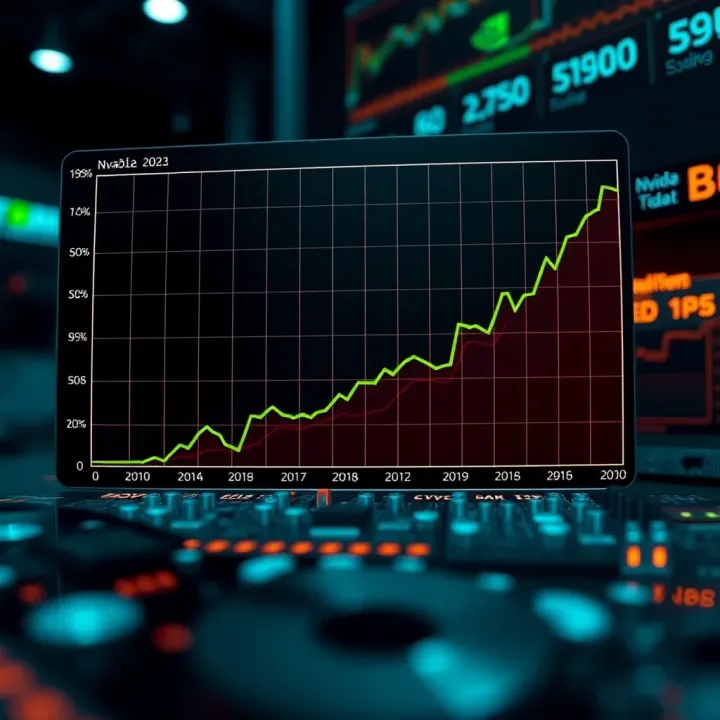
Nvidia's rise in market capitalisation is driven by several concrete factors:
Innovation in graphics processing units (GPUs): Nvidia leads in GPU technology, crucial for gaming, professional design, and increasingly for artificial intelligence applications.
Expansion into AI and data centres: Investments in AI computing and data centre products have boosted growth prospects.
Strategic partnerships and acquisitions: Moves like acquiring Mellanox and planning to buy ARM have strengthened Nvidia's market position.
When analysing Nvidia’s market cap, it is essential to consider both the stock performance and underlying business fundamentals.
Understanding the market capitalisation also means recognising its limits. A high market cap suggests market optimism but can sometimes lead to overvaluation risks, especially in volatile sectors.
For Pakistani investors, following Nvidia's market cap helps identify trends in global technology shifts, suggesting areas for portfolio diversification. Keeping an eye on this metric alongside financial statements and market conditions ensures informed decision-making.
Summary:
Market capitalisation equals share price times shares outstanding.
Nvidia's tech innovation drives its valuation growth.
Market cap offers a broad value measure but needs contextual analysis.
Pakistani investors can use this insight for better investment choices in tech equities.
This section sets the stage for a deeper dive into how Nvidia's valuation reflects its business health and what investors should watch next.
Understanding Nvidia’s market capitalisation gives investors a snapshot of the company’s size and market value. This number not only tells you how much the company is worth according to investors but also influences investment decisions, stock comparisons, and risk assessments.
Market capitalisation, often called market cap, is the total value of all outstanding shares of a company’s stock. You calculate it by multiplying the current share price by the number of shares available. For example, if Nvidia has 2 billion shares trading at Rs 500 each, its market cap would be Rs 1,000 billion (or Rs 1,000 crore). This figure constantly changes as stock prices fluctuate but remains a quick way to gauge company size.
Unlike revenue or profits, market cap focuses on market perception. It reflects what investors collectively believe a company is worth at any given moment. For Pakistani investors looking at global tech stocks like Nvidia, this helps in comparing it to other players easily.
Market cap acts as a barometer for company value but isn’t the whole story. It shows investor confidence in Nvidia’s future growth potential, profitability, and competitive strength in the semiconductor sector. A rising market cap suggests optimism about innovations like AI chips or data centre GPUs, while a drop may signal concerns over competition or market conditions.
That said, market cap does not capture debt levels, cash reserves, or other financial health indicators directly. To get a full value picture, analysts combine market cap with other metrics like enterprise value or earnings reports.
For traders and investors, Nvidia’s market capitalisation helps decide portfolio weight and entry points, especially when comparing to firms like Intel or AMD.
In Pakistan’s context, understanding market cap is practical for those investing via international brokerage accounts or mutual funds, offering insight into global tech leaders shaping market trends and opportunities.
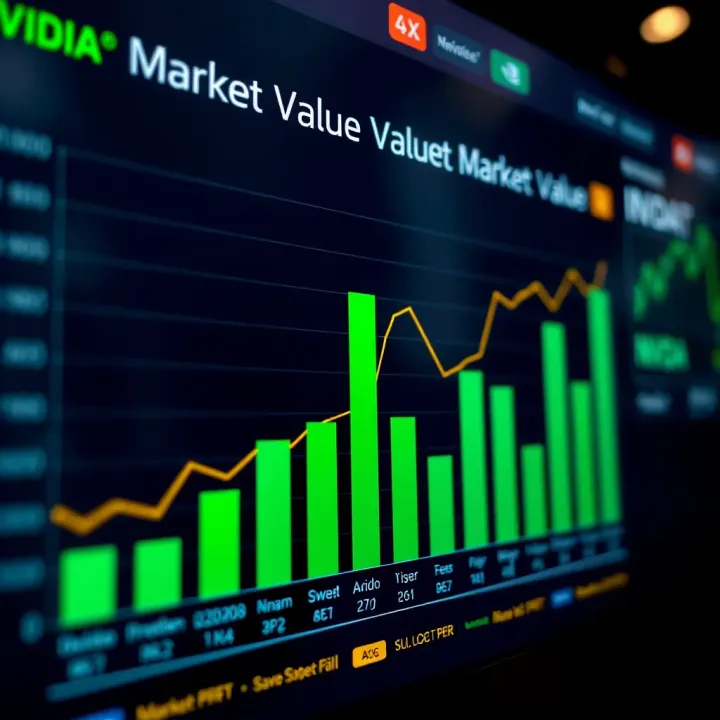
Understanding Nvidia's current market capitalisation helps investors, traders, and analysts gauge the company's present size and influence in the tech world. It provides a snapshot of how the market values Nvidia, reflecting investor confidence, potential growth, and industry impact. This figure is especially relevant for those looking at the dynamic semiconductor sector, where valuations change quickly based on product launches, partnerships, and global demand.
As of early 2024, Nvidia's market capitalisation stands near the $1 trillion mark, making it one of the most valuable semiconductor companies globally. This level reflects the strong demand for its graphics processing units (GPUs) in gaming, data centres, and artificial intelligence (AI). The surge in AI applications, particularly, has pushed Nvidia's stock higher in recent months. For instance, partnerships with cloud service providers for AI workloads have expanded Nvidia’s reach beyond traditional gaming markets.
The trend shows a steady upward trajectory, with occasional dips driven by broader market corrections. For Pakistani investors, this means paying attention to global tech trends and Nvidia’s quarterly earnings, which often act as signals for stock movements. The company’s ability to maintain leadership in GPU technology also supports investor optimism.
Looking back, Nvidia's market cap has grown from about $4 billion in the early 2000s to nearly $1 trillion today, thanks to relentless innovation and strategic expansions. A key milestone was its pivot toward AI and data centre solutions around 2016, which markedly increased revenue streams and attracted new investor segments.
This growth, while impressive, wasn't linear. The market saw fluctuations during global chip shortages, geopolitical tensions affecting supply chains, and competitive pressure. However, Nvidia's focus on R&D and acquisition of companies like Mellanox in 2019 helped solidify its broad technology portfolio, maintaining steady growth.
Tracking historical trends offers insight into why Nvidia commands such a high market cap today and informs predictions about its future trajectory—valuable for investors weighing long-term positions.
In summary, Nvidia's current market capitalisation showcases the company’s robust market presence and innovation-driven value. For traders and financial analysts, keeping up with Nvidia's market cap trends and history offers a clearer picture of when to enter or exit positions, especially amidst the fast-changing tech environment globally and in markets like Pakistan.
Nvidia’s market value depends heavily on several core factors that paint a fuller picture beyond just share price. Understanding these elements helps investors and analysts make sense of how the company’s shares are priced and what might impact future performance.
Nvidia’s ability to introduce cutting-edge products drives its market valuation significantly. For example, its advances in graphics processing units (GPUs) and artificial intelligence (AI) chips have set new benchmarks in performance. The recent launch of the Ada Lovelace architecture GPUs gave Nvidia an edge over competitors in gaming and professional rendering markets. Product innovation attracts investor confidence, as it often leads to increased sales, higher profit margins, and opens fresh markets. This reputation for technology leadership means the market often values Nvidia at a premium compared to peers who lag in innovation.
Nvidia operates within the semiconductor sector, which is sensitive to global supply and demand fluctuations. Industry-wide factors such as chip shortages, trade tensions, and geopolitical developments impact Nvidia’s market valuation. For instance, the global chip shortage during 2020 and 2021 led to high demand for Nvidia’s products, boosting revenue and investor interest. Conversely, economic slowdowns or relaxed demand in end-user markets can lower expected growth, affecting valuation negatively. Pakistani investors should watch global semiconductor trends closely, as these ripple through Nvidia’s stock performance.
Nvidia’s earnings reports offer direct insight into its financial health, which strongly influences market value. Consistently strong revenue growth, expanding profit margins, and effective cost management boost investor confidence. For example, Nvidia’s fiscal year 2023 earnings exceeded market expectations, supported by growth in data centre and gaming segments. Earnings announcements that surprise on the upside tend to lift the stock, while any sign of revenue slowdown or expense escalation can pull it down. Traders and investors rely heavily on quarterly financials to gauge whether Nvidia’s market capitalisation is justified or overheated.
Monitoring these three factors—innovation, industry trends, and financial results—provides a clear guide to understanding the forces shaping Nvidia’s market value. Staying informed about these can help investors in Pakistan and worldwide make better decisions.
Product innovation fuels growth and premium valuation.
Semiconductor trends connect macro events to Nvidia’s stock.
Financial performance confirms Nvidia’s operational strength.
Keeping track of these factors allows stakeholders to discern whether Nvidia’s market capitalisation reflects its true potential or speculative excitement.
Comparing Nvidia’s market capitalisation with its major competitors offers a clear picture of where the company stands in the semiconductor and technology sectors. For investors, traders, and analysts, these comparisons highlight relative valuation, growth prospects, and market confidence levels. This context is especially relevant in Pakistan’s rising interest in global tech stocks, where understanding competition helps in making measured investment decisions.
Nvidia’s market capitalisation has surged past many traditional giants like Intel and AMD in recent years. As of early 2024, Nvidia’s market cap hovers around $800 billion, while Intel’s is closer to $150 billion, and AMD sits near $200 billion. This stark difference reflects Nvidia’s leadership in GPUs, AI, and data centre technologies, whereas Intel, despite its size, has struggled with some production delays and market share loss in key segments.
Unlike Intel and AMD, Nvidia’s focus extends beyond hardware to AI software platforms and autonomous driving technologies, which investors find promising. For example, while Intel remains dominant in CPUs for PCs and servers, Nvidia’s GPUs power AI research and cloud computing services, driving higher valuation.
Other competitors like Qualcomm and Broadcom have market capitalisations between $150 billion and $300 billion, but their focus on telecommunications and infrastructure chips contrasts with Nvidia’s AI-centric growth, explaining the premium investors place on Nvidia.
Nvidia stands out due to its pioneering role in AI acceleration and graphics processing. It became synonymous with AI hardware, especially after its GPUs became essential for training large AI models. This gives Nvidia a unique position that competitors have yet to fully match.
Moreover, Nvidia's ability to maintain strong revenue growth with healthy profit margins sets it apart. Its strategic acquisitions, such as Mellanox for data centre networking and more recent expansions into software like CUDA (Compute Unified Device Architecture), provide further moat.
Nvidia’s blend of hardware innovation, software ecosystems, and AI leadership creates a compelling market valuation story that goes beyond traditional semiconductor companies.
Additionally, Nvidia’s expanding role in autonomous vehicles and gaming consoles adds diverse revenue streams, making it less vulnerable to fluctuations that affect chipmakers solely tied to PC sales.
For Pakistani investors watching the global tech arena, recognising these distinctions can guide informed decisions, from stock selection to portfolio diversification strategies focused on emerging technology sectors.
Nvidia’s market capitalisation gives Pakistani investors a snapshot of its overall value in the global market. More than just a number, it reflects investors’ confidence in Nvidia’s growth prospects and dominance in sectors like gaming, AI, and data centres. For investors in Pakistan, understanding this helps in making informed decisions about adding Nvidia shares to their portfolios, especially when looking beyond local stock options.
Pakistan’s tech investment landscape is expanding, with more retail and institutional investors showing interest in international stocks through brokerage platforms enabled for foreign trading. Nvidia, being a leader in chip manufacturing and AI technologies, offers exposure to cutting-edge innovation and high growth. Investing in Nvidia allows Pakistani investors to tap into the rising global demand for semiconductors, a sector that influences everything from smartphones to cloud computing.
With the State Bank of Pakistan holding key interest rates steady, some investors find foreign tech stocks like Nvidia attractive for portfolio diversification. Platforms like PSX’s index funds and wealth managers are increasingly educating clients about global equities, including US tech giants, highlighting opportunities outside traditional asset classes like real estate or fixed income. For example, a Pakistani investor with Rs 1 million saving might consider allocating a small portion for Nvidia shares to balance local risks such as currency volatility and domestic economic challenges.
While Nvidia’s market capitalisation indicates strong performance, Pakistani investors should remain mindful of the risks linked to foreign equities. Currency fluctuations between PKR and USD can impact returns as Nvidia shares trade in dollars. Additionally, geopolitical tensions, US regulatory changes, or shifts in the semiconductor supply chain can affect Nvidia’s stock price unpredictably.
Moreover, investing internationally often involves higher transaction costs and requires understanding local taxation rules on foreign capital gains. Pakistani investors must check compliance with Federal Board of Revenue (FBR) regulations when reporting such income. It’s also worth remembering that market capitalisation alone doesn’t guarantee future returns; it must be analysed alongside Nvidia’s fundamentals, sector trends, and global economic factors.
Wise investors in Pakistan look beyond just share price or market cap. They assess the business model, industry outlook, and their personal financial goals before committing funds to stocks like Nvidia.
In summary, Nvidia’s market capitalisation presents clear opportunities for Pakistani investors eager to diversify and engage with the global tech boom. However, careful risk assessment and proper investment planning are essential to navigate challenges linked to currency risks, regulatory compliance, and international market dynamics.
📈 Explore APT price trends with expert insights, market data, and technical analysis. Learn how to predict APT prices wisely and understand the risks involved.

Explore Amazon's journey, market impact, and business tactics 📈 with a focus on insights valuable to Pakistan investors and consumers 🌏🛒.
📊 Get the latest Cardano (ADA) price prediction and detailed market analysis tailored for Pakistani investors. Stay updated on trends and expert insights! 🇵🇰

🔍 Discover Aave's price forecast with expert insights, latest DeFi trends, and market analysis. Stay ahead with risks & long-term outlook for smart investing.
Based on 11 reviews