
Dollar to PKR Forecast: Exchange Rate Trends
Explore dollar to PKR exchange rate trends, market shifts, economic and political influences 🇵🇰💹 crucial for businesses, investors, and consumers in Pakistan.
Edited By
Daniel Price
Predicting the US dollar rate against the Pakistani rupee (PKR) demands careful attention to economic signals and global trends. The PKR-USD exchange rate does not move randomly; it responds to several clear-cut factors which traders, investors, and analysts closely watch either for decision-making or research.
Exchange rate prediction starts with understanding market fundamentals—trade balances, foreign reserves, and remittances, all of which influence demand for dollars in Pakistan. For example, when Pakistan's import bill rises sharply without a matching increase in exports or foreign currency inflows, the PKR tends to weaken against the dollar. Conversely, strong remittance flows from overseas Pakistanis can temporarily stabilise or boost the rupee.
Monetary and fiscal policies also play a key role. Decisions by the State Bank of Pakistan (SBP) regarding interest rates affect currency valuation. If SBP raises policy rates above inflation expectations, it tends to attract foreign investment, strengthening PKR. However, persistent budget deficits financed by debt often put pressure on the rupee.
Global factors like US Federal Reserve Rate actions and geopolitical events impact the dollar index and consequently the PKR-USD rate. Economic sanctions or tensions in the Middle East, for example, have rippling effects on Pakistan due to energy import dependencies.
Accurate forecasts require blending quantitative methods, such as time-series models and machine learning, with qualitative evaluations of policy changes and international developments.
Traders use various tools to anticipate rate movements:
Technical analysis, studying price charts and volume trends to predict short-term shifts
Fundamental analysis, evaluating economic indicators including inflation, trade data, and foreign direct investment
Sentiment analysis, examining market psychology via news, social media, and policy statements
Yet, challenges remain. Data delays, sudden political changes, or unforeseen global shocks can swiftly alter currency trajectories. That’s why predictions must be updated frequently and cross-checked with local and international developments.
Understanding these trends and factors equips stakeholders in Pakistan’s financial ecosystem for better risk management and opportunity spotting in the PKR-USD exchange market.
Understanding what drives the PKR-USD exchange rate is vital for traders, investors, and financial analysts looking to navigate Pakistan’s volatile currency market. Several domestic and international factors shape the rupee’s value against the dollar, impacting imports, exports, inflation, and broader economic stability. This section breaks down key influences, providing a clear lens on why the exchange rate moves and how these changes matter in practical terms.
Inflation in Pakistan directly affects the rupee’s purchasing power and exchange rate stability. Rising inflation means higher prices locally, which can discourage foreign investment due to shrinking returns. For example, when inflation in Pakistan outpaces that in the US, the rupee tends to weaken as investors seek stronger currencies. Traders watch consumer price index (CPI) reports closely since sustained increases typically pressure the PKR downward.
The gap between what Pakistan exports and imports influences the dollar demand. A persistent current account deficit, where imports exceed exports significantly, requires financing through foreign currency inflows. Pakistan has faced large deficits due to oil imports and machinery purchases, which increase USD demand and weaken the PKR. For instance, a rising oil bill during global price spikes has historically deepened the trade deficit and pushed the dollar rate higher.
Pakistan’s foreign exchange reserves, held by the State Bank of Pakistan (SBP), act as a buffer to stabilise the currency. Healthy reserves allow the SBP to intervene in the currency market by selling dollars to limit excessive rupee depreciation. When reserves dip, confidence drops, causing further outflows and pressure on the PKR. A reserve level below three months of import cover often signals vulnerability to exchange rate shocks.
SBP’s policy rate influences both inflation and currency demand. Increasing interest rates typically attract foreign portfolio investment as yields improve, supporting the rupee. Conversely, cuts can spur inflation and reduce capital inflows, putting the PKR under pressure. In mid-2023, swift rate hikes helped stabilise the dollar rate temporarily despite global uncertainties.
Pakistan’s fiscal deficit impacts exchange rates through demand for foreign loans and potential currency issuance. Higher borrowing can lead to rupee depreciation if it fuels inflation or signals economic instability. For example, budget shortfalls financed by external debt often increase dollar demand and weigh on the rupee unless offset by aid or remittances.
As a net oil importer, Pakistan’s dollar demand rises with oil price hikes. Sharp increases in Brent crude lead to more foreign currency needed for petroleum imports, straining reserves and weakening the rupee. During the 2022 global oil price surge, PKR faced significant pressure, highlighting oil prices’ outsized role.
Movements in the US dollar index, which reflects its value against major currencies, also affect PKR. When the dollar strengthens globally due to US economic growth or interest rate hikes, emerging market currencies like the rupee often weaken. Similarly, downturns in global equity markets tend to increase demand for safe-haven currencies like the USD, adding pressure on the PKR.
Tensions in the region, diplomatic ties, and trade agreements directly impact investor confidence and capital flows. For instance, uncertainty during conflicts or political crises leads to capital flight, weakening the rupee. Improved relations with key partners or successful IMF programmes can support the PKR by boosting foreign inflows and stabilising expectations.
A solid grasp of these factors helps market participants predict exchange rate movements more accurately and adjust strategies accordingly. Economic indicators, government policies, and global developments each play a hands-on role in shaping the PKR-USD rate’s daily and long-term trends.
Predicting the PKR-USD exchange rate involves a mix of methods tailored to capture different market dynamics. Traders and analysts rely on these approaches to anticipate currency movements, aiding in risk management and investment decisions. Understanding technical tools, fundamental drivers, and advanced statistical models provides a well-rounded perspective essential for forecasting dollar rate fluctuations in Pakistan.
Technical analysis revolves around studying past price movements to predict future trends. Chart patterns like head and shoulders, double tops/bottoms, and flags help identify potential reversal or continuation signals. For example, a head and shoulders pattern might warn traders of an upcoming rupee depreciation against the dollar, prompting timely hedging.
Trends on daily or weekly charts also indicate momentum. If the PKR is consistently dropping over several sessions, it generally suggests continued weakness. Observing support and resistance levels aids in spotting entry or exit points for currency trades.
Moving averages smooth out price data to reveal the average exchange rate over a period, commonly 50 or 200 days. When the short-term moving average crosses above the long-term one, a bullish signal for the PKR may emerge, hinting at dollar weakness.
Other indicators like the Relative Strength Index (RSI) or Moving Average Convergence Divergence (MACD) assess momentum and potential overbought or oversold conditions. For instance, an RSI above 70 might indicate an overbought dollar, signalling a possible correction against the rupee.
Fundamental analysis looks beyond charts, focusing on economic indicators to gauge currency strength. Inflation rates, trade deficits, and foreign exchange reserves in Pakistan directly impact the PKR-USD rate. Higher inflation typically erodes the rupee's value, while mounting deficits increase pressure on the currency.
Take Pakistan's Foreign Exchange Reserves reported by the State Bank of Pakistan; a drop below $10 billion often triggers depreciation fears among investors. Monitoring such data allows forecasters to anticipate sharp movements.
Political stability and policy developments significantly influence exchange rates. Announcements about IMF programmes, budget deficits, or changes in government can cause swift market reactions. For example, news of delays in structural reforms can weaken the rupee against the dollar, making timely analysis crucial.
Economic news from the US, including Federal Reserve interest rate decisions, also play a role. A stronger dollar due to US monetary tightening can translate into PKR weakness, affecting the exchange rate outlook.
This approach uses historical exchange rate data to predict future values by identifying patterns and seasonality. Techniques like ARIMA (AutoRegressive Integrated Moving Average) help model PKR-USD fluctuations over time.
Such models are valuable because they adapt to changing trends without relying solely on economic fundamentals. For example, they can flag probable volatility spikes that technical analysis might miss.
Regression techniques analyse relationships between the dollar rate and impact factors like inflation, interest rates, or trade balance. By quantifying these links, econometric models forecast how shifts in these variables affect the PKR-USD rate.
For instance, a regression model may predict the dollar rising by Rs 0.50 if inflation increases by one percentage point, offering clear metrics for policymakers and traders to watch.
Combining technical signals with fundamental insights and statistical models forms a more reliable framework for predicting the ever-changing PKR-USD exchange rate.
Government policies and international agreements significantly shape the PKR-USD exchange rate by influencing demand and supply dynamics in the foreign exchange market. Decisions made by the State Bank of Pakistan (SBP) and the federal government impact how much dollar liquidity is available and how the rupee responds to global economic conditions. At the same time, international agreements, especially those involving financial aid and trade, affect investor confidence and cross-border capital flows. This section highlights key government actions and global partnerships that matter for predicting the dollar rate.
The SBP actively manages the rupee’s exchange rate through currency controls and market interventions. When the dollar rapidly strengthens against the rupee, the SBP may enter the market to sell USD reserves and buy PKR, aiming to stabilise the exchange rate and curb runaway depreciation. For example, in recent years during balance of payment pressures, SBP’s timely intervention helped prevent sharp rupee falls.
Currency controls, such as restrictions on dollar purchases by importers or limits on remittances, also shape demand. These controls reduce excess dollar outflow and can temporarily support the PKR. However, strict controls risk pushing transactions underground, leading to discrepancies between official and open-market rates. Understanding SBP’s intervention patterns helps traders gauge when and how the rupee might be supported or allowed to adjust.
Government import policies, such as imposing tariffs, restrictions, or prioritising essential goods, directly affect demand for foreign currency. A policy tightening imports reduces the need for dollars, easing pressure on the exchange rate. Conversely, encouraging exports through subsidies or easing export procedures brings in more dollars, strengthening PKR indirectly.
For instance, policies supporting textile exports—the backbone of Pakistan’s export sector—can improve the trade balance and dollar inflows. On the other hand, high import bills for fuel and machinery push the dollar demand up. Monitoring import-export policy shifts allows investors to anticipate changes in currency demand and predict exchange rate trends more accurately.
Pakistan’s agreements with the International Monetary Fund (IMF) often come with economic reform commitments affecting exchange rates. IMF programmes typically require tightening fiscal discipline, raising interest rates, and reforming subsidies—all measures that influence rupee stability.
While IMF funding provides much-needed foreign exchange support, the conditional reforms can trigger short-term market anxiety, sometimes weakening the rupee at announcement time. The 2019 IMF bailout package, for example, temporarily spiked dollar demand as markets reacted to expected reforms. Analysts watch IMF programme status closely to time exchange rate moves and investor sentiment.
Foreign direct investment (FDI) inflows and international loans impact dollar supply in the economy. When Pakistan secures large FDI projects or multilateral loans, especially under China-Pakistan Economic Corridor (CPEC) frameworks, substantial dollar inflows arrive.
These inflows help stabilise the rupee by increasing foreign currency reserves and boosting market confidence. However, loan repayments add pressure on future exchange rates. Recognising patterns in FDI and loan agreements aids traders and investors in predicting currency strength or weakness linked to external financing cycles.
Government policies and international financial engagements form the backbone of exchange rate dynamics. Staying updated with SBP controls, trade policies, IMF negotiations, and external financing helps anticipate the PKR-USD movement with greater confidence.
Predicting the PKR-USD exchange rate is no easy task due to several complex challenges. Traders and analysts must grapple with factors that can swiftly change the outlook, making forecasts uncertain and sometimes unreliable. Understanding these challenges is critical for anyone involved in forex trading or financial planning in Pakistan.
Global economic shifts often send shockwaves through currency markets, including the PKR-USD exchange rate. For example, sudden spikes in crude oil prices can increase Pakistan’s import bill, putting downward pressure on the rupee. Similarly, fluctuations in commodity prices or changes in major economies like China or the US can lead to unexpected swings. The COVID-19 pandemic showed how rapidly global uncertainty can cause exchange rates to move wildly, disrupting previously stable trends.
Political stability—or the lack thereof—greatly affects currency values. General elections, policy changes, diplomatic tensions, or security concerns can trigger swift rupee depreciation against the dollar. For instance, political uncertainty in Islamabad during caretaker government phases often leads to hesitant investor behaviour, impacting PKR’s strength. Similarly, foreign sanctions or strained relations with trading partners can unsettle currency markets badly.
Accurate data on economic indicators in Pakistan can sometimes lag or be subject to revision, which complicates reliable forecasting. Misreported inflation rates or delayed trade balance figures can mislead analysts. Moreover, market sentiment driven by rumours or speculative trading plays a big role. Social media buzz or news of possible IMF programmes often triggers sharp currency moves regardless of fundamentals. This makes sentiment analysis as important as hard data for dynamic dollar rate predictions.
Effective forecasting requires constant monitoring of global market conditions, domestic politics, and timely, accurate data. Ignoring any of these elements can turn well-planned strategies upside down.
In summary, predictable currency forecasting in Pakistan demands awareness of global economic volatility, political uncertainty, and challenges in data accuracy alongside market moods. Being mindful of these helps investors and analysts manage risks and make informed exchange rate predictions with more confidence.
Predicting the dollar-to-rupee exchange rate is crucial for Pakistan’s economy and its people. Exchange rate fluctuations impact everything from trade balance to inflation and influence how businesses and consumers plan their finances. Understanding how predictions shape these areas helps policymakers, traders, and everyday citizens make smarter decisions.
Fluctuations in the PKR-USD rate directly affect the cost of imports and exports. When the rupee weakens against the dollar, imported goods—like machinery, electronics, and fuel—become more expensive, pushing inflation upward. For example, a rise from Rs 280 to Rs 300 against the dollar only bumps up costs for fuel imports, which in turn raises transport and production expenses across the board.
Exporters, however, benefit somewhat from a weaker rupee as their goods become cheaper in international markets, potentially boosting Pakistan’s exports of textiles, rice, and leather products. Still, import costs for raw materials remain a challenge. Predictive insights on exchange rates help exporters decide the right time to sell products abroad and manage supply chain costs.
Businesses closely monitor dollar rate forecasts to plan their budgets and investment strategies. Firms relying on imported inputs or foreign loans adjust their financial plans based on expected exchange movements. For instance, a textile manufacturer borrowing $1 million will face higher repayment costs if the rupee depreciates, affecting profitability.
Likewise, investors use exchange rate predictions to evaluate risks. Foreign investors may hesitate to pour money into Pakistan if they expect the rupee to decline sharply, fearing losses on currency conversion. Conversely, stable or appreciating PKR projections can attract investment flows, benefiting Pakistan’s stock market and economic growth.
For ordinary Pakistanis, exchange rate swings influence the prices of everyday items and remittance value. A weaker rupee means higher costs for imported food products, electronics, and pharmaceuticals, which hits lower and middle-income households the hardest. Meanwhile, migrant workers sending money back home watch dollar rates keenly; a strong dollar means their earnings convert into more rupees, easing family expenses.
Exchange rate predictions thus act as a barometer for economic well-being—guiding businesses in managing risks and helping consumers anticipate price changes and remittance values.
In summary, accurate dollar rate forecasts provide a roadmap for managing economic challenges and opportunities in Pakistan. Whether for trade, investment, or daily living, these predictions inform key decisions and help stabilise expectations amid a volatile currency environment.
Explore dollar to PKR exchange rate trends, market shifts, economic and political influences 🇵🇰💹 crucial for businesses, investors, and consumers in Pakistan.
📉 Discover key factors shaping USD to PKR exchange rates—from economy to geopolitics—and get expert tips for navigating future currency trends effectively.

📊 Explore key factors shaping USD to PKR rates: history, economics, policies & global trends. Insights for investors, businesses & consumers in Pakistan.
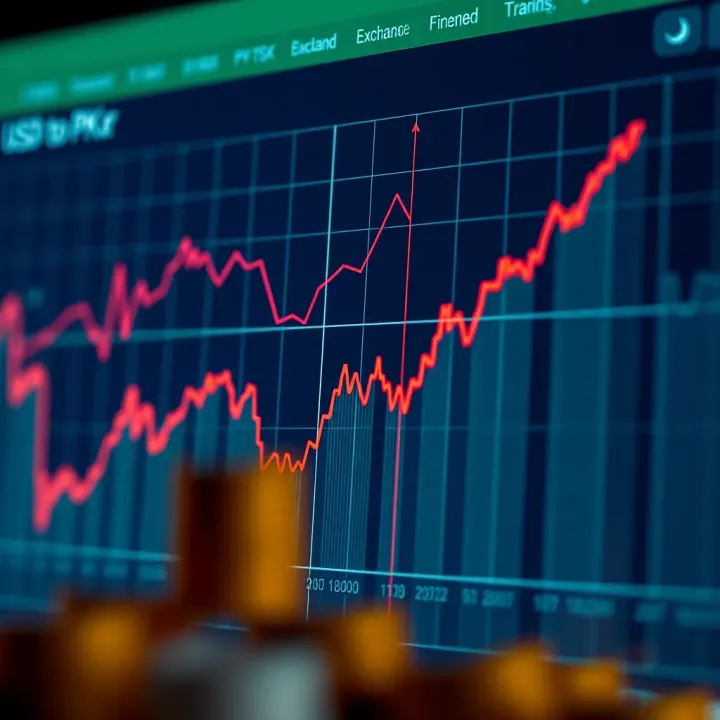
📉 Get detailed insights into USD to PKR trends, key economic and political factors, and practical tips to understand and adapt to exchange rate movements.
Based on 15 reviews