

USD/JPY Outlook: Key Trends and Market Factors
Explore the USD/JPY forecast with fresh insights on economic trends, geopolitical issues, and market sentiment shaping currency moves for Pakistan traders 📊💹.
Edited By
Liam Gallagher
The GBP/USD pair reflects the strength between the British pound and the US dollar, making it a key focus for traders, investors, and analysts worldwide. Understanding this pair's forecast helps Pakistani market participants gauge international economic shifts while making informed investment or trading decisions.
Economic indicators like the UK's GDP growth, inflation rates, Bank of England (BoE) interest rate decisions, and unemployment data shape the pound's direction. On the other hand, the Federal Reserve's monetary policy, US employment figures (particularly the non-farm payroll report), inflation, and political developments directly influence the dollar.
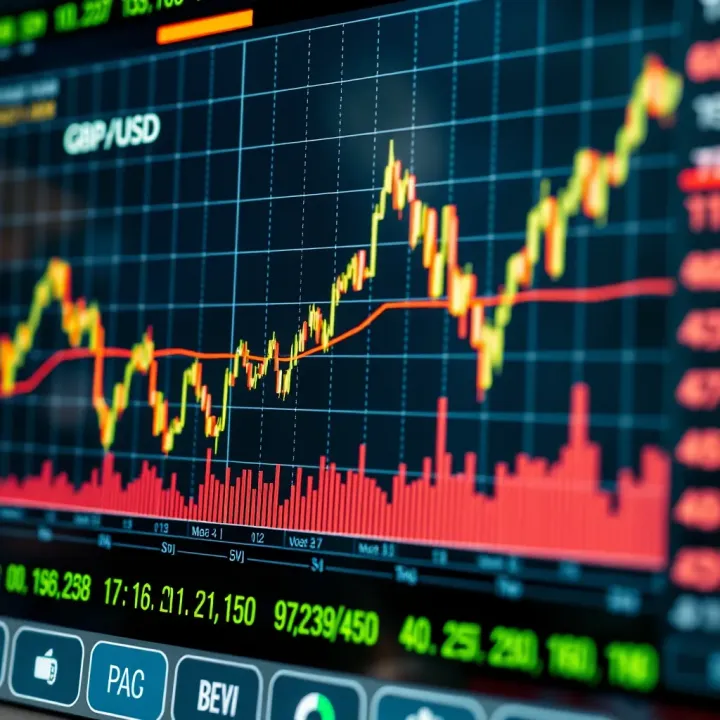
Keeping an eye on the interplay between these indicators can help predict swings in GBP/USD more accurately.
In recent times, global uncertainties such as Brexit fallout, US-China trade tensions, and shifting energy prices have added volatility to the pair. For Pakistani traders, awareness of these events helps avoid surprises, especially as fluctuations may impact import costs, remittances, or investment portfolios.
Technical analysis complements fundamental evaluation. Common methods include:
Monitoring support and resistance levels identified on daily and weekly charts
Using moving averages (like the 50-day and 200-day) to spot trends or reversals
Examining the Relative Strength Index (RSI) for overbought or oversold conditions
Such tools enable traders to time entries or exits better, especially when combined with current economic news.
Pakistan-based investors should also consider the impact of changes in GBP/USD on foreign currency accounts with local banks, as well as effects on exports to the UK market. Since many transactions are priced in dollars or pounds, the exchange rate forecast has tangible consequences on profit margins.
By studying both technical trends and economic data, traders can position themselves wisely in volatile markets. This article will unpack these key factors, helping you navigate the GBP/USD pair with greater confidence and clarity.
Understanding the fundamental factors behind GBP/USD movements helps traders and investors make better-informed decisions. Economic indicators, central bank policies, and political events in both the UK and the US directly affect the exchange rate. For example, shifts in interest rates or unexpected political developments can lead to sharp changes in the pair’s value.
GDP growth and inflation are key measures of the UK economy’s health. When the UK economy grows strongly, the pound tends to strengthen as investor confidence rises. On the other hand, high inflation may erode purchasing power, putting pressure on the GBP.
Take the recent UK inflation spike beyond the 10% mark: it raised concerns about the cost of living but also signalled potential interest rate hikes by the Bank of England. Traders closely watch these figures because inflation directly impacts consumer spending and business costs.
Bank of England’s interest rate decisions are among the strongest drivers of GBP/USD. A hike in interest rates usually results in a stronger pound as higher returns attract foreign capital. Conversely, rate cuts can weaken the currency.
Consider how the Bank of England’s unexpected pause in rate increases last year led to a temporary slide in GBP/USD. Investors had to reassess yield expectations and adjust their positions accordingly.
Employment data and consumer confidence reveal the UK’s economic momentum. High employment levels suggest a robust economy, boosting the pound, while falling job figures may signal trouble.
Moreover, consumer confidence affects spending patterns; when people feel secure, they spend more, supporting GDP growth and the currency. For example, during recent pandemic recovery phases, improved employment stats helped stabilise GBP/USD.
Federal Reserve policy and interest rates play a pivotal role. Like the Bank of England, the US Federal Reserve’s moves influence the USD’s strength. When the Fed raises rates, USD typically strengthens, dragging GBP/USD lower.
For instance, aggressive Fed tightening in 2022 caused a sharp USD rally, putting pressure on GBP/USD. Traders monitor Fed announcements intensely to anticipate currency trends.
US inflation and labour market statistics also impact the pair. High inflation may prompt the Fed to raise rates, while strong employment figures show economic resilience, typically boosting the USD.
Take the consistently low US unemployment rate, which signals a tight labour market and supports the dollar. Unexpected changes here can cause sudden GBP/USD swings.
Trade balance and GDP data indicate the broader economic conditions in the US. A widening trade deficit might weaken the dollar, while strong GDP growth underpins it.
For example, if US GDP data shows slower growth, traders might expect the Fed to ease policies, leading to a weaker USD and higher GBP/USD.
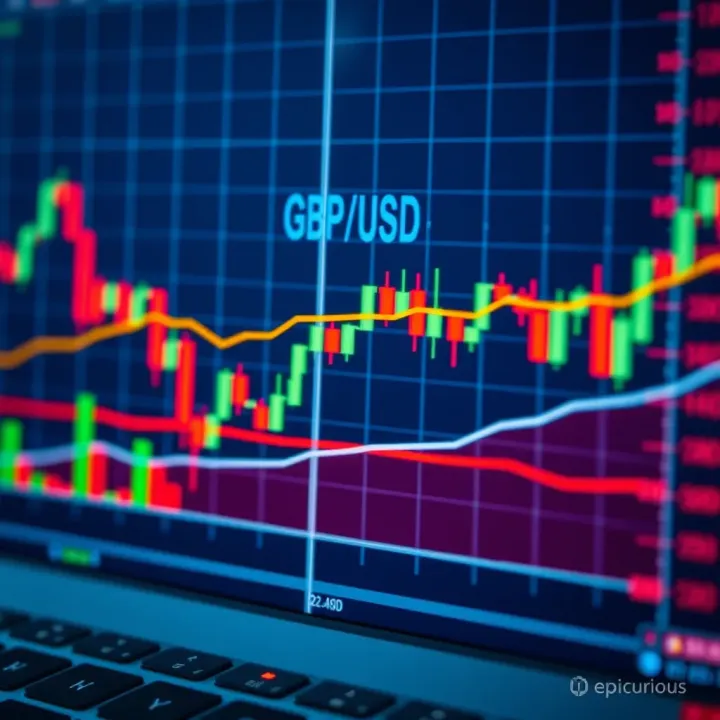
Brexit developments and UK political stability remain under scrutiny. Any uncertainty around trade agreements or governance tends to weaken the pound, as investors seek safer assets.
Recent parliamentary debates or changes in Brexit protocols can cause volatility in GBP/USD, as seen with shifts in trade negotiations.
US government policies and geopolitical tensions affect market sentiment globally. Trade disputes, sanctions, or elections can strengthen or weaken the USD depending on perceived risks.
For example, tensions between the US and China often boost the USD as a safe haven, influencing GBP/USD movements accordingly.
Staying updated on these fundamental factors allows Pakistani traders and investors to anticipate GBP/USD shifts and manage their positions effectively.
Technical analysis plays a key role for traders and investors tracking GBP/USD. It helps identify price trends and patterns from historical data, offering practical insights for entry and exit points in the market. While fundamental factors influence the currency's long-term direction, technical analysis focuses on short-to-medium term moves, which is vital for timing decisions in fast-changing forex markets.
Support and resistance levels mark crucial price points where GBP/USD tends to pause or reverse its direction. Support is the level where buying interest usually emerges, preventing the price from dropping further. Resistance, on the other hand, is where selling pressure often caps upward moves. For example, if GBP/USD repeatedly falls to 1.3000 but bounces back, that level acts as strong support. Recognising these levels helps traders place stop-loss orders more effectively and manage risk.
Moving averages and trend lines help smooth out price volatility and guide traders on the overall direction. A simple moving average (SMA) of 50 or 200 days is widely used to spot bullish or bearish trends. If the price stays above the 200-day SMA, it suggests upward momentum, whereas falling below reflects potential declines. Trend lines drawn connecting swing highs or lows provide visual cues on support or resistance trends. For instance, a rising trend line under GBP/USD’s price signals consistent buying interest, guiding traders to buy on dips.
Relative Strength Index (RSI) measures the speed and change of price movements to identify overbought or oversold conditions on a scale of 0 to 100. An RSI above 70 typically signals GBP/USD is overbought and may soon correct downward. Below 30 suggests oversold conditions and possible upward reversal. Pakistani traders can use RSI to avoid entering trades at extreme price points and to anticipate reversals.
MACD (Moving Average Convergence Divergence) tracks momentum by comparing two moving averages of different periods, often the 12-day and 26-day EMAs. When the MACD line crosses above the signal line, it may indicate a bullish trend starting, and the opposite signals bearish momentum. MACD helps confirm trend changes or continuation alongside price actions.
Fibonacci retracement levels are drawn between a recent high and low to identify potential reversal levels where corrections may stall. Key retracement levels such as 38.2%, 50%, and 61.8% act as support or resistance during pullbacks. For GBP/USD, these levels assist traders in spotting entry points during a trend correction. For example, after a sharp rise, a retracement to the 50% level may offer a strategic buying opportunity.
Using technical analysis tools together offers a clearer picture than relying on just one indicator. Combining support/resistance, moving averages, RSI, MACD, and Fibonacci levels helps traders make informed, timely decisions based on market behaviour rather than guesswork.
This approach suits both short-term trading and longer-term investment strategies, especially amid the volatility seen in GBP/USD influenced by economic and political factors.
Understanding recent market trends and sentiment is essential when tracking GBP/USD. This section sheds light on how price movements and trader attitudes shape the currency pair's near-term direction. For traders and analysts, paying attention to these trends helps anticipate potential reversals or continuations, enabling better decision-making.
GBP/USD has experienced periods of notable volatility lately, often linked to major economic announcements or political developments. For example, when the Bank of England raised interest rates in recent months, the pair saw sharp swings as traders digested the impact on future growth and inflation. Increased volatility means traders have more opportunities but also higher risk, making it important to use proper risk management.
Trading volumes also reflect market interest. When volumes rise alongside price moves, it confirms stronger conviction among traders. Conversely, lower volumes can hint at hesitation or weaker trends. Watching volume alongside price helps assess the credibility of moves, which is vital for short-term trading strategies.
Economic releases from both the UK and the US heavily influence GBP/USD shifts. For instance, stronger-than-expected US labour data typically bolsters the dollar, pushing the pair down. Meanwhile, sluggish UK GDP growth can dampen the pound’s appeal.
These reactions are often immediate and sharp. Knowing which releases matter most and anticipating their outcomes enables traders to prepare for potential spikes or dips. For example, monitoring Bank of England announcements and US Federal Reserve speeches has helped many Pakistani investors avoid sudden losses or seize quick gains.
Global events such as geopolitical tensions, trade disputes, or unexpected financial crises significantly impact market sentiment and GBP/USD. Risk-on moods, where investors favour higher-yielding assets, generally support the pound. But risk-off phases, triggered by events like Ukraine conflict escalations or China’s economic slowdown, often shift capital towards the safe dollar.
For traders in Pakistan, being aware of these global risk sentiments helps contextualise sudden market shifts. It prevents knee-jerk reactions and encourages more thoughtful trade entries and exits.
The US dollar often acts as a safe haven during uncertain times. When worries about global stability rise, many investors flock to the dollar, strengthening it against other currencies including GBP. This demand can override technical signals and economic fundamentals temporarily.
Being alert to safe-haven flows can save investors from unexpected losses. For example, during global disruptions in 2022, although UK data showed improvement, GBP/USD still slid due to dollar’s safe-haven status. Recognising this helps traders avoid traps and time their positions better.
Keeping a close eye on market trends and prevailing sentiment complements technical and fundamental analysis, providing a fuller picture for forecasting GBP/USD moves confidently.
External factors have a clear impact on the GBP/USD exchange rate, often shifting market sentiment and influencing price direction beyond domestic economic data. Traders and investors need to watch global economic conditions and monetary policies in other leading economies since these shape currency flows and risk appetite worldwide. A decline or rise in oil prices, changes in commodity markets, or shifts in trade relations can send ripples through forex markets, including GBP/USD.
Oil prices and commodity markets hold surprising sway over the GBP/USD pair. For instance, higher oil prices can raise inflation concerns in the UK, which imports much of its oil, potentially putting pressure on the pound by prompting expectations of tighter monetary policy. Conversely, US dollar often benefits from rising oil prices since the US is a net producer, supporting dollar strength. When commodity prices fluctuate sharply, traders adjust their risk positions accordingly, impacting GBP/USD volatility.
Global trade relations also directly affect currency strength. Trade tensions or new agreements between major economies influence investor confidence and economic outlooks. For example, ongoing trade disagreements between China and the US often create uncertainty, pushing investors towards safe havens like the US dollar. Meanwhile, Brexit-related trade negotiations continue shaping the pound’s prospects. Positive trade developments tend to strengthen GBP by improving growth expectations, while disputes can drag it down.
The European Central Bank (ECB) and the Bank of Japan (BoJ) play significant roles in shaping global monetary conditions, indirectly affecting GBP/USD. If the ECB adopts a dovish stance with lower interest rates, it may weaken the euro, influencing trade balances and investment flows involving the UK. Similarly, BoJ’s prolonged easy policy influences the yen, which often moves inversely with the dollar. These dynamics create ripple effects on GBP/USD through correlated asset shifts and capital reallocations.
Currency correlations further highlight the impact of these monetary policies on GBP/USD. When the euro or yen weakens due to their central banks’ policies, the US dollar frequently gains, putting downward pressure on GBP/USD. Traders who follow these correlations can anticipate moves in the GBP/USD pair by watching ECB and BoJ updates. This helps in timing trades and managing risk, especially during volatile periods.
Monitoring external factors like global economic trends and major economies’ monetary policies enhances your ability to forecast GBP/USD movements more accurately. Ignoring these can leave traders blindsided by sudden market shifts.
Keep a close eye on oil prices and commodity markets for inflation clues affecting the pound.
Watch trade developments, especially Brexit negotiations, which continue to affect GBP's outlook.
Track ECB and BoJ policy decisions as their ripple effects shape global currency flows impacting GBP/USD.
Use currency correlation insights to better time entries and exits in GBP/USD trading.
Staying informed on these external influences will help Pakistani traders and investors navigate the GBP/USD market with greater confidence and precision.
Understanding how to navigate the GBP/USD currency pair is essential for traders and investors in Pakistan given its direct impact on imports, exports, remittances, and investment returns. This section focuses on practical strategies for using GBP/USD forecasts effectively and accessing reliable market data.
Incorporating fundamental and technical analysis offers a solid foundation for trading decisions. For example, fundamental analysis might highlight Bank of England's interest rate changes or US job reports as triggers for GBP/USD movement. At the same time, technical analysis—such as monitoring key support and resistance levels or using indicators like the Relative Strength Index (RSI)—helps identify entry and exit points. Combining these approaches gives a clearer picture of when to buy or sell the currency.
Managing risk is equally important, especially in the volatile forex market. Pakistani traders should set stop-loss limits to prevent large losses. For instance, if you buy GBP/USD at 1.2500, placing a stop-loss at 1.2450 limits your loss to 50 pips, protecting your capital if the market moves against you. This simple strategy shields your investments from sudden adverse moves due to unexpected political events or economic data releases.
For sound trading, timely and trustworthy information is key. Pakistani traders can rely on local sources such as business news from Dawn or Business Recorder alongside global platforms like Bloomberg and Reuters. These sources provide up-to-date news about economic indicators, central bank decisions, and geopolitical developments that influence GBP/USD movements.
Besides news, having access to the right tools and platforms enhances trading efficiency. Pakistani investors often use platforms like MetaTrader, TradingView, or local brokers’ trading apps that offer real-time charts, indicators, and order execution capabilities. Mobile apps from banks and digital wallets like JazzCash and Easypaisa increasingly also support forex trading features. Choosing a platform with low spreads, quick execution, and a user-friendly interface helps manage trades smoothly and boosts confidence in decision making.
Always remember, successful trading involves staying informed, planning carefully, and managing risks diligently. Combining these elements allows you to navigate GBP/USD fluctuations while protecting your investment in Pakistan's unique market environment.
Explore the USD/JPY forecast with fresh insights on economic trends, geopolitical issues, and market sentiment shaping currency moves for Pakistan traders 📊💹.
📈 Get a detailed OGDC share price forecast with insights into Pakistan’s energy market, govt policies, global oil trends & sector risks for smart investing.
📈 Stay ahead in forex with today's detailed EUR/USD forecast covering Pakistan-relevant data, central bank moves, technical trends, and real-time market sentiment.
💷 Get the latest GBP to PKR forecast for 2024 with in-depth analysis of economic trends, policies, and geopolitical factors affecting your currency exchange choices in Pakistan.
Based on 13 reviews