
Today's Gold Price Prediction in Pakistan
📈 Today's gold price prediction in Pakistan explained with market trends, economic and geopolitical impacts, plus expert insights for smart investing. 💰
Edited By
Sophie Mitchell
Understanding gold price predictions today requires a solid grasp of the many factors shaping the market. Globally, gold reacts sharply to changes in economic indicators like inflation rates, US dollar strength, and geopolitical tensions. For instance, when inflation rises or the US dollar weakens, gold typically gains value as investors seek a safe haven.
In Pakistan, local dynamics add further complexity. The rupee's fluctuations, demand from jewellery makers, and government import policies often swing prices noticeably. For example, when the rupee depreciates against the dollar, gold becomes costlier in PKR, pushing domestic prices up. Similarly, increased demand during festivals like Eid can temporarily raise local gold rates.

Traders and investors should watch both international cues and domestic variables closely to navigate gold price movements effectively.
Key factors influencing gold prices include:
Global economic shifts: Central bank decisions, interest rates, and trade tensions.
Currency movements: Particularly the USD and PKR exchange rate.
Local demand: Seasonal buying patterns and policy changes affecting imports.
Grasping these elements helps you interpret daily forecasts more accurately. It’s not just about following headline prices; understanding why gold moves allows smarter choices whether you’re buying, selling, or holding.
By combining global and local perspectives, traders and analysts can fine-tune strategies according to market realities. For example, a rise in US Federal Reserve interest rates may cool international gold demand, but a weakening rupee could still push prices up in Pakistan. Recognising such nuances is crucial.
In the next sections, we will explore market trends, data analysis, and tools to deepen your understanding of gold price predictions today.
Understanding today's gold price predictions is vital for traders, investors, and brokers working in Pakistan's dynamic market. Gold acts as a hedge against inflation and currency fluctuations, making its price movements significant for financial planning. Tracking these predictions helps you identify buying or selling opportunities before prices shift markedly.
In practice, knowing the current gold price trend can guide businesses dealing in jewellery, exporters, and even ordinary consumers during festival seasons like Eid or wedding-related demand surges. For instance, if predictions suggest a price rise due to international tensions, buyers might act swiftly to avoid higher costs later.
Daily price updates from local sources offer real-time information crucial for decision-making. Reliable dealers and jewellers in Karachi, Lahore, and Islamabad update gold rates several times daily based on the local market and international bullion prices. For example, platforms like Metal Bulletin or local newspapers provide these figures, helping buyers avoid overpaying or sellers to time the market.
These daily updates are practical tools for those operating on narrow margins, such as jewellery retailers and small investors. Since gold rates fluctuate due to supply-demand shifts and currency rates, staying informed daily prevents surprise losses.
Comparison with international gold prices is equally important since Pakistan largely depends on imported gold. International benchmarks set in markets like London and New York influence local prices directly. For example, if the global price per ounce rises owing to US Federal Reserve policy changes, local rates typically follow after accounting for import duties, taxes, and rupee value.
By monitoring international trends alongside local updates, you can grasp whether price changes stem from global factors or domestic influences. This awareness helps in strategic planning, especially for importers and exporters.
Role of market analysts and experts is central in crafting accurate gold price forecasts. These professionals analyse economic indicators like inflation rates, geopolitical developments, and central bank policies to predict short- and long-term trends. Their insights guide institutional investors and traders on market sentiment and risk factors.
In Pakistan, experts from financial institutions or commodity exchanges watch global events such as US-China trade relations or Middle East tensions closely. Their commentary offers actionable cues — for instance, warning investors to expect volatility if political unrest escalates.
Use of historical data and technical analysis complements expert opinions by providing empirical evidence through charts and patterns. Tools like moving averages, resistance, and support levels help spot trends and possible price reversals, informing tactical entry or exit points.
For example, if gold prices in PKR hover near a resistance level established over recent months, technical analysts may predict a pullback. Conversely, breaking this resistance might signal further upward movement, prompting timely investment decisions.
Staying informed via daily local updates, understanding international price dynamics, and employing expert and technical predictions collectively empower you to navigate Pakistan's gold market confidently.

Understanding the drivers behind gold price movements is essential for investors and traders. Various factors—from worldwide economic health to local market dynamics in Pakistan—shape gold’s value each day. This section highlights key influences to help you read market signals better and plan your investment moves with more confidence.
Inflation often nudges gold prices higher, as investors seek to protect their money’s value when prices rise. When inflation spikes globally, gold serves as a hedge because its physical value stays relatively stable. For instance, during recent global inflation surges, gold prices saw steady gains as people shifted away from cash holdings.
Interest rates play a balancing role. When central banks hike rates, especially the US Federal Reserve, it pushes yields on bonds up, making them more attractive compared to non-yielding gold. This can dampen gold demand temporarily. However, if rate hikes are seen as insufficient to combat inflation, gold prices may remain supported. In Pakistan’s case, SBP’s policy rate adjustments often reflect these global trends, influencing local gold prices accordingly.
Uncertainty caused by political conflicts or wars tends to push investors towards safer assets like gold. For example, tensions in the Middle East or strained US-China trade relations usually spike demand for gold as a “safe haven”. This sudden rush can cause price jumps that last weeks or months.
Pakistani investors closely watch such developments because regional unrest can amplify local gold demand. Especially during times when political or security issues dominate headlines, Pakistan’s gold market often experiences increased buying, affecting prices.
Gold prices generally move opposite to the US dollar. When the dollar strengthens, it makes gold pricier for holders of other currencies, hurting demand and leading to price drops. Conversely, a weaker dollar tends to boost gold prices globally.
Since gold is priced in dollars internationally, fluctuations in the greenback deeply affect Pakistani gold rates. For instance, when the dollar rallies against the rupee, local prices rise, sometimes even faster than the international spot price, due to currency conversion costs.
The rupee’s performance plays an outsized role in Pakistan’s gold price. Depreciation increases the cost of importing gold, pushing local rates up regardless of global trends. For example, rupee fall against the dollar in recent months has resulted in higher gold prices in Karachi and Lahore bazaars.
Besides imports, speculative demand surges when the rupee weakens, as people turn to gold to protect savings from inflation and currency risks. So, even minor shifts in the rupee-dollar rate can send ripples through Pakistan’s gold market.
Gold buying in Pakistan rises sharply during festivals like Eid and wedding seasons. Families invest in gold jewellery as gifts or savings, boosting demand temporarily. This seasonal pattern often hikes prices by Rs 2000 to Rs 5000 per tola during these peak times.
Understanding this cycle helps traders predict short-term price moves. For example, if Eid falls in May, expect rising gold demand and prices starting weeks earlier in April as buyers get ready.
Pakistan imposes import duties and taxes on gold which directly affect its final price in the market. Changes in duty rates, whether a hike or a reduction, are quickly reflected in retail prices.
Moreover, government policies on gold imports—such as licensing restrictions or changes in customs clearance—can create supply bottlenecks. When imports slow, local gold prices tend to jump due to scarcity. Staying updated with FBR announcements is crucial for anyone dealing with gold in Pakistan.
Keeping an eye on both global signals and local developments allows investors to make informed decisions instead of following market noise.
By understanding these factors, you can better gauge when to enter or exit gold investments, minimise risks, and capitalise on market conditions effectively.
Understanding gold price predictions is essential for traders, investors, and brokers in Pakistan’s dynamic market. These predictions help you anticipate price movements, plan your buying or selling strategy, and manage risks more wisely. Rather than relying on guesswork, reading and using predictions effectively ensures your decisions rest on clear analysis and current market trends.
Moving averages and trend lines provide insight into the overall price direction of gold over a period. A moving average smooths out daily price fluctuations to reveal the general trend — for example, a 50-day moving average tracks the average closing price of gold for the past 50 days. If the gold price stays above this average, it usually signals a bullish trend, suggesting prices may keep rising. Trend lines connect key price points to show support or resistance paths, helping traders visualise momentum. For instance, drawing an upward trend line on Pakistan’s gold prices during festive seasons can highlight steady demand-driven growth.
Resistance and support levels reveal price points where gold tends to stop falling or rising. Support is the level where buying interest is strong enough to prevent further price drops—think of it as a safety net beneath the price. Resistance is the level where selling pressure can cap further price increases. For example, if gold keeps bouncing back near Rs 110,000 per tola but struggles to cross Rs 115,000, then Rs 110,000 acts as support and Rs 115,000 as resistance. Knowing these helps investors decide entry or exit points with better timing.
When to buy or sell gold depends heavily on interpreting trends and signals from these technical indicators. If prices break above a resistance level with strong volume, it might be a good time to buy, betting on a continued upward trend. Conversely, if prices fall below support, selling might limit losses. Also, seasonal patterns like spike in gold demand ahead of Eid or wedding seasons in Pakistan must factor into timing decisions.
Risks and considerations for investors include unexpected geopolitical events, sudden currency fluctuations, or policy changes that may quickly alter market dynamics. Even solid predictions cannot guarantee profits as gold is sensitive to global factors like inflation or US dollar movements. Hence, always weigh technical signals alongside current news and your investment goals. Diversifying assets and setting stop-loss orders can protect investments from sudden downturns.
Using gold price predictions isn’t about following signals blindly but combining tools with practical awareness of Pakistan’s market nuances to make informed, strategic decisions.
Navigating the gold market in Pakistan requires more than just keeping an eye on price predictions. Practical knowledge about where and how to buy or sell gold can save you from losses and ensure you make the most of your investment. This section focuses on key aspects like choosing trustworthy dealers and understanding the standards of gold purity and weights commonly used in the local market.
When buying or selling gold, trust is everything. Certified dealers usually carry licences from the Pakistan Gems and Jewellery Development Company (PGJDC) or other recognised bodies. Always ask for these certifications before proceeding. Besides official licences, customer reviews and feedback offer insight into a dealer’s reliability and fairness in pricing. For example, a solid dealer in Karachi’s Saddar area or Lahore’s Liberty Market often has word-of-mouth recommendations among local traders that can guide your choice.
Gold prices fluctuate daily, especially in Pakistan’s dynamic market. Using online price tracking websites or apps keeps you informed of the latest rates, both locally and internationally. Platforms tailored to Pakistani buyers, showing Rs-based rates updated regularly, help you decide the right moment to buy or sell. This combats the risk of overpaying or selling gold when prices are low. Combined with in-person verification, such tools improve your bargaining power and decision-making.
Gold purity is usually measured in karats, with 24-karat gold representing pure gold. In Pakistan, most jewellery is sold as 22-karat to balance purity and durability. Hallmarking, now mandatory, certifies a piece’s karat level through stamps from permanent hallmark centres regulated by the Pakistan Standards and Quality Control Authority (PSQCA). Checking for hallmarks prevents buying adulterated gold and safeguards your investment.
Gold in Pakistan is often bought and sold by weight, mostly measured in grams or tolas (where 1 tola equals approximately 11.66 grams). Dealers price gold according to weight multiplied by the current market rate per gram or tola plus making charges. For instance, a simple gold chain in Islamabad might be quoted as Rs 9,000 per gram plus Rs 1,000 in making charges. Being aware of these units and how additional costs apply helps avoid unexpected expenses and ensures transparent transactions.
Always prioritise certified transactions with clear purity and weight standards. This habit protects you from fraudulent dealings and lets you benefit from accurate gold price predictions in Pakistan’s market.
📈 Today's gold price prediction in Pakistan explained with market trends, economic and geopolitical impacts, plus expert insights for smart investing. 💰
📈 Understand gold price trends in Pakistan using current data on currency, imports, global markets & seasonal demand. Stay informed for smarter investments.
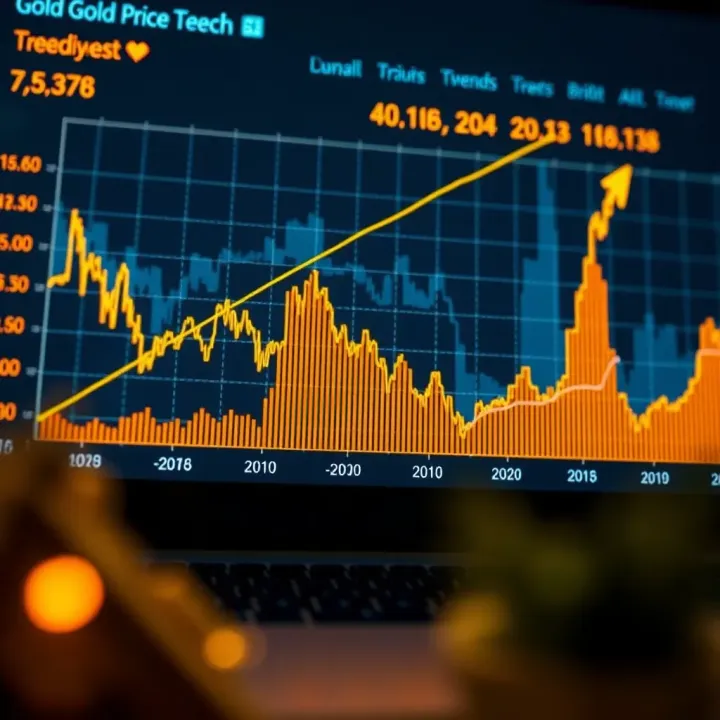
Wondering if gold prices will rise soon? 📈 This article breaks down local & global factors affecting Pakistan's gold rates for smart investing decisions.

📈 Explore gold price trends influenced by global factors, Pakistani economy, and rupee value fluctuations to make informed investment choices.
Based on 7 reviews